
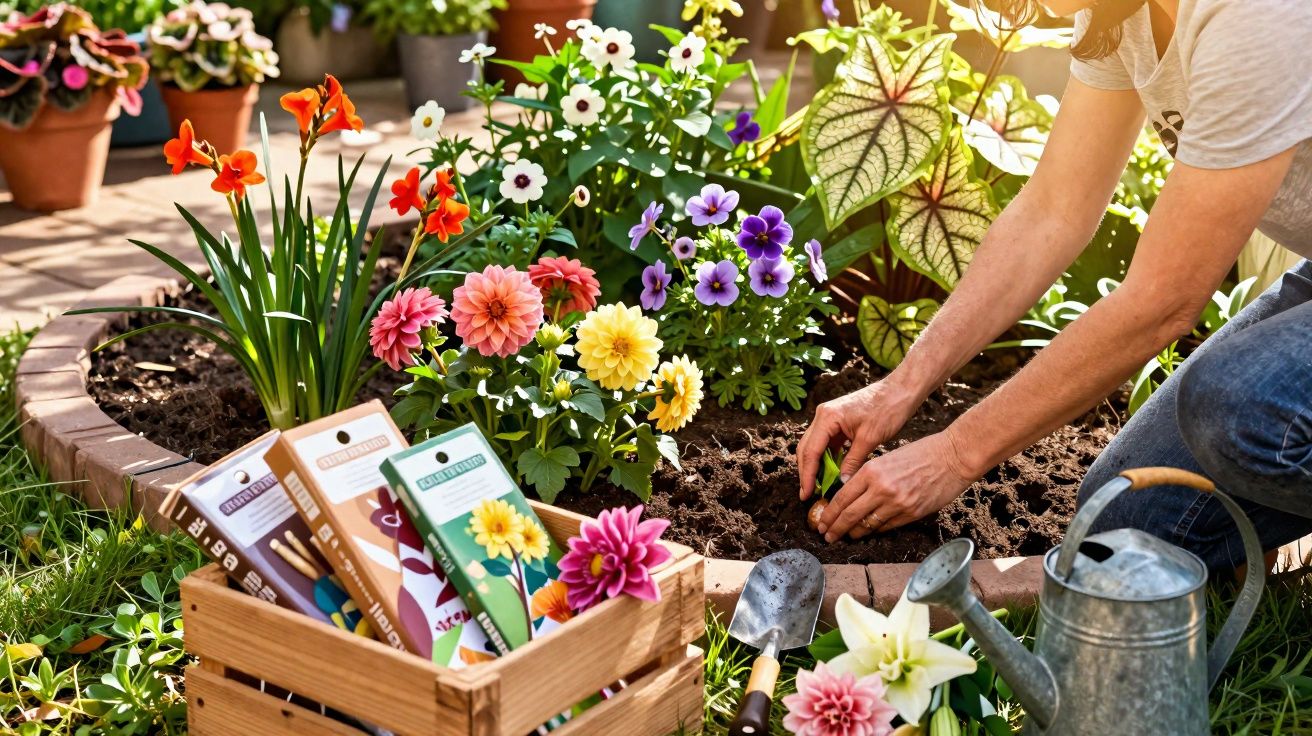
If you choose the right bulbs and tubers now in spring, you can enjoy a riot of colour by summer. Many of these beauties do not flower just once: with the right treatment, they return year after year. Here are the most useful tips and the most exciting varieties for anyone who wants to lift an outdoor space without a huge amount of effort.
Why perennial flowering bulbs and tubers are the best choice right now
When people hear “bulb flowers”, they often think of tulips or daffodils planted in autumn. For a dramatic summer display, there are far more interesting options: perennial tubers and bulbs that you plant between February and May and that flower in the same year.
The main advantage is that these plants store energy in their bulb or tuber and, with a little care, can keep coming back for several seasons in a row.
By the time you buy them, most of these species have already had the cold period they need. They are practically waiting to go into the ground as soon as frost is no longer a risk. Once planted, they get going quickly and produce large blooms, exotic shades and often a strong fragrance in midsummer.
A useful extra tip: when you are buying, look for firm, plump bulbs and tubers with no mould, soft patches or shrivelling. Healthy planting material establishes faster and is far less likely to rot once it is in the ground or a pot.
The 10 most important bulbs and tubers for a summer garden with wow factor
1. Amaryllis for tropical giant blooms in the border
Most people know amaryllis as a Christmas houseplant in a pot. In a summer border or a large container, it can look even more impressive. The bulbs need a warm, sunny position with well-drained soil.
You do not plant them deeply: the top half of the bulb can sit just below the surface. With a little fertiliser and regular watering, they produce striking stems carrying enormous trumpet-shaped flowers in summer.
2. Anemones: airy clouds of flowers for edging and pots
If you plant several tubers close together, anemones create proper sheets of flowers. They are ideal for the edge of a border, rock gardens or shallow balcony bowls.
Before planting, soak the tubers in lukewarm water for a few hours so they swell up and get off to a quicker start. In a bright spot with fresh soil that never becomes waterlogged, they flower for weeks in blue, pink, white or red.
3. Tuberous begonias: the shade specialists
Anyone with a darker courtyard, a north-facing balcony or a spot beneath shrubs should choose tuberous begonias. They tolerate very little direct sun, but they repay partial shade and full shade with almost continuous flowering.
Plant the tubers shallowly, with the hollow side facing upwards. In late autumn, lift them out, allow them to dry and store them somewhere frost-free. That way, you can enjoy them for many years.
4. Caladium: foliage plants that look almost painted by hand
Caladiums are not traditional flowering plants; they stand out because of their spectacular leaves: white, pink and red, streaked with green veins. They look especially elegant in pots or as underplanting beneath shrubs.
Their tubers need warmth and only really get going once temperatures are consistently high. It is worth starting them indoors at over 20 degrees, as they can then move outside strongly in early summer.
5. Canna: tropical flair with little effort
Canna form strong, rhizome-like tubers and tall stems with large leaves. Depending on the variety, they resemble banana plants, only much tougher. Their flowers in yellow, orange or red bring a jungle feel to the border.
They need full sun and plenty of water and nutrients. In mild areas, they can stay outside with a thick mulch layer; elsewhere, lift the rhizomes in autumn and overwinter them in a frost-free place.
6. Crocosmia: fiery fountains in orange and red
Crocosmias grow from small tubers and send up narrow, elegant leaves and arching flower spikes. In summer they shine in vivid orange or red and attract bees and butterflies.
In sheltered locations, they often survive winter in the ground, especially if you cover them with leaves or bark mulch. They work well in perennial borders and along the edge of terraces.
7. Dahlias: the classic choice for lavish summer borders
Dahlias are among the most popular summer-flowering plants in the UK. From tuberous root clumps, they grow into plants well over a metre tall, with fully double, single, spherical or cactus-shaped flowers.
- Sunny position, as sheltered from wind as possible
- Nutrient-rich, loose soil
- Remember to stake tall varieties
- Remove spent blooms regularly to encourage new buds
In autumn, lift the tubers, let them dry off and store them in the dark at between 1 and 7 degrees in a dry place. Over time, this makes it possible to build an impressive collection.
8. Gladioli for spectacular cut flowers
Gladioli grow from corms and produce long, upright flower spikes that are perfect for vases. If you plant fresh corms every two weeks, you can extend the flowering display from midsummer into early autumn.
They prefer a sunny position, either in rows in the border or in deep containers. After flowering, allow the corms to dry and keep them safe in a cellar or similar cool place, especially in colder regions.
9. Lilies: long-lasting fragrant stars of summer
Lilies form true bulbs and are among the longest-lasting members of this group. Once planted in the right place, they remain there for years and often become better from season to season.
Many varieties give off a powerful scent, making them ideal near a terrace, entrance or seating area. The soil should be loose and rich in humus, because sites that stay wet quickly lead to rot.
10. Tuberoses: intense evening fragrance for terraces and balconies
Tuberoses are still a bit of an insider’s tip in the shops. Their tuber-like roots produce long, slim stems with white flowers that are especially fragrant in the evening.
They are excellent in containers beside an outdoor seating area. The tubers want warmth and free-draining compost, and they must be lifted again before the first frosts and stored somewhere frost-free.
Where to put them: sun, shade, balcony or border?
Many summer bulbs love sun and warmth, while others brighten up darker corners. If you know what each plant needs, you save yourself a lot of disappointment.
| Plant | Position | Winter hardiness |
|---|---|---|
| Dahlias | full sun | lift the tubers and store them frost-free |
| Canna | full sun | mulch well in mild areas, otherwise lift them |
| Tuberous begonias | partial shade to full shade | store the tubers frost-free |
| Caladium | partial shade, warm | very warmth-loving, safe only indoors |
| Lilies | sun to light partial shade | usually can stay in the ground permanently |
For south-facing balconies, canna, dahlias, crocosmia, gladioli, lilies and tuberoses all do well in large containers. Every tall plant needs support so it does not snap in the wind.
Shadier courtyards or north-facing aspects benefit from tuberous begonias, caladium and anemones. In towns and cities, they are a simple way to lighten dull corners without having to water endlessly every day.
How to plant them properly: depth, spacing and watering
The basic rule is simple: bulbs and tubers need well-drained soil that does not stay wet throughout winter. Too much moisture quickly leads to rot.
- Plant tubers roughly two to three times as deep as they are tall, with exceptions such as amaryllis, which should be planted more shallowly.
- Position the point or growing tip facing upwards.
- Firm the soil in gently so there are no air pockets.
- Water thoroughly after planting, then continue to water as needed.
In pots, a layer of clay pebbles or gravel at the bottom helps with drainage. A good-quality, lightly fertilised compost encourages strong growth. During the summer, liquid fertiliser in the watering can every two weeks is usually enough.
What happens in autumn: overwintering without stress
The word “perennial” does not automatically mean “fully hardy and hassle-free” for these plants. Many of them come from warmer parts of the world and cannot cope with frost.
As soon as the foliage turns yellow in autumn, cut it back and lift sensitive tubers such as dahlias, tuberous begonias, caladium, canna and tuberoses from the ground. Leave them to dry in a well-ventilated place, then store them in boxes with a little dry compost or similar material in a cool, frost-free room.
Hardier types such as some lilies and crocosmias can often remain in the border if you cover them with leaves or bark mulch. If you are unsure, try a few plants first and store the rest in the usual way in the cellar or shed.
Practical combinations and a few extra tips
These bulbs and tubers can be mixed creatively. Low-growing anemones or tuberous begonias make a carpet, with lilies or gladioli rising above them. In pots, a canna in the centre surrounded by trailing begonias creates a particularly striking display.
Another point that is often overlooked is cut flowers. Dahlias and gladioli provide free flowers for vases all summer long if you cut them regularly. That encourages more buds to form and keeps the plants vigorous.
If you are new to the hobby, the best place to start is with three beginner-friendly choices: dahlias, tuberous begonias and lilies. They forgive minor mistakes in care and quickly show how great the difference can be between an empty garden and a well-planned summer display. From there, you can expand your range year by year - the bulbs and tubers simply move with you.




Comments
No comments yet. Be the first to comment!
Leave a Comment