
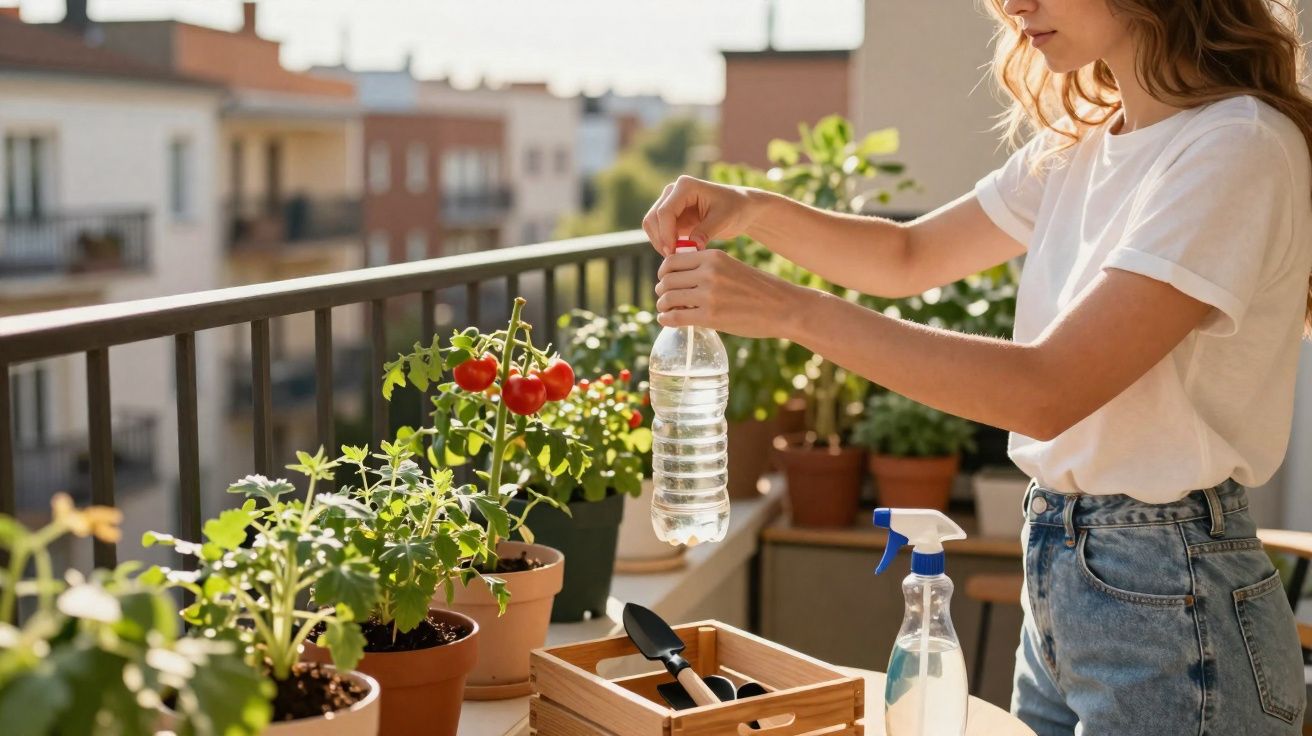
The first time I spotted them, I genuinely assumed someone had installed odd balcony art. Two plastic bottles, dangling on bits of string, sloshing with a murky mix of water and vinegar as they rocked in the summer breeze. Underneath was a small courtyard with a few pots of flowers-and a neighbour quietly cursing the swarm of flies and wasps that kept dive-bombing her lunches. She’d come across “grandma’s trick” somewhere: hang up vinegar bottles and, supposedly, every nuisance insect would keep away without a drop of chemicals. So she gave it a go. No aerosol, no shop-bought traps-just those slightly miserable bottles standing guard over her tomato plants.
A week later, she still couldn’t decide whether the idea was brilliant or simply… unattractive balcony décor.
And that’s where the real question starts.
Why are bottles of vinegar hanging from so many balconies?
Once your eye is trained to them, they seem to be everywhere: clear bottles (sometimes sun-yellowed), tied to railings or tucked into corners like miniature, forgotten experiments. Inside is usually water and vinegar-occasionally with a pinch of sugar, occasionally without. The promise is appealingly straightforward: fewer flies, less hassle from mosquitoes, and no more wasps crashing your evening drink.
It has the charm of a home remedy. Two ordinary kitchen staples, no poison, no gadgets-just a quick, low-effort fix.
People talk about vinegar bottles the same way they swap old household cures. “My aunt did this in the countryside and never had a single fly,” one neighbour claims, tightening the knot on her bottle. Someone else says it rescued her summer meals during a heatwave, when the communal bins downstairs turned into an insect theme park. Online, you’ll find endless “before/after” posts-usually accompanied by blurry photos of balconies and improvised bottle contraptions.
Then there’s the other camp: those who tried it, saw absolutely no change, and now dismiss it as pure balcony folklore.
So what’s actually happening? Vinegar has a strong odour that can disrupt or confuse certain insects-especially ants, and some types of fly. When vinegar is diluted with water (and sometimes sweetened), the smell can either put insects off or lure them in and drown them, depending on the species and the strength of the mixture. Mosquitoes are a different story: they mainly track people by our carbon dioxide, body heat and skin odours-not anything resembling salad dressing. Wasps, meanwhile, may investigate if the mix smells sweet enough.
That’s the point where the “magic trick” becomes a messy compromise: it can help in some situations, but it isn’t a universal repellent.
A quick reality check for UK balconies
On many UK estates and terraces, insect pressure isn’t just about your own flat. Nearby wheelie bins, overflowing communal waste areas, restaurant terraces, and even blocked gutters can easily outmatch what one bottle can do. Think of vinegar bottles as a small tool that might tip the balance locally-not something that rewrites the whole neighbourhood ecosystem.
How to use water and vinegar bottles on a balcony (without making it a running joke)
If you’re going to try water and vinegar bottles, it’s worth setting them up in a way that gives them the best chance of doing anything useful. Use a clean, clear plastic bottle and fill it one-third with water and one-third with white vinegar. Some people add a spoonful of sugar or a piece of overripe fruit to tempt fruit flies and curious wasps, turning it into a simple trap rather than a pure “keep away” solution. Make a few small holes near the top-just large enough for insects to crawl inside.
Hang or place the bottle away from where you sit, ideally close to the area where insects tend to gather.
You also have to maintain it, otherwise it turns into an unpleasant little science experiment. In warm weather, replace the mixture weekly: it can ferment and begin to smell like an abandoned compost bin. And if you live close to rubbish containers, eateries, or stagnant water, don’t expect miracles from one lone bottle on the railing. Let’s be frank: hardly anyone keeps up the routine perfectly every day.
The biggest mistake is treating a vinegar bottle as a magical shield-then leaving food uncovered, lights blazing, and windows open all night while hoping nothing uninvited turns up.
A note on safety and practicality
If you’ve got a windy balcony, make sure bottles are securely fixed so they can’t swing into windows, drip onto neighbours below, or spill where children and pets play. It’s also worth using bottles you can recycle afterwards, and swapping them out if they become brittle from UV exposure in direct sun.
“Vinegar bottles on the balcony are like spinach smoothies,” laughs an urban pest-control specialist I spoke with. “They won’t do any harm, they might help a bit-but if your whole plan depends on that, you’ll be disappointed.”
He sees them constantly during summer call-outs, often hanging above overflowing ashtrays, sticky tables, and uncovered food. “People want one simple trick to solve a messy situation,” he says. “Proper pest control is more of a routine than a miracle.”
- Close food sources – wipe up crumbs, cover plates, empty bins regularly.
- Reduce standing water – saucers under pots, buckets, and old containers attract mosquitoes.
- Combine methods – vinegar bottles, mosquito nets, and clean surroundings work better together.
- Watch the neighbourhood.
- Accept some life – a completely insect-free balcony is a fantasy, especially in summer.
Smart eco-hack or just balcony folklore about vinegar bottles?
The honest answer sits in the middle: part clever, eco-minded experiment, part mild nonsense. A bottle of water and vinegar on your balcony won’t turn your home into a fortress, and it can’t replace basic hygiene, sealed rubbish, or a decent mosquito screen. In a handful of specific situations, it genuinely can reduce fruit flies or discourage the odd curious wasp. For others, it’s largely psychological comfort-like a small talisman that says, “At least I’m doing something.”
Most of us recognise that feeling: a cheap, simple trick is easier to try than tackling the bigger picture.
And on a balcony, the bigger picture often includes other people’s habits, the building’s waste arrangements, the pub garden round the corner, or that stagnant gutter two properties away. Your vinegar bottle can be one part of the answer, but it won’t redesign the ecosystem. Maybe that’s fine. Perhaps the value is less about perfect “results” and more about experimenting, adjusting, speaking to neighbours, and comparing what actually works.
Sometimes one small bottle starts a surprisingly big conversation about how we choose to live alongside the living world around us.
| Key point | Detail | Value for the reader |
|---|---|---|
| Limited effectiveness | Works on some flies and wasps, barely touches mosquitoes | Helps set realistic expectations and avoid disappointment |
| Part of a bigger routine | Needs a clean balcony, sealed rubbish, and reduced standing water | Shows how to build a more complete, eco-friendly strategy |
| Low-cost experiment | Simple, non-toxic, easy to test and adjust | Lets readers try without risk and decide if it’s worth keeping |
FAQ
Question 1: Does a bottle of water and vinegar really repel mosquitoes on a balcony?
Not reliably. Mosquitoes are drawn mainly to body heat and carbon dioxide, not vinegar. The smell may slightly disrupt some of them, but it won’t prevent bites the way mosquito nets, fans, and long, light clothing can.Question 2: Is the vinegar bottle method safe for pets and children?
Yes-white vinegar and water are non-toxic. However, the mixture tastes foul and can sting eyes. Keep bottles out of reach and make sure they’re firmly attached so they can’t fall or spill where children and pets play.Question 3: Which vinegar works best: white, apple cider, or wine vinegar?
White vinegar is usually sufficient and cheaper. Some people find apple cider vinegar slightly more attractive to fruit flies due to its sweeter scent, but the difference tends to be modest.Question 4: How many bottles should I put on my balcony?
For a small balcony, one or two bottles is plenty to test whether it makes any difference. If you notice fewer flies near a particular corner, you can add another there-but lining the entire railing with bottles won’t deliver proportionate results.Question 5: Are there more effective eco-friendly alternatives to vinegar bottles?
Yes. Mosquito nets, fans (which disrupt flying insects), essential-oil candles used carefully, and consistently clean outdoor areas usually have a stronger effect. Vinegar bottles can be a small part of that puzzle, not the whole solution.
Comments
No comments yet. Be the first to comment!
Leave a Comment