
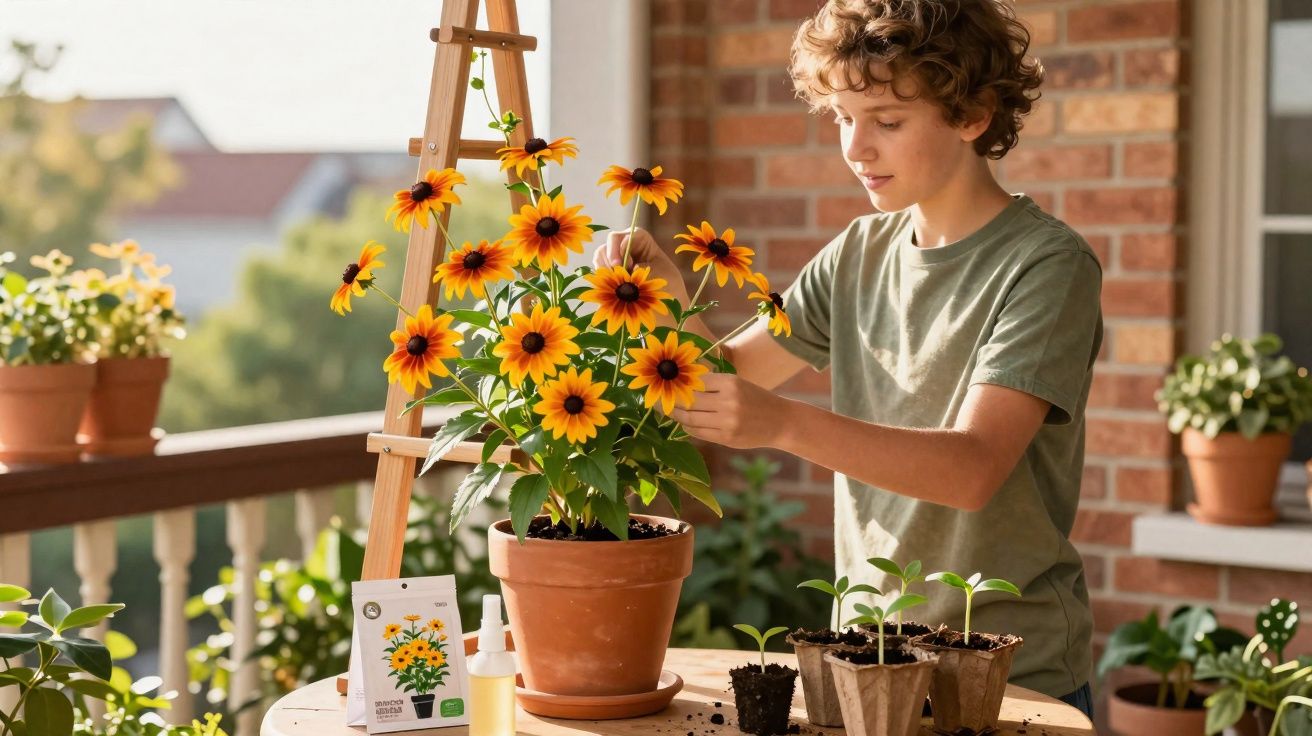
This climbing plant forgives almost every error a novice gardener might make.
The Black-eyed Susan vine grows quickly, flowers for a long time and needs very little attention. If you sow it at the right time, you can turn a balcony, patio or garden into a mass of flowers within just a few weeks - no green-fingered expertise required.
Why the Black-eyed Susan vine is such a beginner favourite
The Black-eyed Susan vine (Thunbergia alata) is one of the easiest climbers you can grow in a home garden. This annual plant scrambles upwards on canes, trellises or fences, producing a surprising amount of foliage and flowers in its very first season.
If you want visible results in the garden fast, this climbing plant is a brilliant choice - even if you have no prior experience.
Its key advantages for beginners are:
- rapid growth within a few weeks
- a long flowering period from summer into autumn
- flexible use in beds, containers or window boxes
- easy to sow: it germinates reliably with warmth and light
The plant twines upwards in a spiral, reaches impressive heights in a single season and covers arches, obelisks, trellis panels or simple wire fencing at remarkable speed. That is exactly what makes it so appealing when you want an attractive result with very little effort.
When to sow the Black-eyed Susan vine
You should begin in March. By then, indoor temperatures are usually warm enough for the seeds to germinate well. Ideal conditions are between 16 and 18 degrees Celsius, although slightly warmer is fine too, as long as the compost does not dry out.
Because the Black-eyed Susan vine is completely frost-tender, start it off indoors:
- sow from March onwards on a warm windowsill or in a propagator
- place the containers somewhere bright, but not directly above a radiator
- only move the plants outside permanently after the last frosts
Starting too early can cause young plants to become leggy on the windowsill, because the light in late winter is still weak. It is better to sow a little later and end up with sturdy, compact seedlings than to start too soon and get long, thin growth.
How to sow the Black-eyed Susan vine properly
You do not need specialist kit for sowing. Small pots, modular trays or simple seed trays are enough.
Step-by-step guide
- fill pots or trays with loose seed compost
- place one to two seeds in each pot
- cover very lightly with compost - no more than 1 centimetre
- water gently until the compost is evenly moist
- keep the containers warm and bright, but out of strong midday sun
The compost should always stay slightly moist, but never wet - waterlogging is the most common reason seeds fail to germinate.
Beginners often water too generously. It is better to water little and often than to drench the pots in one go. If the surface feels dry, that is the right time to top up with a little more water.
Warmth and light: the turbo boost for young plants
The Black-eyed Susan vine comes from the tropics of East Africa. It therefore loves warmth and sunshine. In a cool spare room with a north-facing window, it will grow much more slowly - or may stop altogether.
The best places for raising seedlings are:
- a bright south-facing window, slightly set back from the glass
- a small propagator above a radiator
- a bright, frost-free conservatory
The warmer and lighter the position, the stronger the seedlings will be. A draughty open window or a cold hallway will slow growth significantly.
After germination: prick out and plan a support
As soon as the seedlings have produced their first true leaves alongside the seed leaves, it is time to prick them out. At this stage, move each plant into its own pot filled with a richer compost.
How to prick out the seedlings
- gently lift the plants from the tray with a dibber or a spoon
- hold them by the leaf, not by the delicate stem
- place them into prepared pots and lightly firm the compost
- water in and protect them from direct midday sun for the next few days
Because the Black-eyed Susan vine climbs very quickly, it is worth putting a support in the pot early on - a small bamboo cane or wooden stick is enough at first. Later, once planted out, a larger support structure can take over.
Moving outdoors: only after the last frost
Even if the young plants look strong in April, they cannot cope with cold. Even slight frosts can destroy them overnight. Wait until the nights stay consistently frost-free - usually from mid-May onwards.
Before planting out, a short hardening-off period is well worth it:
- place the plants outside for a few hours during the day
- choose a sheltered, lightly shaded spot
- bring them back indoors in the evening
- three to five days is usually enough
This helps the young plants get used to wind, direct sun and changing temperatures, and improves their chances of establishing well outdoors.
The best position for abundant flowering
Once planted outside, the Black-eyed Susan vine shows what it can really do. The key is choosing a site that suits its preferences.
| Factor | Recommendation |
|---|---|
| Light | full sun to very bright, sheltered from wind |
| Soil | loose, humus-rich, free-draining, with no waterlogging |
| Container | large pot or trough with drainage holes |
| Water | evenly moist, but never permanently wet |
The plant works particularly well in containers with an obelisk, in window boxes with a grille, or on a simple trellis against a wall. If conditions are right, it quickly grows into a dense, flowering screen.
A sheltered position also helps the flowers last longer and keeps the foliage looking fresher. In very exposed spots, the stems can dry out more quickly and the plant may spend more energy recovering from wind than producing blooms.
Typical beginner mistakes - and how to avoid them
Many problems with the Black-eyed Susan vine can be traced back to just a few causes. If you know these common stumbling blocks, the plant is easy to manage.
- Planting out too early: cold weather or late frosts can set the plant back or kill it. Always wait until after the risk of frost has passed.
- Too little warmth during propagation: in cool rooms, the seeds germinate poorly and grow slowly.
- A site that is too shady outdoors: in partial shade, there are fewer flowers, and in deep shade the growth is often sparse.
- Waterlogging: persistently wet compost quickly leads to root rot, especially in saucers with no drainage.
- No climbing support: without something to grip, the stems tangle or trail unattractively.
If you pay attention to warmth, sun, free-draining compost and a simple support, you remove most of the difficulty from raising this plant.
Practical tips for balconies and patios
On a balcony, the Black-eyed Susan vine really shines as a living screen. In a larger container with a climbing frame, it quickly blocks unwanted views. Popular choices include varieties with orange-yellow or white flowers, which combine beautifully with other summer bedding plants.
Good companion plants are those with similar needs, such as:
- sweet peas on a trellis
- branching petunias in the foreground
- trailing pelargoniums around the edge of the container
This creates a layered display of flowers, with the Black-eyed Susan vine taking the height while the other plants fill in the surfaces and edges.
How to keep the plant healthy and keen to flower
During the season, it pays to check the shoots regularly. You can remove faded blooms as they appear, which encourages more buds to form. In pots and window boxes, a standard liquid feed for flowering plants helps prevent nutrients from running out too quickly.
If the plants are growing very densely, it does no harm to guide or tie in some of the stems. This helps the vines spread more evenly across the support and reduces bare patches.
Black-eyed Susan vine care: extra points worth knowing
Feeding is especially useful if the plant is grown in a container, because compost in pots contains only a limited supply of nutrients. A weekly feed at a low dose during peak growth is often enough to maintain good flowering.
It is also worth checking the drainage holes from time to time. If they become blocked by roots or compacted compost, excess water can collect in the base of the pot. That can undo all your careful watering, even if the surface looks dry.
What the name tells you - and what else you should know
The plant owes its unusual name to the dark centre of the flower. It resembles an eye looking out from the coloured petals. Depending on the variety, the colour range runs from strong orange and yellow to white and apricot.
As it is an annual plant, it will not survive winter outdoors. If you become particularly fond of it, you can collect seed from ripe seedheads and sow it again the following year. That way, the Black-eyed Susan vine can return to the garden season after season - and all without specialist knowledge.


Comments
No comments yet. Be the first to comment!
Leave a Comment