
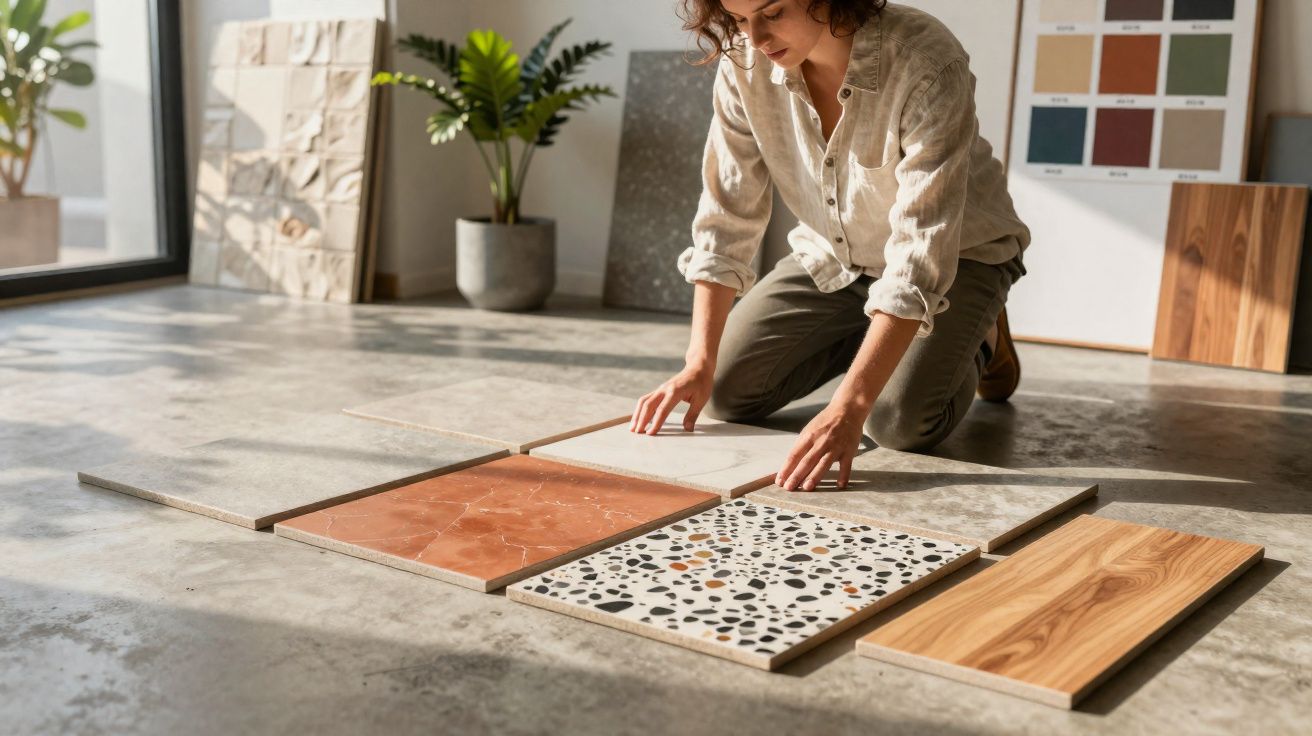
If you still head to the DIY store and automatically choose wood-effect tiles, you are already a step behind. In today’s interior schemes, other materials are taking the lead: real stone looks, reworked classics such as terrazzo and terracotta, and eye-catching colours are changing the way floors and walls appear in modern homes. What is especially interesting is that these new finishes do more than simply look premium - they say far more about the people who live with them.
Why wood-effect tiles are losing their appeal
For years, wood-effect tiles were the compromise of choice for anyone who wanted the look of parquet but needed the easy care of ceramic. Over time, though, they turned up everywhere: in new-build family houses, rental flats and holiday apartments alike. That is precisely why they feel tired in 2026.
- In many ranges, they look too synthetic and too uniform.
- The Scandi country-house look has already passed its peak.
- Interior designers are once again favouring materials that feel visibly honest and textured.
The new idea of luxury in living spaces is no longer based on imitation wood, but on stone, craftsmanship and bold colour.
Rather than copying a natural material as convincingly as possible, the emphasis has shifted to surfaces that openly express what they are - from rugged stone effects to glazed artisanal tiles.
Stone-effect floor tiles: a fresh take on natural stone
In 2026, authentic stone-effect flooring is attracting a great deal of attention. Travertine looks are particularly in demand, with warm sandy tones and irregular veining. They create a calm Mediterranean atmosphere without the need to install genuinely porous, delicate natural stone.
Where stone-effect tiles work best
- Bathroom: large formats in a light stone finish make compact rooms feel more generous.
- Living area: a continuous stone effect from the hallway into the main room creates a seamless look.
- Terrace: slip-resistant outdoor versions visually connect indoor and outdoor spaces.
The appeal lies in the combination: linen fabrics, furniture in natural wood and a few carefully chosen accents in black metal or brass make the stone surface feel contemporary rather than rustic.
Terracotta tiles are making a comeback
Terracotta floors, with their typical slightly irregular tiles, were long seen as a reminder of southern holiday homes. In 2026, they are returning - but in a more restrained, design-led form. Matte finishes, natural red tones and warm orange hues make them feel relaxed rather than kitschy.
Terracotta brings a warmth to a room that wood-effect tiles could only ever imitate.
This material works especially well in rooms where people spend a lot of time and where a barefoot feel matters: kitchens, kitchen-diners and conservatories. Paired with lime plaster on the walls and simple fitted furniture, the result evokes southern architecture without resembling a holiday-home copy.
Terrazzo tiles: a classic with a contemporary update
Terrazzo tiles remain a favourite because they balance retro charm and contemporary design so effectively. The embedded colour chips can be chosen to sit quietly within the same tone range or to stand out in deliberate contrast.
Why terrazzo stays so popular
- It feels right both in period kitchens and in minimalist lofts.
- The speckled pattern makes marks less noticeable.
- It works well as a continuous floor, but also as an accent surface in the bathroom.
Designers use terrazzo to zone spaces visually. For example, the kitchen area can feature terrazzo flooring, while the living zone uses a calmer stone effect - all without harsh transitions.
Craftsmanship in the spotlight: zellige and similar tiles
Handmade ceramic tiles with slightly uneven edges and vivid glazes are booming. Each tile looks a little different, and the way light reflects from the surface feels lively rather than perfect. Splashbacks in kitchens, vanity areas and shower zones benefit especially from this depth.
Instead of a flat printed wood grain, handcrafted tiles create a surface that looks slightly different every time you see it.
If you choose a calm floor, you can be bolder on the wall: a rich petrol blue, deep bottle green or warm honey yellow can bring energy into functional rooms without making them feel overloaded.
XXL tile formats: fewer joints, more spaciousness
Large-format tiles remain a core trend. Edge lengths of 100 x 100 cm or even 120 x 120 cm are no longer unusual. This reduces grout lines to a minimum, which is exactly what creates the sought-after gallery feel.
Advantages of large-format tiles
- Rooms appear larger and more tranquil.
- Fewer grout lines mean fewer dirt edges.
- They are ideal for open-plan layouts with seamless transitions.
In particular, the bathroom is a strong place to be bold with XXL formats: wall and floor surfaces feel almost monolithic, while taps and furniture come more clearly into focus. The result is closer to a spa than a conventional bathroom.
Colours in 2026: confidence in stronger shades
While wood-effect tiles tended to stay safely within beige and brown, the current direction is all about more deliberate colour statements. A soft, slightly rosy red can become the focal point of an entrance hall, while deep midnight blue gives dining rooms an almost theatrical quality.
| Colour | Effect | Suitable rooms |
|---|---|---|
| Softened red with a rosé tint | Welcoming, warm | Hallway, living room |
| Bright yellow | Energising, friendly | Kitchen, home office nook |
| Midnight blue | Elegant, calming | Dining room, bedroom |
| Combination of brown and old rose | Gentle, contemporary | Bathroom, guest WC |
Designers speak of “bold serenity”: the main surfaces usually remain natural and muted, while selected areas work with stronger colours. That keeps the room lively without making it feel restless.
Relief, texture and 3D: walls with depth
Tiles with a tangible surface are on the rise. Small ridges, waves, grooves and 3D patterns give wall areas in particular a new sense of tension. In side light from windows or spotlights, they cast shadows that alter the character of the room.
Textured tiles give even a very plain new-build bathroom an architectural feel - without any need for bright colour.
Matte, slightly rough finishes are especially popular, echoing raw earth or limestone. They fit the muted natural tones that many people are once again craving after years of grey minimalism.
What builders and renovators should pay attention to now
Anyone choosing a floor or wall finish in 2026 should do more than copy a trend - they should develop a clear idea of the room itself. A simple guiding question helps: what feeling should the space create - cool and spacious, warm and sociable, or calm and private?
- For open living areas, stone effects and XXL formats are a strong choice.
- For cosy zones such as reading corners, terracotta or warmer colours work well.
- For striking accents in otherwise restrained rooms, artisanal tiles with glaze or relief are ideal.
Practical considerations matter too: slip resistance, cleaning effort, underfloor heating and pets all play a part. Many of the newest collections are trying to bridge exactly this gap: they look like natural materials, yet remain technically robust enough for everyday life, family routines and home-working.
Lighting should also be planned alongside the tile choice. A surface with texture or subtle colour variation can look flat under harsh overhead light, but come alive with warm LEDs or carefully positioned side lighting. Likewise, grout colour has a major influence: a tone that matches the tile keeps large surfaces calm, while a contrasting grout can turn a smaller format into a more graphic feature.
If you still instinctively reach for wood effect, you risk ending up with a look that feels tired within a few years. If, however, you are willing to embrace genuine texture, colour and format, you can create rooms that still feel fresh in 2030 - without looking like a passing fad.

Comments
No comments yet. Be the first to comment!
Leave a Comment