
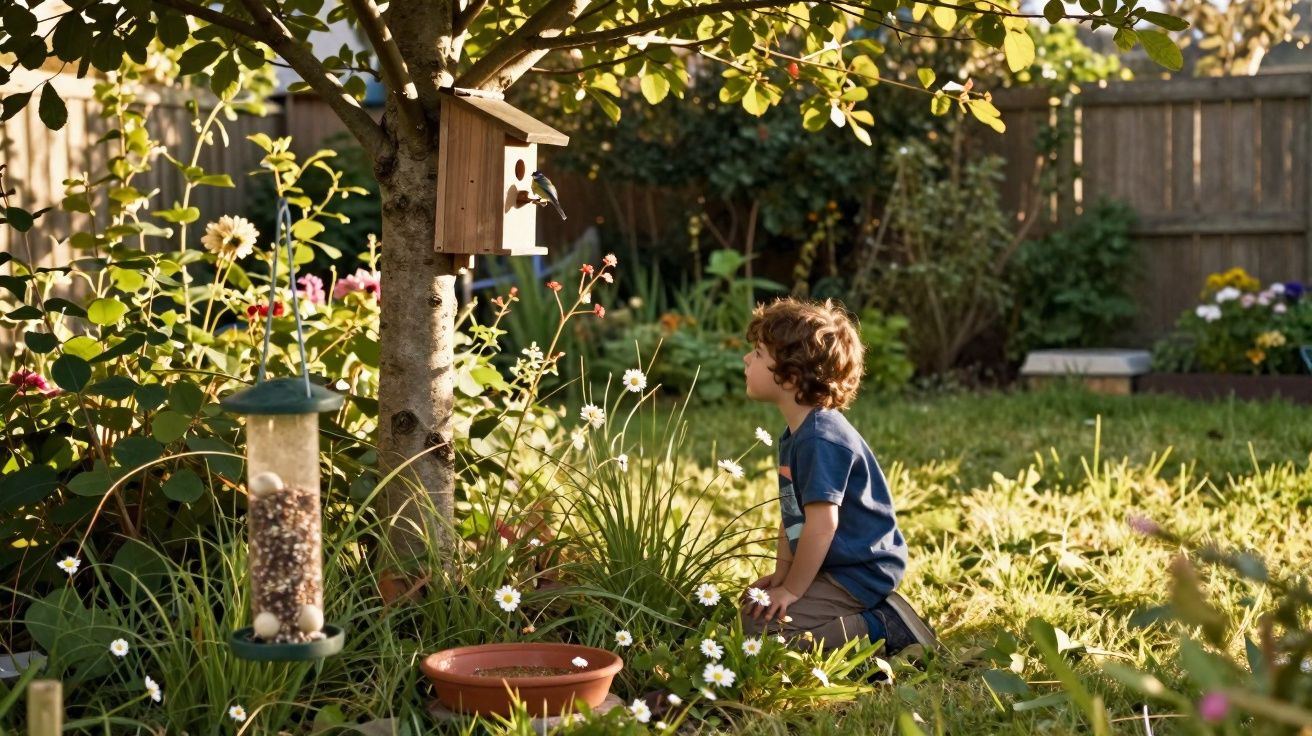
More and more people want their garden to be more than just a patch of green decoration; they want it to be a living space. Tits are especially popular. These small singers with their colourful plumage bring movement, sound, and real practical value to any garden - even right in the middle of a city. With a few simple measures, an ordinary lawn can become a secure refuge for these birds.
Why blue tits and great tits in the garden are such a lucky find
Tits are not only pleasant to look at. In everyday life, they are genuine helpers for anyone with vegetable beds, roses, or fruit trees in the garden. While we are asleep, they are busy at work, picking caterpillars, aphids, and other pests off leaves, branches, and buds.
A single family of tits can eat thousands of insects in spring - free plant protection without poison.
Anyone who supports tits is therefore also protecting their beds indirectly. Many amateur gardeners notice after just one season that they need to reach for sprays far less often. Instead of chemicals, a flock of birds does the job - and much more gently.
There is also the ecological side to consider: in many regions, native bird populations are declining. Paved surfaces, sterile gravel gardens, and a lack of hedges all take away habitats from animals. Every garden that becomes a little wilder and closer to nature acts like a small rescue island in a densely built-up area.
The heart of it: the right nesting box for tits
Anyone who wants tits to stay in the garden for the long term needs more than a bird feeder. The crucial thing is a suitable nesting box. Only when that is right will the birds move in and raise their young there.
Material and construction: natural rather than plastic
Untreated wood is best. A sturdy wooden board at least two centimetres thick is ideal, because it stops the inside from cooling down too much or overheating. Paints, stains, and pressure treatments have no place in a nesting box - the fumes can be harmful and the birds will avoid them.
- Material: untreated, weather-resistant wood; no plastic
- Roof: slightly sloped so rainwater runs off
- Front: hinged or removable for cleaning in autumn
- Interior: no perches - tits do not need them, but predators do
The size of the entrance hole is crucial. This is where a good nesting box is separated from a decorative item from a garden centre.
| Species | Recommended entrance-hole diameter |
|---|---|
| Blue tit | approx. 28 mm |
| Great tit | approx. 32 mm |
If the hole is too large, competing species or even starlings and sparrows may get in. If it is too small, the birds you want will stay outside. It is therefore well worth checking the specifications carefully before buying.
Location: a few metres can mean success or emptiness
Even the best nesting box will stay empty if it is hung in the wrong place. Tits may be used to people, but they still want a certain amount of safety distance.
- Height: at least two metres above the ground, preferably a little higher
- Protection from predators: not directly above bins, wall ledges, or fences that are easy to climb
- Direction: east or south-east is ideal
- Avoid constant sun: west- and south-facing walls can become very hot in summer
If the entrance faces east, it gets a little morning sun without the box overheating all day. At the same time, the harsher western wind is less likely to blow straight into the entrance hole. That reduces the risk of chicks getting cold or being soaked in heavy rain.
The best time to hang the box is between late winter and early spring. During this period, birds are actively searching for places to breed. If you are late, you can still put the box up: many tits use it as a safe sleeping place in autumn and winter.
A further benefit is that nesting boxes are most effective when there are several nearby natural features rather than a single isolated one. Trees, shrubs, and hedges give the birds routes to travel and places to shelter, which makes the whole area more attractive as a breeding territory.
How to create a tit-friendly garden
A single nesting box helps very little if the surrounding area is just closely cut grass and gravel. Tits need food, cover, and structure - not a sterile golf course outside the front door.
More shrubs, less stone waste
The easiest step is to plant native shrubs and reduce artificial stone surfaces. Berry-bearing shrubs provide food in autumn and winter and offer protection from cats, martens, and birds of prey.
Suitable species include, for example:
- Rowan
- Black elder
- Dog rose
- Privet, if it is not treated with pesticides
These plants naturally attract insects - and therefore tits. If you deliberately leave a corner of the garden to go a little wild, you go one step further: undergrowth, dead stems, and leaf piles are nurseries and winter shelters for countless small creatures.
A shallow water dish can also make a real difference, especially in dry spells and during hot spells. Tits need water for drinking and bathing, but the dish should be shallow and refreshed regularly so that it stays clean and safe.
Leaving some seed heads, stems, and fallen leaves in place through winter is another simple way to help. It keeps the garden looking more alive, and it provides insects with shelter - which in turn gives the birds another reliable food source.
Do not cut the lawn to millimetre perfection
A tightly trimmed lawn may look neat, but it feeds very little life. If the mower is used less often and some areas are allowed to grow longer, wild flowers, spiders, beetles, and caterpillars quickly return. That is exactly what tits need, especially during the breeding season, when they are constantly bringing food back for their chicks.
An “imperfect” garden brings more life, more birdsong, and less work - a clear win.
Feeding: support that helps in the right places
Many people only feed birds in winter. Specialists now also view modest year-round feeding positively, provided it is done sensibly. Tits benefit from it in particular, as long as they can still find natural food as well.
What really belongs in the feeder
Typical supermarket mixes are not always ideal. Better choices are more targeted products:
- Fat balls or fat rings without plastic netting
- Sunflower seeds, either shelled or in the shell
- High-fat mixes with chopped nuts, unsalted
Bread, seasoned leftovers, and salty nuts should be strictly avoided. These foods harm the birds and create a lot of mess.
The feeding station should be placed where cats cannot easily reach it, for example on a tall, smooth pole or hanging freely from a branch with plenty of space away from other climbing aids.
Care, risks, and common mistakes
Anyone who wants to support tits also takes on responsibility. A neglected nesting box can do more harm than good, because parasites and disease-causing organisms can build up.
Cleaning the nesting box
The best time to clean it is in late autumn, when breeding has finished. In most cases, it is enough to:
- Remove all old nesting material completely
- Brush the inside out while dry
- Rinse it with hot water if necessary, then let it dry thoroughly
Chemical cleaners should be avoided altogether. If you are unsure whether a late brood is still in the box, watch the entrance for several days beforehand - if there is no activity for a prolonged period, it can be cleaned safely.
Reduce hazards in the garden
Glass fronts, reflective windows, and tightly stretched football nets can become traps for many birds. Markings on large panes, slightly slack nets, and clearly visible boundaries on washing lines or garden toys reduce the risk significantly.
Domestic cats also play a major role. A bell on the collar helps a little, but it is no substitute for responsible management. If you keep your cat indoors during the breeding season, especially in the early morning, you protect many young birds.
How to bring tits closer to children and neighbours
A garden that is friendly to tits is an excellent way to get children interested in nature. Building nesting boxes together, checking feeding stations, or observing the birds’ behaviour all help create closeness and understanding of ecological relationships.
Projects are often easier to carry out with neighbours. If several gardens in one street hang up nesting boxes, leave hedges in place, and use fewer sprays, a real network of habitats is created. The birds use these areas intensively and spread out across several properties.
Perhaps the greatest advantage is this: when you experience tits regularly in your garden, you notice changes more quickly. If the singing stops or the birds seem weakened, it stands out. In this way, your own garden becomes a sensitive early warning system for the state of local nature - with nothing more than a nesting box, a few shrubs, and the willingness to make the outdoors a little more alive.


Comments
No comments yet. Be the first to comment!
Leave a Comment