
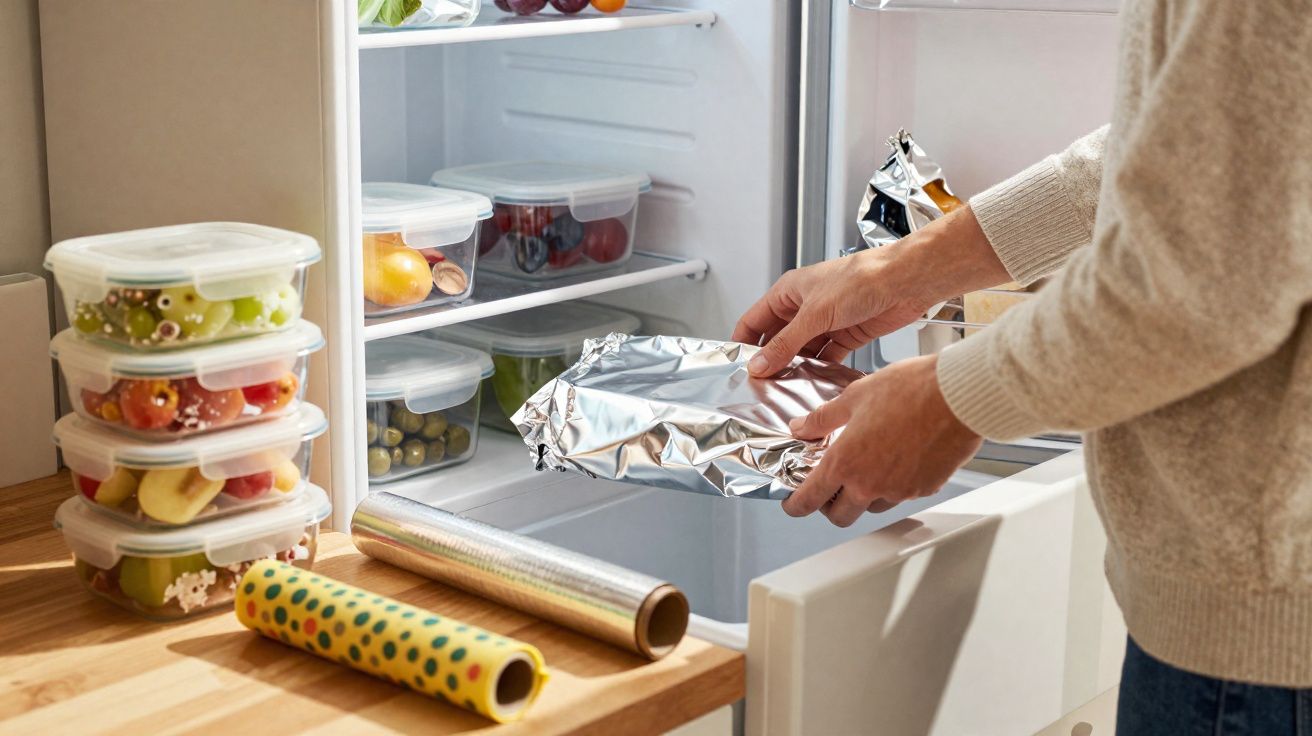
But how healthy and sensible is that, really?
A piece of roast, half a cake, two bread dumplings - quickly wrapped in aluminium foil and straight into the freezer. That is exactly how things are done in countless kitchens. At the same time, doubts are growing: does the metal affect the food? Are there health risks? And are there better options for everyday use?
Aluminium foil in the freezer: technically fine, but not without drawbacks
From a physical point of view, there is little to object to when it comes to aluminium foil in the freezer. Aluminium copes with sub-zero temperatures without difficulty, does not become brittle and, of course, does not melt. For that reason, many guides list aluminium foil as an officially acceptable wrap for frozen storage.
The real risk in the freezer is rarely the metal itself, but poor wrapping with holes and tears.
That is where the practical problem begins: a single thin layer of aluminium foil tears easily. Sharp bone edges, baking tray corners or other frozen items in the compartment can damage it. Even tiny holes let in air and odours, which encourages so-called freezer burn.
Freezer burn is not poisonous, but it does noticeably change taste, smell and texture. Food becomes dry, stringy and unappetising. For longer storage periods, sturdy freezer bags or airtight containers are clearly the better choice.
When aluminium foil works well for freezing
For some foods, aluminium foil is still a reasonable option - especially if they are dry, firm and not meant to stay in the freezer for months.
Foods suitable for aluminium foil in the freezer
- raw meat without marinade, such as steaks, chops or chicken breast
- raw fish without a strongly seasoned marinade
- bread and bread rolls
- sweet yeast plaits, brioche and dry cakes such as plain sponge or bundt cake
- cooked leftovers with little salt and little sauce
Preparation is crucial. Warm food should not be wrapped in foil. It must be allowed to cool completely first, otherwise condensation and ice crystals will form. That damages the texture and can encourage bacterial growth before the food has fully frozen.
Well wrapped in this context means the foil should lie tightly against the surface, with as little trapped air as possible. Anyone who adds a freezer bag or container on top increases the seal significantly and reduces the risk of tearing.
A few extra habits also help in everyday use: portion food before freezing whenever possible, and label every package with its contents and the date. That makes it easier to rotate stock, avoids forgotten items at the back of the freezer and helps prevent waste. A freezer that stays organised also uses space more efficiently and makes meal planning much simpler.
These steps make all the difference
- Always let food cool completely.
- Wrap the aluminium foil tightly and press out the air.
- Optional: place the parcel in a freezer bag or put it in a container.
- Clearly label the package with the contents and freezing date.
If you use aluminium foil as an extra protective layer rather than the only wrap, many of its disadvantages are reduced to a minimum.
When aluminium foil is not a good idea for freezing
The critical issue with aluminium is not sub-zero temperatures, but chemical reactions. Certain foods attack the metal, especially if they are very salty or very acidic. In those cases, small amounts of aluminium can migrate into the food.
Experts have pointed out for years that a high intake of aluminium may disrupt various bodily functions over the long term, including the nervous system. A clear direct link to illnesses such as Alzheimer’s has not been conclusively proven, but caution still clearly outweighs convenience.
Foods that should not go straight into the freezer in aluminium foil
- tomatoes and tomato sauces
- citrus fruits and their juices
- dishes with lots of vinegar, such as salads or pickled vegetables
- very salty cured meats such as salami, bacon or raw ham
- very salty cheeses or feta in brine
- strongly marinated meat or fish with plenty of salt, citrus or vinaigrette
For these products, freezer bags, glass containers or plastic boxes are better options. They should be approved for freezer temperatures and close tightly. If aluminium foil is used at all, it should only be as an outer layer around food that is already suitably packaged.
Experts also keep stressing one point: aluminium foil does not belong in the microwave. For defrosting in the microwave, use microwave-safe containers, plates or special covers. Frozen parcels wrapped in foil should be fully unwrapped beforehand.
Shelf life, hygiene and common freezing mistakes
Whatever the material, problems arise when food is frozen too late. The freezer stops most germs from multiplying, but it does not eliminate them. If food that is already spoiled or borderline has been frozen, the problem has merely been locked in.
Leftovers should generally go into the freezer within one or two days. Bread, cakes and raw meat should ideally be portioned and wrapped straight after buying or baking. Small portions freeze through more quickly and are easier to take out later.
| Product | Suitable packaging | Recommended storage time |
|---|---|---|
| Raw meat, unseasoned | Aluminium foil plus bag or container | 3–6 months |
| Bread and bread rolls | Aluminium foil or bag | 1–3 months |
| Dry cake | Aluminium foil plus container | 2–3 months |
| Tomato sauces | Freezer bag or container, no aluminium foil | 3 months |
| Very salty sausages or cheese | Freezer bag or container, no aluminium foil | 1–2 months |
Sustainable alternatives: how to cut down on aluminium foil
Many households want to reduce their use of single-use aluminium foil for environmental reasons. For the freezer, there are now several long-lasting options that work well in everyday life.
- reusable silicone bags that can be sealed airtight
- stackable glass containers with lids for finished dishes and sauces
- sturdy plastic boxes without plasticisers, suitable for freezer temperatures
- empty screw-top jars for soups, stocks and puréed vegetables, leaving room for expansion
Anyone who freezes food in portions regularly should ideally choose a few fixed container sizes. That makes prepared meals easier to fit into daily routines: one jar of Bolognese for two people, one box of rice for a single meal, or four slices of bread in a bag for the following weekend.
Practical examples from the kitchen
A typical case: there is some roast left over from Sunday lunch. If it is only lightly salted, it can be wrapped tightly in aluminium foil after cooling and then placed in a bag. In that form, it will keep for several weeks without any major loss of quality.
The picture is different with lasagne in a strongly flavoured tomato sauce. In that case, the dish is better placed directly into a glass or plastic dish with a lid, without any contact with aluminium. The same applies to marinated feta or a spicy sausage platter from a buffet - they should be packed airtight, but not in aluminium foil.
If you take a moment to question your freezer routine, one thing becomes clear quite quickly: aluminium foil can remain useful as a stopgap or an extra layer in the freezer. For many purposes, reusable glass, plastic or silicone containers are more practical, safer and more environmentally friendly in the long run.





Comments
No comments yet. Be the first to comment!
Leave a Comment