
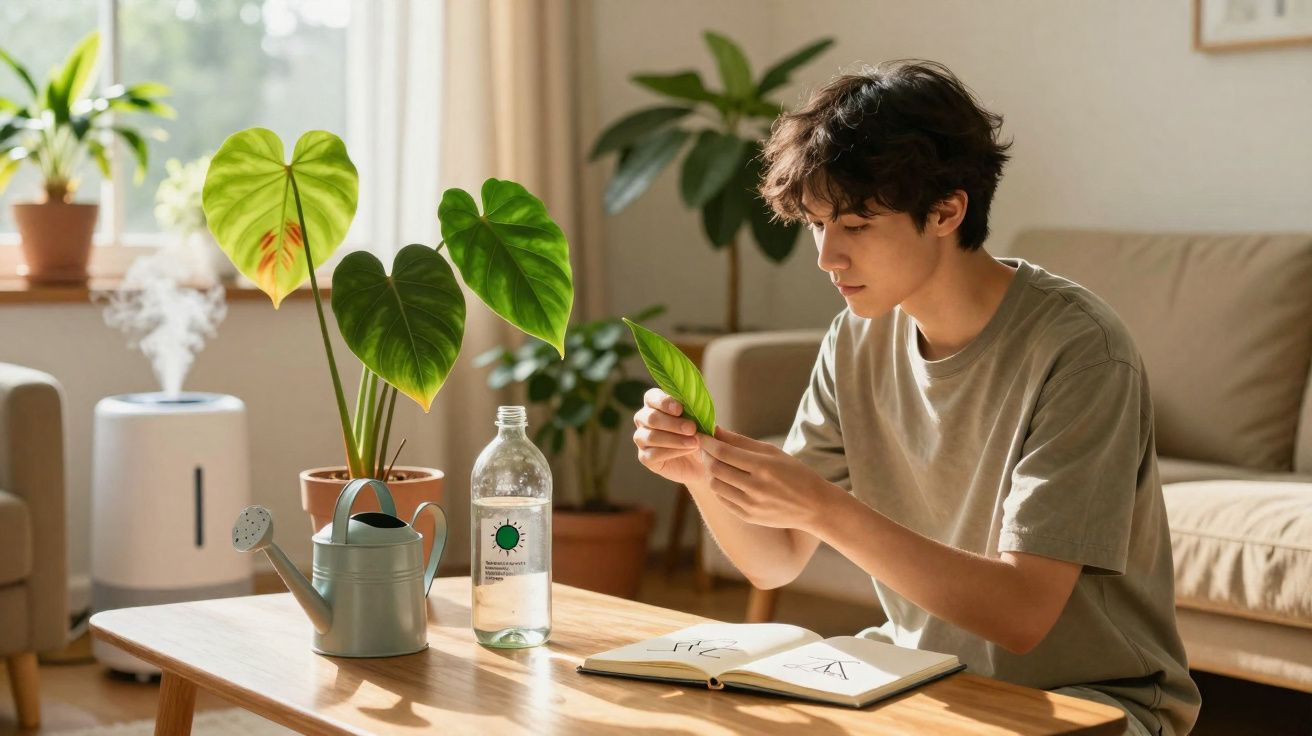
Your indoor jungle can look fine one week and oddly worn-out the next.
For many houseplant owners, the first clue is the same: crisp, brown leaf tips that feel like a gentle telling-off. But the fix is rarely as simple as “water more” or “water less”. Those tiny, dried-out edges are often the earliest visible sign that something in your plant’s environment is out of balance - and they can reveal far more about your home conditions than you might expect.
Brown tips on houseplants: what they’re really telling you
When a leaf tip turns brown, think of it as a built-in alarm. Tips sit at the far end of the plant’s supply line, so they’re the last area to receive moisture and nutrients. If anything slips - stress, low humidity, salts building up, roots struggling - the damage often shows up there first.
One slightly browned edge on an older leaf usually isn’t a disaster. Plants naturally retire leaves as they mature. The bigger warning sign is when multiple leaves begin crisping together (especially newer ones), or when the brown area gradually advances further into the leaf.
Brown tips aren’t merely cosmetic - they’re often your earliest and clearest opportunity to catch a problem while it’s still manageable.
Pay attention to the pattern. A few narrow, stable brown margins on older foliage often points to normal ageing. Browning that spreads, paired with drooping, yellowing or noticeably slower growth, suggests ongoing stress that needs correcting.
Dry indoor air: the quiet culprit in modern homes
It’s easy to assume brown tips mean the compost is too dry and reach for the watering can. Frequently, though, the soil isn’t the issue - the air is.
Winter central heating and summer air conditioning can regularly drag indoor humidity below 40%. Many popular houseplants are tropical species adapted to forest conditions where humidity commonly sits at roughly 70% or higher. In comparison, a typical living room can feel desert-dry to them.
Plants that show low-humidity stress first
Certain houseplants tend to complain quickly:
- Patterned foliage plants such as calatheas and prayer plants (marantas)
- Ferns, particularly Boston and maidenhair varieties
- Alocasias with large, thin leaves
- Monstera deliciosa, especially as it matures and the leaves expand
- Fine-leaved ficus such as Ficus benjamina
If any of these are kept in a warm room, close to a radiator, or in the direct stream of a fan or AC unit, brown tips are very likely sooner or later.
Low humidity pulls moisture from leaf edges faster than the plant can replace it, so the outermost cells dry out and die.
Water quality: when tap water slowly undermines your plants
If you live in an area with hard tap water, mineral build-up becomes a prime suspect. Chlorine and fluoride can upset more sensitive plants, but for many houseplants the longer-term issue is limescale from calcium-rich water.
With time, minerals accumulate in the potting mix. A white crust on the compost surface or around the rim of the pot is a strong giveaway. These deposits can disrupt root function and shift the pH of the growing medium. When roots can’t take up water evenly, leaf tips are often where the shortage is revealed first.
Simple checks to see whether your water is to blame
- Check for white, chalky deposits on the compost surface or the pot.
- Notice whether sensitive plants brown despite careful watering and reasonable humidity.
- Try a quick test: water half your plants with rainwater or filtered water for a month, keep the rest on tap water, then compare the new growth.
If fresh leaves in the “filtered water group” stay clean while the others continue to brown, your tap water is probably contributing to the problem.
Pots and potting mix: the overlooked partnership
Even when humidity is good and water quality is acceptable, brown tips can still appear if roots don’t have enough space or oxygen. A pot that’s too tight, or a potting mix that has degraded into a heavy, soggy mass, restricts airflow and makes moisture movement unreliable.
Classic signs of a rootbound plant include roots spiralling around the inside, poking out of drainage holes, or forming a firm plug when you slide the plant from its pot. In that state, the plant can dry out very quickly after watering and struggle to move moisture all the way to the leaf tips.
When to repot and what to look for
| Sign | What it suggests |
|---|---|
| Roots coming through drainage holes | The pot is too small and growth is restricted |
| Water runs straight through | The mix is exhausted and has become water-repellent |
| Plant wilts a day after watering | There isn’t enough substrate to hold moisture |
| Hard, compact root ball | Time for a slightly larger pot and fresh mix |
An increase of just 2–3 cm in pot diameter is usually plenty. Going too large can keep the mix wet for too long, raising the risk of root rot - and yes, that can also end in those familiar brown tips.
Light levels: caught between deep shade and scorch
Light is rarely the first thing blamed for crispy tips, but it strongly influences how resilient a plant is. In very low light, plants produce weaker growth that’s more prone to dry air, pests and watering mistakes. At the other extreme, harsh midday sun can burn leaf edges, leaving them brown and papery.
Low light doesn’t usually “cause” browning by itself - it often makes the plant too sluggish to handle other stresses.
If your plant leans hard towards the window or produces thin, stretched growth, it’s asking for more light. If leaves nearest the glass fade, curl, or develop brown scorched patches, the exposure is too intense and direct - particularly through south- or west-facing windows.
Adjusting exposure without shocking your plant
Shift sun-loving plants nearer to bright windows, but soften harsh midday rays with a sheer curtain. For shade-tolerant plants, aim for bright, indirect light rather than a dim corner. Make changes gradually (a little closer each week) to avoid further stress and damage.
Watering routines: walking the line between drought and drowning
Brown tips caused by watering errors can look deceptively similar whether you’re watering too little or too often. Underwatering dries the outer cells first. Overwatering deprives roots of oxygen; compromised roots then fail to supply water to the leaves, producing a similarly “dehydrated” look at the edges.
Building a plant-by-plant watering rhythm
A single schedule for every plant rarely works well. Instead, assess each one on its own terms:
- Lift the pot: if it feels very light, the mix is often dry.
- Check the top 2–3 cm of compost with your finger instead of relying on the calendar.
- Notice leaf feel: soft, limp leaves can happen with both drought and waterlogged roots, so always pair this with a soil check.
Treat watering as an ongoing conversation with each plant, not a rigid timetable stuck to the fridge.
Remember that needs shift through the year. Many houseplants slow down in winter and use far less water, even in a heated flat.
Practical fixes to stop brown tips in their tracks
Raising humidity where it matters
If you keep lots of humidity-loving plants, a small electric humidifier placed near the group is one of the most effective options. For tropicals, aim for roughly 50–60% humidity; succulents and cacti generally prefer a bit less.
For a budget approach, cluster plants together and set them on trays filled with pebbles and a shallow layer of water - with pots kept above the waterline. As water evaporates between the stones, it creates a more humid pocket around the foliage.
Misting feels helpful, but the benefit is short-lived. Unless you spray repeatedly throughout the day, it rarely changes overall humidity for long.
Improving water quality without making it complicated
If your tap water is very hard, consider:
- Collecting rainwater in a clean container
- Leaving tap water to stand for 24 hours so chlorine can dissipate
- Using a basic filter jug
Water with liquid that’s close to room temperature. Very cold water on warm roots can shock the plant, triggering stress that may later show up at the leaf tips.
Flushing built-up salts from the potting mix (often missed)
Even with decent water, fertiliser residues and minerals can build up over time and irritate roots. Every so often, take the plant to a sink or shower and flush the potting mix thoroughly with room-temperature water, allowing it to drain completely. This can reduce salt accumulation that contributes to tip burn, especially in fast-growing plants fed regularly.
Dealing with tips that are already brown
Dead leaf tissue won’t turn green again, but you can neaten it without harming the plant. Use sharp, disinfected scissors and trim to match the leaf’s natural outline, leaving a fine brown border so you don’t cut into living tissue.
Don’t remove an entire leaf if only the edge is damaged - any remaining green area still contributes energy to the plant.
Building a routine that prevents future damage
Experienced plant owners tend to rely on small, consistent habits rather than dramatic “rescues”. One practical approach is to group plants with similar needs together, so you’re not juggling multiple watering styles on a busy weeknight.
Why a simple plant log can change everything
A note on your phone or a notebook on the windowsill can record when you water, repot or fertilise each plant. After a couple of months, patterns become obvious: the peace lily that droops every six days in summer, the monstera that dislikes fertiliser in winter, the fern that struggles whenever the heating goes on.
It also helps you connect cause and effect. If brown tips appear about a week after every heavy feed, the fertiliser may be too strong or too frequent, lightly scorching roots and, in turn, the delicate leaf tips.
Reading stress signals before they escalate
When you water, take a moment to check each plant’s overall posture, the compost surface, and the undersides of leaves. Fine webbing, sticky residue, or sudden pale patches can indicate pests or sun stress - issues that often accompany brown tips.
Catching these early means you can reposition the plant, rinse foliage, or adjust humidity before large sections of leaves are damaged. It’s preventative care, not emergency treatment.
Extra insight: why some species will always be “drama queens”
Even with excellent care, calatheas and maidenhair ferns, in particular, can develop brown edges after small changes - moving rooms, a cold draught, or one missed watering. Their thin, highly active leaves respond rapidly to shifts in conditions.
That doesn’t mean you’re failing. It reflects the stark difference between a rainforest floor and a winter flat with radiators and double glazing. A healthier mindset is to prioritise fresh, clean new growth rather than chasing perfection in older leaves.
When to worry that brown tips mean something bigger
The odd brown tip on older leaves is normal. Concern is warranted when brand-new leaves unfurl already damaged, large sections brown rapidly, or the plant stops growing for months.
In that situation, combine the checks above: inspect roots, replace exhausted potting mix, reconsider light, measure humidity, and take a hard look at your tap water. A short, methodical review often uncovers a clear chain of causes behind those tired brown edges - and gives your plant a real chance to recover rather than merely cope.


Comments
No comments yet. Be the first to comment!
Leave a Comment