
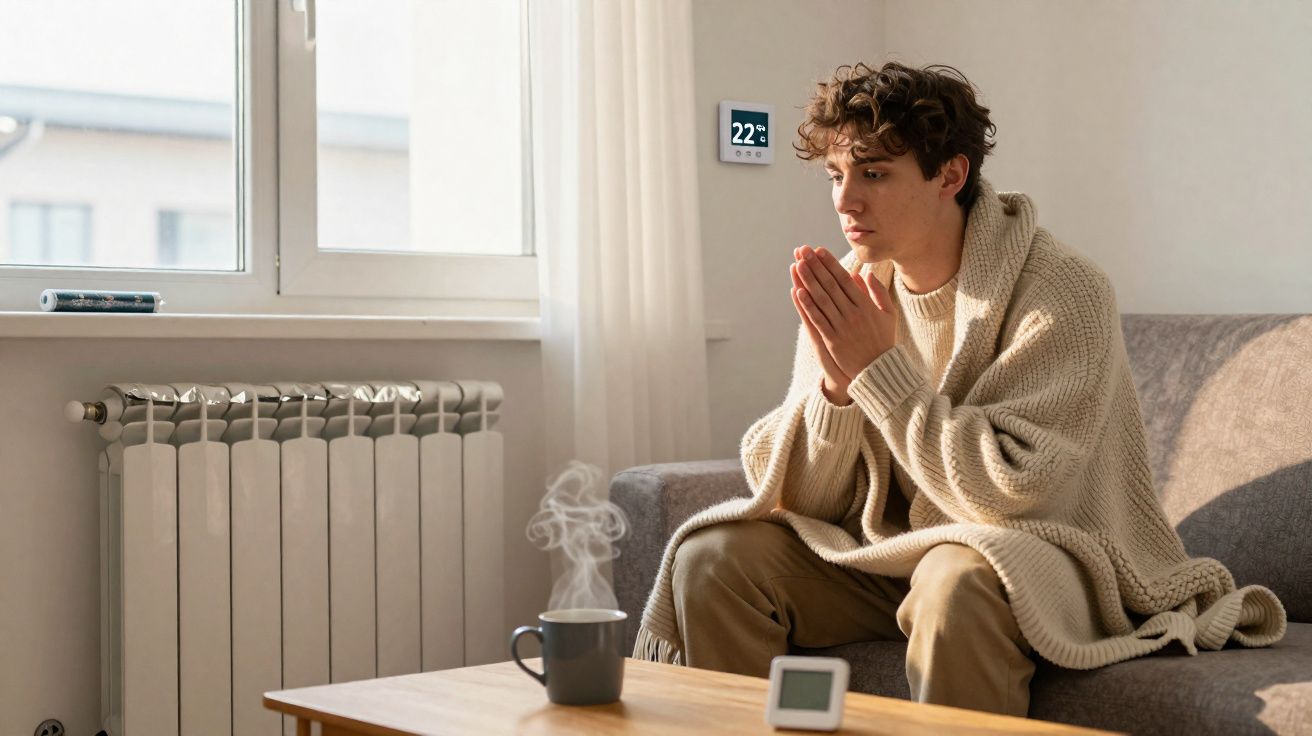
There is a very specific British kind of winter misery: you’re on the sofa wearing three jumpers, double socks and a grim expression, while the thermostat sits there smugly insisting it’s 21°C. The boiler has kicked in, the bills are climbing, yet your toes feel as though they’ve been left at a bus stop in January. You nudge the dial up, get a brief flicker of hope, and then the draught slides back across the floor and you’re reaching for the blanket again. The heating is “on”, but the house still feels like it’s quietly working against you.
Most of us start with the usual suspects. We blame the weather, the boiler, and-briefly-our own lack of understanding. But when you’re paying £200+ a month and still shivering in your own living room, irritation turns into something sharper. The reason some homes feel comfortable and others never quite do isn’t only about shiny tech or insulation charts. A lot of it comes down to small, almost invisible decisions in the rooms you actually sit in. Once you notice them, it becomes impossible to ignore them.
Thermostat says 22°C: why do I still feel cold?
If you’ve ever checked a smart thermostat app, seen a perfectly respectable number and still pulled your sleeves over your hands, you’re in good company. A thermostat only reports part of the picture: it measures air temperature at a single point (often a hallway, or somewhere that feels oddly arbitrary), while your body judges comfort using much more information. Your skin is constantly “reading” the air, the walls, the floor, the windows-and even the fabric of the sofa.
When your walls and windows are cold, they steal heat from you without making a sound. You can be sitting in 21°C air and still feel chilled because your body is radiating warmth towards those colder surfaces. It’s why New Build Nick down the road can lounge in a T-shirt at 19°C, while your Victorian terrace feels like a campsite at 22°C. The thermostat isn’t lying; the room just isn’t behaving.
There’s also a very typical UK layout problem: a warm hallway and a cold living room. If the controller is in the part of the house nobody actually uses, it can switch the heating off once the hallway is comfortable-while your sofa corner remains a tiny Arctic outpost. No one explains this at move-in. You just assume your circulation is terrible and put on another cardigan.
The hidden culprits: cold surfaces and sneaky draughts
Radiators can be piping hot and still lose the fight if the rest of the room is undoing their work. Single glazing-and some older double glazing-lets heat leak out relentlessly, and you can feel the “cold fall” coming off the glass even when the air seems fine. You may not notice it consciously, but your body reacts: you shift away from the window, hunch your shoulders, and tuck your feet under you. Your posture becomes a weather report.
Then there are the gaps you don’t hear but absolutely feel: under doors, around letterboxes, through keyholes, and up through floorboards. A thin ribbon of cold air under the living-room door can flatten a warm room into a lukewarm one within half an hour. It’s the difference between feeling supported by your home and feeling as though you’re renting warmth from it on sufferance.
Fast fixes for draughts you can feel but not see
Often the quickest win is draught-proofing, not fiddling with the boiler. A brush-style draught excluder on the front door, a keyhole cover, a letterbox brush, and foam strips around leaky window frames can transform the feel of a room in a single day. It’s not glamorous DIY and you won’t be posting it on Instagram, but you’ll notice it when you sit still for ten minutes and your ankles stop complaining.
Old timber floors with gaps are both beautiful and unforgiving. Dropping a thick rug in the worst spot isn’t “cheating”; it’s basic survival. If you want to go a step further, flexible fillers designed for floorboard gaps can be pressed in over a weekend. None of this will turn your home into a Grand Designs showpiece-it simply stops the heat you pay for drifting politely out to the street.
When the radiator exists, but the warmth never reaches you
We don’t talk enough about radiator placement and radiator blockage. In plenty of British homes, radiators are enthusiastically covered by sofas, heavy curtains, or a sideboard that hasn’t moved since 2004. The heat is being produced, but it’s getting trapped behind fabric and furniture, effectively creating a private sauna for the wall while the rest of the room stays oddly flat and cool.
If you sit with your back to the radiator, you’re effectively functioning as the world’s most expensive heat shield. You get a hot spine and a cold nose, which is a uniquely infuriating combination. Simply pulling furniture 5–10 cm away from the radiator can release enough heat to make the room feel genuinely different-not necessarily warmer “on paper”, but warmer in the way your body experiences it.
Small radiator tweaks that make a big difference
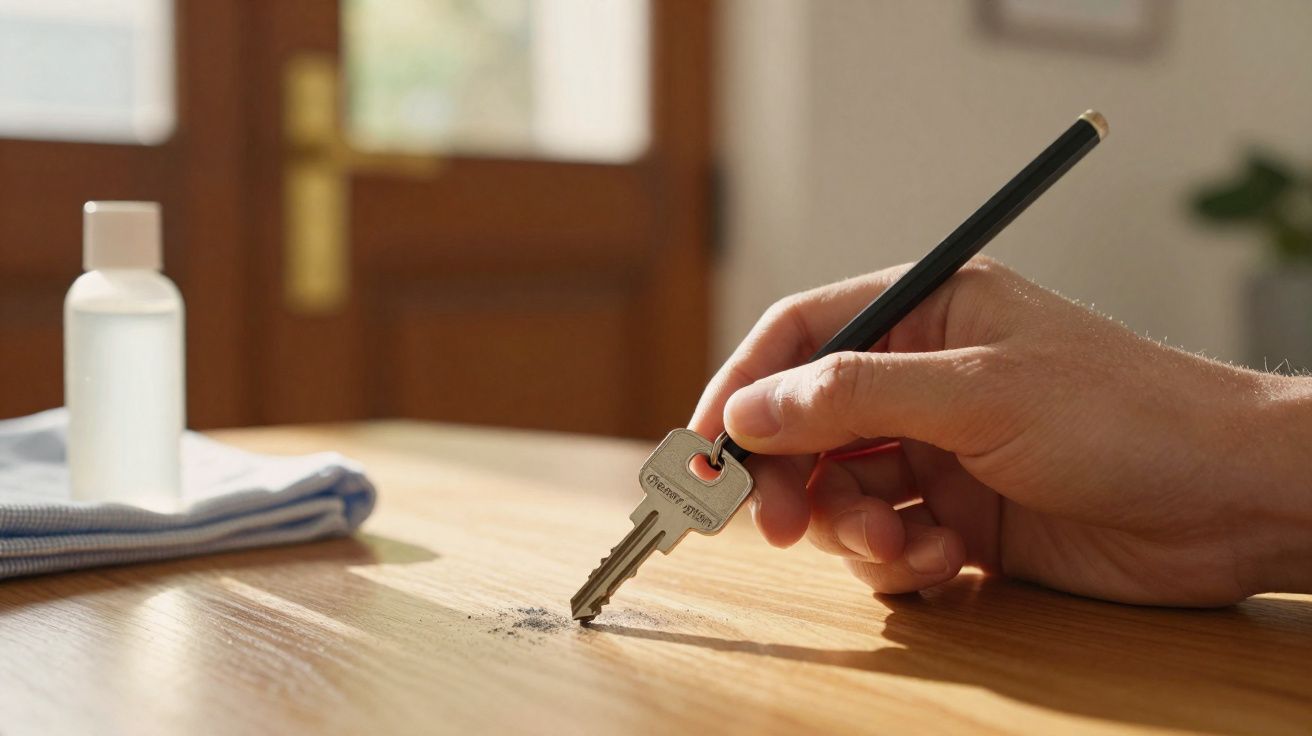
Bleeding radiators is the classic job everyone knows they should do and then somehow never gets round to. If the top of a radiator is cooler than the bottom, trapped air is reducing its output-like driving with the handbrake slightly on. A radiator key, an old towel, and five minutes can bring it back to full performance.
If a radiator sits on an external wall, reflective foil panels behind it can bounce heat back into the room rather than letting it soak into the brickwork. They’re inexpensive and, once fitted, easy to forget about.
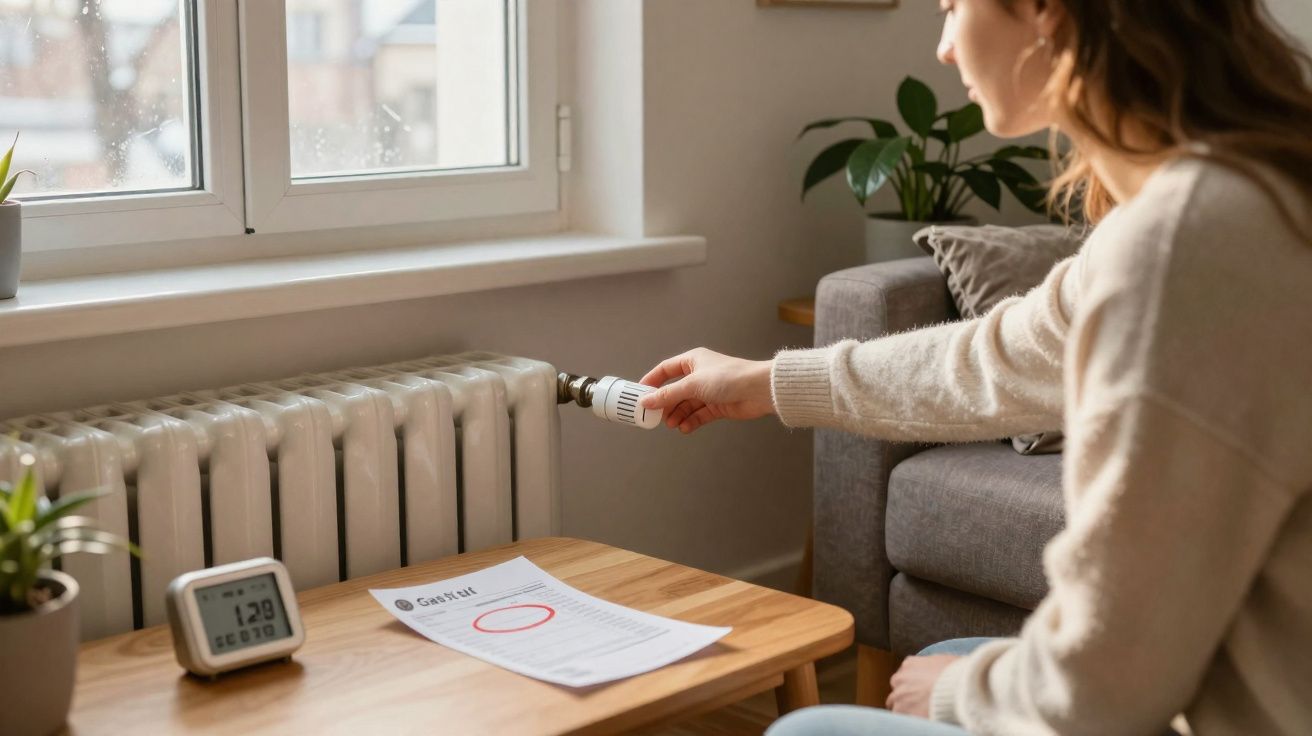
Also pay attention to thermostatic radiator valves (TRVs). If a TRV is stuck, half-closed, or set oddly in one room, your system can become unbalanced-sending too much heat upstairs and not enough to where you actually live: the sofa, the kitchen table, or that one chair by the window where you scroll your phone at midnight.
The “cold feet, warm face” problem (and why it happens)
Most of us have had the moment where your upper body is fine, but your feet feel like ice cubes pressed against the floor. That’s your body flagging uneven temperatures from top to bottom. Warm air rises and gathers near the ceiling, leaving the part of the room you occupy-knees down-slightly abandoned. The thermostat can read 21°C while your feet sit in a much colder pocket of air.
High ceilings make this worse. The warm air floats up to admire the cornicing while you’re down below searching “is it normal to wear slippers and boots?” Underfloor insulation is the dream fix, but it’s not quick. The faster approach is layering: a thicker rug, underlay, and actually wearing slippers rather than pretending socks count as “properly dressed”.
Cheap ways to reduce temperature layering
A surprisingly effective trick is a small fan set low and slow, gently pushing air towards the radiator or stove. You’re not trying to create a gale-just encouraging circulation so the warm air doesn’t sit smugly at the top of the room. If you already have one, a ceiling fan set to “winter” mode can do a similar job by pushing warm air down.
Zoning helps as well. If you spend 80% of your time in two rooms, prioritise those. Close internal doors so heat doesn’t drift into hallways you barely use, and allow the rooms you actually occupy to become properly and evenly warm. It isn’t defeat to admit your home is partly seasonal; it’s realism-and it stops you playing musical chairs to find the one non-draughty spot.
The emotional cost of a home that never feels warm
A cold-feeling home creates a quiet, grinding tiredness. You’re not dramatically shivering; you’re simply never fully at ease. Your shoulders stay slightly raised, your jaw a bit clenched, your movements smaller. The boiler fires in the background while you sit under a blanket scrolling your phone, and an odd guilt creeps in: you’re paying for heat-so why doesn’t it feel like comfort?
It also changes your routines. You stay in bed longer because stepping onto that freezing floor feels like a hard no. You put off cooking because the kitchen is consistently the coldest room. Even having friends over can trigger low-level panic: will they politely ignore it, or will they joke about your “freezer flat” while keeping their coats on?
Underneath all of that is the money worry. Your bills say “high usage”, but your body says “not enough warmth”. That mismatch feels unfair in a way that’s difficult to explain. A house that won’t warm up doesn’t just affect your temperature-it eats away at your sense of safety at home.
When the problem is in the walls: heat loss you can’t out-run
Some homes-especially older ones-lose warmth faster than you can comfortably replace it. Solid walls, an uninsulated loft, and bare suspended floors over a cold void can all behave like giant radiators to the outside world. You turn the thermostat up, the boiler roars, the radiators glow… and within half an hour of switching it off, the warmth has vanished as though someone opened a window. It’s like trying to fill a bath with the plug out.
This is where the long-game work matters: loft insulation, cavity wall insulation (where suitable), and adding insulation boards beneath new flooring during renovations. It’s not “fast”, and it can be costly, but it changes the personality of the house. Heat stops sprinting outdoors, and the thermostat can finally act like steady steering rather than an emergency lever.
There are halfway options too. Thick, lined curtains over windows-and even over external doors-make a clear difference. Some people install a curtain rail above a particularly cold front door and pull a curtain across in the evening; it looks charmingly old-fashioned and works shockingly well. Draught lobbies, door curtains, and secondary glazing film might not look pretty on an architect’s plan, but they are kind to human skin.
Two extra checks most people skip: humidity and ventilation
Comfort isn’t just temperature; humidity plays a part in how warm a room feels. Air that’s very dry can leave you feeling cooler (and more “chilled to the bone”) even when the thermostat looks fine, while overly humid air can feel clammy and encourage condensation on cold surfaces. A cheap hygrometer can be useful, with many homes feeling best somewhere around 40–60% relative humidity-balanced with proper ventilation to avoid damp.
Ventilation is also a hidden heat-leak. Extractor fans, open trickle vents, and permanently leaky air bricks can be essential for indoor air quality, but if they’re paired with lots of uncontrolled draughts elsewhere, your heat can disappear quickly. The aim is not to “seal the house shut”, but to control where fresh air comes in-so you’re not paying to heat a constant stream of outside air.
When boiler and thermostat settings quietly sabotage comfort
Sometimes the house isn’t the villain-the settings are. Many UK boilers run with their flow temperature far higher than necessary. That can produce radiators that are scorching hot for a short burst instead of gently, steadily warming the building. The result is a rollercoaster: hot, then off, then cold, then the urge to crank it up again.
If you have a modern condensing boiler, lowering the flow temperature (often to around 55–60°C for radiators) can improve efficiency and smooth out the heat. Radiators feel less like branding irons and more like warm panels, but the home can stay consistently comfortable instead of yo-yoing. It sounds backwards to “turn it down to feel warmer”, yet many people are surprised by how much steadier the comfort becomes.
Thermostat schedules matter as well. In lots of households, heating runs in short blocks, so the building is repeatedly reheated from cold. Sometimes letting the system tick over at a moderate, steady level feels warmer-and can even cost less-than big dramatic bursts. It’s about smoothing the curve rather than sprinting up and down it.
Fast comfort wins you can do this week
If your home feels cold even when the thermostat is high, three practical steps often deliver the biggest immediate “oh, that’s better” moment:
- Hunt the draughts. On a cold evening, walk around with a lit incense stick (or simply the back of your hand) to find air movement under doors, around windows, and near floor edges. Block or seal two or three of the worst offenders using brushes, tape, excluders, foam strips-or even a rolled towel as a temporary fix.
- Let your radiators do their job. Pull bulky furniture slightly forward, make sure curtains don’t drape over radiators, bleed them, and consider reflective foil behind radiators on external walls. That alone can shift a room from “never quite right” to “actually quite cosy” without changing the thermostat number.
- Create warm zones on purpose. Close doors, layer rugs where you sit, add a throw or heated pad to your most-used chair, and circulate air gently with a small fan to mix the heat through the room.
You’re not trying to win a war against the entire building. You’re trying to make the spaces you genuinely live in feel safe and soft. Your body doesn’t care what the meter says-it cares whether your shoulders drop when you walk into the room.
A warmer house isn’t always a hotter house
The uncomfortable truth about home comfort is that the number isn’t everything. One house can feel snug at 19°C because the floors are insulated, the windows are tight, and the heat is well distributed. Another can feel bleak at 23°C because the walls and glass are cold, the draughts are constant, and the warmth never quite reaches your skin in the right way. We chase the thermostat because it’s visible, while the real difference is often made in the quiet corners.
Warmth is as much about how heat moves as how much heat you buy. A few lengths of foam tape, a shifted sofa, heavier curtains, and a calmer boiler setting won’t turn a leaky period property into a Scandinavian eco-lodge overnight. But they can change your evenings: the way the room holds you while you read, and the way the chill doesn’t creep into your bones halfway through a film.
You may still grumble about the gas bill. You may still keep the extra blanket at the end of the bed. But the house can start to feel as though it’s on your side. That shift-from “fighting the cold” to being quietly held by the warmth you already pay for-is what finally stops you staring at the thermostat and lets you enjoy your home again. Because what you really want isn’t a higher number on the wall; it’s the moment you realise you’re not cold any more.




Comments
No comments yet. Be the first to comment!
Leave a Comment