
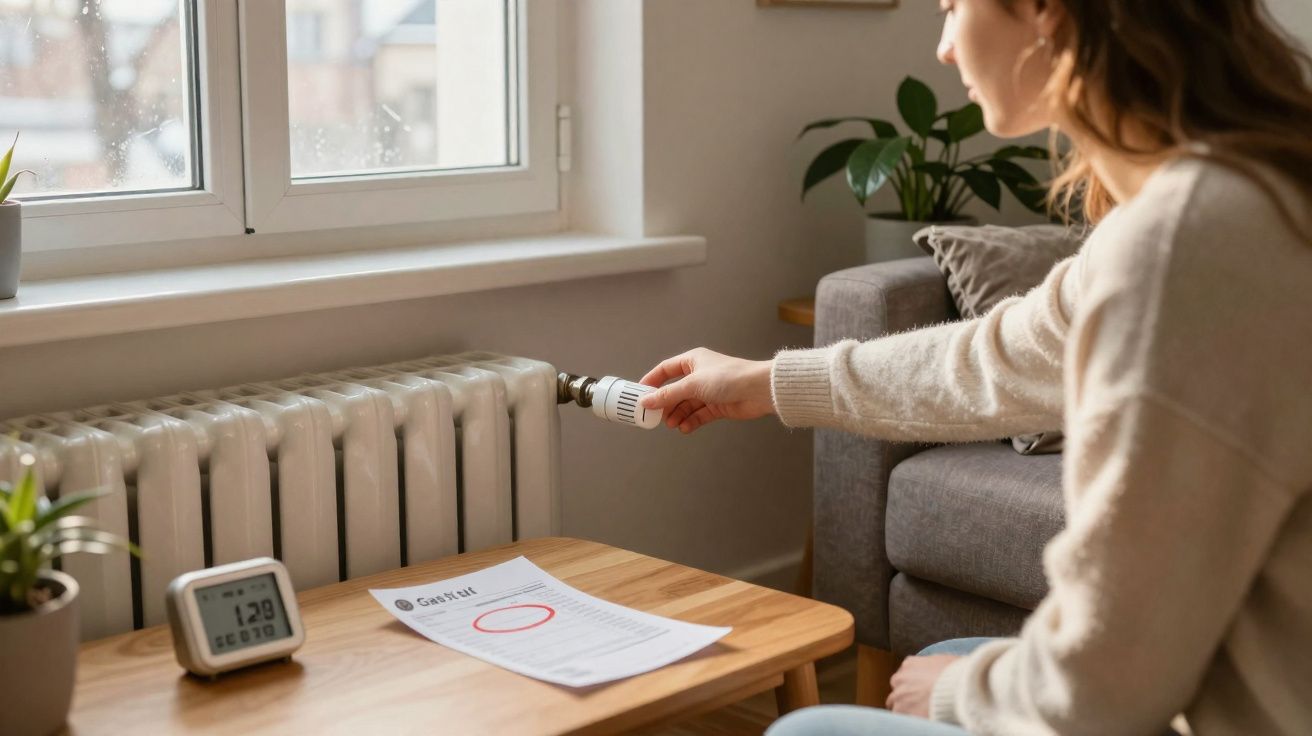
There’s a familiar winter scene: you come home absolutely frozen, crank the radiator valves right up… and then keep your coat on because the room takes ages to warm through.
Meanwhile the bill climbs, the air starts to feel heavy, and you still end up with icy feet. In plenty of homes, winter turns into a strange tug-of-war between the thermostat, extra jumpers and the bank balance.
Heating engineers often point to one habit that quietly undermines everything. It’s an old reflex, so ingrained most of us never question it. Every winter we repeat it, convinced that’s simply “how heating works”.
The irony is that this routine comes from a time when energy was cheaper and nobody had apps, smart thermostats or modern thermostatic radiator valves. Today it mainly sends warmth-and money-out of the door. Yet the gesture is so automatic you probably do it daily without thinking.
The old radiator reflex that lets heat (and money) escape
The habit is straightforward: you open the radiators fully, then switch them off sharply when you feel too warm, only to turn them back up to maximum later. This constant yo-yo between “max” and “off” is still extremely common. In some homes, every radiator head sits on the same number all winter, as if the dial only has two real settings.
In the moment, it feels like control. Cold? Turn it up. Too hot? Turn it off. It sounds logical-almost instinctive. But with a hot-water heating system, it’s a bit like repeatedly flooring the accelerator and stamping on the brake at the same time: lots of effort, messy results.
Many installers describe it as a leftover mindset from the 1980s and 1990s, when households worried less about every kilowatt-hour. People “boosted” a radiator the way they’d blast a hob ring. The idea that heating works best when it runs steadily, with finer room-by-room adjustment, simply wasn’t part of everyday life. That cultural inertia has clung on.
A Manchester flat, a gas bill, and a classic heating yo-yo
In a renovated small flat in Manchester, Sarah (34) started questioning her gas bill. Her daily pattern was the same: radiators on full in the morning, off when she left, then back on full in the evening. She complained that the bedroom stayed stubbornly cold, while the living room overheated and then cooled rapidly-an exhausting thermal seesaw.
A technician sent by her housing association looked over the radiators, watched the settings, and laughed. “You’re driving your heating like an old car with no engine braking,” he said. Once the thermostatic valves were actually used-almost all had been left on 5-and each room was set to a steady target temperature, her consumption dropped by roughly 15% over two winter months.
Stories like this crop up across European cities. Local awareness campaigns regularly find that close to one household in two runs radiators in an all-or-nothing way. In some blocks of flats, plumbers still come across valves jammed at maximum for years because nobody dared touch them. People talk about heat pumps and other high-tech fixes, yet this outdated routine still dictates day-to-day comfort.
Why the “max then off” routine makes comfort worse
From a thermal point of view, the mechanism is fairly simple: radiators and the boiler behave better in a stable operating range. When you push everything to maximum and then cut it completely, you create demand spikes. The boiler ramps up, burns more fuel, then stops. The water in the circuit cools, the walls never properly warm, and comfort remains fragile. It’s heating in gusts, not a settled, enveloping warmth.
Professionals call this thermal inertia: radiators, walls and floors absorb heat gradually and release it over time. When you keep yanking the system up and down, you never give the building fabric time to do its job. The result is familiar-feeling chilled the moment there’s a draught, big temperature differences between rooms, moisture edging back towards under-heated walls, and (of course) a larger bill.
By contrast, when heating is set to coherent temperatures in each room, the system often uses less energy because the boiler runs more evenly. It isn’t constantly “stressed”. The fuel goes into maintaining a level of warmth, rather than repeatedly catching up after you’ve let the home cool right down.
A room-by-room way to manage radiators with thermostatic valves
The modern move, and the one most heating engineers recommend, begins with a single decision: stop treating radiators as all-or-nothing. Instead of automatically turning the radiator head to full, you pick a setting and leave it to work.
As a guide: - Bedroom: aim for 17–18 °C - Living room: aim for 19–20 °C - Bathroom: a bit higher, but only during the times you actually use it
In practice, that means the radiators stay “on”… but they’re controlled intelligently and kept steady. Rather than switching everything off the moment you feel warm, you drop the dial by one step. That small change gives the home time to settle, instead of lurching like a pressure cooker. Heat spreads into the walls, floors and furniture; you’re not just warming air that disappears the next time a window opens.
For many households this feels counter-intuitive, because we’ve been brought up not to “leave things running”. Yet this is the key shift: let the system operate gently and continuously, instead of in big surges.
The most common mistakes (and why they backfire)
A lot of the trouble comes from fear of “wasting” energy by leaving heating on. Many people switch everything off when they go to work, then blast it to maximum in the evening, hoping the place will be warm in 15 minutes. But the walls have stayed cold all day. Your body senses the chill from cold surfaces even if the thermostat says the air is warm enough.
Another very human habit is treating every radiator the same-one number everywhere, like a master control. But an adult bedroom, a child’s room, a south-facing living room and a kitchen full of electrical appliances don’t behave the same way. Accepting those differences is how you move away from “one button for the whole home”.
And to be realistic: nobody needs to micromanage temperatures daily to the nearest degree. The goal isn’t to become a full-time weather controller for your flat. It’s to create a simple routine: choose one setting per room, try it for a few days, then adjust once or twice. After that, you rarely touch it.
“The biggest source of waste isn’t the old boiler-it’s how we communicate with it,” says one domestic heating specialist. “We shout at it by cranking radiators to maximum, instead of speaking calmly by setting each room properly.”
A practical routine that helps replace old reflexes: - Pick a target temperature for each room (cooler bedroom, slightly warmer living room). - Set each thermostatic radiator valve to a fixed number that matches that feel. - Keep those settings running continuously for three to four days, without switching everything off. - Review: too warm or too cool? Adjust by one notch only. - Don’t block radiators with furniture, heavy curtains or damp laundry.
Many people describe the “aha” moment as the home feeling more settled. The air no longer swings from stifling to icy within hours. Children don’t need a hoodie in the living room and an extra blanket in the bedroom. It won’t be perfect-but it’s a noticeably calmer relationship with heat.
Two extra checks that support steady radiator heating
Even with good settings, two basic maintenance points can make the system behave more predictably. First, if radiators are cold at the top but warm at the bottom, they may need bleeding to remove trapped air; that helps them heat evenly. Second, in homes with multiple radiators, balancing (adjusting lockshield valves so heat is shared fairly) can reduce the “living room too hot, bedroom too cold” pattern without resorting to maximum settings.
It’s also worth remembering that steady comfort isn’t only about the radiators. Simple draught-proofing around doors, sealing obvious gaps, and using lined curtains can reduce heat loss so the boiler doesn’t have to chase temperature drops-making stable, low-stress heating easier to achieve.
When one small habit changes how warm your home feels
What stands out when you speak to families who’ve changed how they use radiators isn’t just the lower bill. It’s how they describe the atmosphere at home: gentler warmth, less harsh overheating, and mornings that feel less punishing because the house hasn’t dropped to fridge-like temperatures overnight.
Some also find they tolerate a slightly lower temperature better when it stays consistent. A constant 19 °C, with walls that feel mildly warm and proper socks, can feel more comfortable than 21 °C for two hours followed by a sudden crash to 16 °C. Bodies like continuity; we adapt and create reference points. Heating becomes a quiet background presence rather than a source of household tension.
There’s a social side to this too. Radiator habits get passed along: you copy what you saw at home growing up, or what a neighbour swears is “the best trick”. Letting go of the “full on then off” reflex also means accepting that the world has changed-energy is expensive, homes are better insulated, and thermostatic radiator valves aren’t just decoration.
Every household ends up with its own version of the new norm. Some use sophisticated smart thermostats; others simply mark a “good setting for the bedroom” on the radiator dial with a pen. The shared direction matters most: moving from anxious, reactive heating to deliberate, thought-out comfort-and it often starts with one tiny adjustment on a cold winter morning.
| Key point | Detail | Why it matters to you |
|---|---|---|
| Radiator yo-yo | Turning radiators to maximum then switching them off increases consumption and harms comfort | Spot a costly habit that adds to the bill without real benefit |
| Room-by-room settings | Match each radiator to how the room is used and keep it steady | Improve comfort while reducing energy use |
| Steadiness over brute force | Prefer continuous low-level warmth rather than peaks | Reduce cold spells, damp risk and big temperature swings |
FAQ
- Should I really leave radiators on during the day when I’m out? In a well-insulated home, maintaining a lower but stable temperature often uses less energy than switching off completely and then reheating everything hard in the evening.
- What number should I set the radiator valve to in the living room? In many cases, a thermostatic valve set around 3 corresponds roughly to 19–20 °C, but you should fine-tune it to your comfort.
- Why do I still feel cold when the radiator is scorching hot? If the walls and floor remain cold, your body reads the room as cool even when the air is briefly warm.
- Do I need to replace my radiators to reduce consumption? Not necessarily-better use of thermostatic valves, room-by-room temperatures and timing can already cut usage noticeably.
- What should I do in a child’s bedroom? Aim for a slightly gentler temperature, around 19 °C, keep the radiator on a stable setting, and judge comfort by how the room feels-not just the number on a display.


Comments
No comments yet. Be the first to comment!
Leave a Comment