
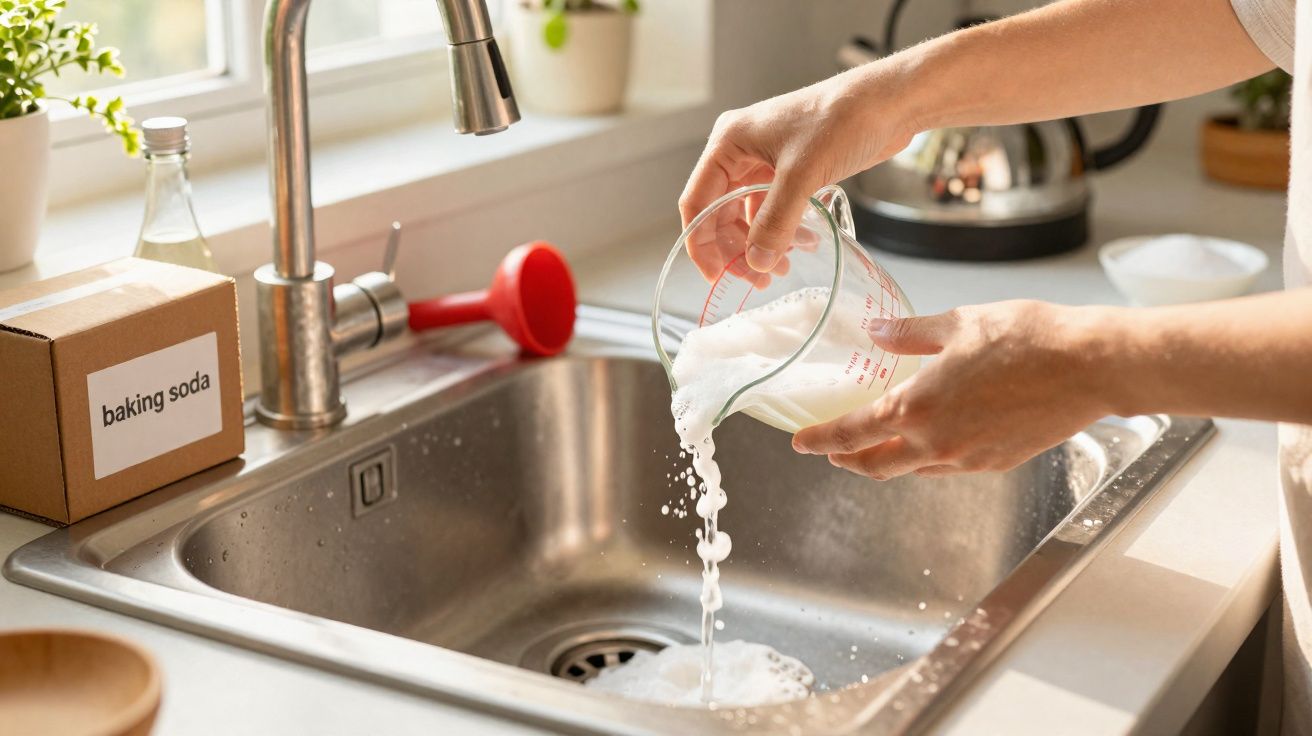
From odd gurgling sounds to unpleasant smells wafting up from the plughole, a clogged pipe quickly becomes more than a small irritation. The encouraging part is that you can often clear a drain without calling an emergency plumber or reaching for harsh chemical unblockers. A low-cost, natural approach can sort out many everyday blockages in well under an hour.
Why your pipes keep clogging in the first place
Before you try any “miracle” mix, it helps to understand what’s actually building up. The type of residue varies depending on the room.
- Kitchen sink: cooking fat, oil, coffee grounds and food scraps stick to the inside of the pipework.
- Bathroom basin and shower: hair, soap scum, toothpaste and cosmetics merge into a stubborn, sticky mass.
- Toilet: too much toilet paper, wet wipes and items that should never be flushed can create hard-to-shift blockages.
A quick diagnosis saves time and wasted effort. Pay attention to how the water behaves:
- If water doesn’t move at all, you’re likely dealing with a complete blockage.
- If it drains slowly and you hear gentle glugging, the pipe is narrowing with debris but isn’t fully sealed yet.
Slow drainage is already a warning sign; leaving it until the pipe is completely blocked usually makes the fix harder and more expensive.
The simple natural method (baking soda, white vinegar and hot water)
The most reliable cupboard solution uses three familiar essentials: baking soda, white vinegar and hot water. When used correctly, this trio can tackle a surprising number of routine drain problems.
What you’ll need
- 100 g baking soda
- 200 ml white vinegar
- At least 1 litre very hot water (just off the boil is ideal)
- A jug or kettle for controlled pouring
- Rubber gloves (optional, but useful)
Keeping baking soda and vinegar in the cupboard can often replace a whole shelf of pricey drain cleaners.
Step-by-step: how to use it safely and effectively
- Clear the plughole opening by removing anything you can see (hair, food scraps, bits of packaging).
- Tip the baking soda straight into the drain. If it sits on the edge, nudge it down gently with a spoon.
- Slowly pour in the white vinegar. Expect fizzing and a noticeable hissing sound.
- Leave it to work for 15–30 minutes (don’t run water during this time).
- Pour very hot water steadily into the drain to flush away loosened residue.
| Step | What it does |
|---|---|
| Baking soda | Clings to grime and helps neutralise odours |
| Vinegar | Creates a reaction that helps shift deposits |
| Hot water | Softens grease and carries loosened debris down the pipe |
If the drain is still sluggish after one attempt, repeat the process once. Where plumbing is older or joints seem delicate, allow the water to cool slightly rather than using fully boiling water.
Extra tricks for stubborn or recurring clogs
Using a plunger alongside natural cleaners
Sometimes the reaction loosens the blockage but doesn’t fully move it. A plunger can provide the extra push-pull needed.
- After the baking soda and vinegar have been sitting for at least 20 minutes, position a plunger firmly over the plughole.
- Run a little warm water so the rubber edge seals properly.
- Pump sharply several times without breaking the seal.
The fizzing mixture softens the blockage, then the plunger’s suction helps pull the loosened material through.
If you have a double kitchen sink, block the other plughole with a wet cloth while plunging-otherwise you may simply force water from one bowl to the other.
A pinch of coarse salt for greasy kitchen pipework
Kitchen clogs often involve fat and oil coating the pipe walls. Coarse salt adds a gentle scouring action.
- Stir 1–2 tablespoons of coarse salt into the baking soda before tipping it down the drain.
- Add the vinegar as normal and let it fizz.
- Finish with hot water to wash away the loosened, gritty mix.
The salt works as a mild abrasive, helping to scrub greasy film without harming typical metal or plastic pipes.
Added check: clean the trap if the smell or slowdown persists
If the problem keeps returning in a basin or kitchen sink, the build-up may be sitting in the U-bend (trap) rather than further along the pipe. Place a bowl underneath, undo the fittings (by hand if possible), clear out any sludge, then refit carefully and run water to check for leaks. This simple step often removes lingering odours that even hot water can’t shift.
Simple habits that stop clogs coming back
Weekly maintenance that takes around 30 seconds
A small routine makes a big difference to long-term flow.
- Once a week, add 1 tablespoon of baking soda to sinks and showers.
- Follow it with a kettle of hot water.
- Do it more frequently if you cook with lots of oil or have long hair.
Regular light cleaning is far cheaper than an urgent call-out when everything stops draining on a Sunday night.
Protecting your pipes with simple hardware
Prevention is also about catching debris before it enters the system.
- Fit mesh strainers in kitchen sinks to trap food bits and coffee grounds.
- Use hair catchers over shower and bath drains.
- Empty strainers into the bin often so they don’t become mini-blockages themselves.
These low-cost add-ons can noticeably extend the life of your plumbing, particularly in older homes where pipes may be narrower or more fragile.
One habit that helps most: keep fat out of the sink
Even if you regularly use baking soda and vinegar, pouring cooking oil or liquid fat down the drain is likely to create repeat problems. Let fat cool and solidify, wipe pans with kitchen roll, and dispose of it in the bin (or a suitable container). You’ll reduce grease build-up and help keep your kitchen drain smelling fresher.
When a DIY method isn’t enough
Natural cleaners and basic tools resolve many everyday issues, but some symptoms point to a deeper blockage.
- Several drains in the home are slow at the same time.
- Running the washing machine causes the kitchen sink to back up.
- You notice sewage smells from floor drains or outside the property.
These signs often indicate a problem further down the line-possibly in the main waste pipe or beyond your boundary. In that situation, a professional inspection is important. Forcing the issue with aggressive chemicals or improvised tools can damage joints, seals or the inspection chamber.
Helpful background: why harsh chemical unblockers are controversial
Many supermarket drain cleaners rely on strong alkalis or acids. They can work quickly, but there are real downsides.
- Fumes and splashes can irritate skin, eyes and lungs.
- Spills may mark worktops and bathroom fittings.
- On older or weakened pipes, repeated use can accelerate corrosion.
- If the clog doesn’t clear, you’re left with caustic liquid sitting in the pipe, making the next step risky.
Natural mixtures aren’t magic, but they’re a safer first attempt before turning to powerful industrial products.
For homes with children, pets or septic tanks, milder options can reduce household risk and help protect the bacterial balance in on-site treatment systems.
Everyday scenarios where this method really helps
Imagine it’s Sunday evening, you’ve got guests arriving within the hour, and the kitchen sink refuses to drain. A quick dash to the local shop for white vinegar and baking soda can still rescue the situation. While you set the table, the mixture gets to work-and by the time the doorbell goes, the water level is back where it should be.
In a shared flat, making a weekly “drain day” part of the routine can prevent simmering rows about hair in the shower or questionable bathroom smells. Keeping the steps written down inside a cupboard door also means nobody can claim they “didn’t know” how to deal with a slow drain.




Comments
No comments yet. Be the first to comment!
Leave a Comment