

Cold panes, heated rooms and everyday habits can combine into the ideal conditions for dripping windows-often long before you spot the harm.
Across the UK (and much of Europe), the moment the radiators start ticking and rain rattles against the glass, another winter visitor tends to appear: condensation. Those fogged-up windows can seem minor, but the moisture they signal can lead to mould, flaking paint and even breathing problems well before most households take action.
Condensation on windows: why they start running with water in winter
You get condensation on windows when warm, moisture-laden indoor air touches a cold surface-most commonly glass that has cooled down in winter. The air temperature drops at the surface, it can no longer hold the same amount of water vapour, and the excess water shows up as droplets.
When humid, warmed air hits cold glass, the extra moisture ends up on the window rather than staying suspended in the air.
That is why the issue spikes in autumn and winter. Heating comes on, showers run hotter, and pans simmer longer. At the same time, we keep windows shut to hang on to warmth. Indoor moisture rises quietly until it has only a few places left to land: the glass, the frames and-eventually-nearby plaster.
If droplets sit there for hours, water can work into sealant, timber and wallpaper. After days or weeks, black mould often begins to show around frames and in still corners where air movement is poor.
The most effective method: control moisture at the source
Professionals tend to agree on one point: you do not “fix” condensation by wiping windows alone-you reduce the moisture that creates it. The most effective method is a straightforward three-part routine used daily:
- Cut down the moisture you generate indoors.
- Ventilate the rooms where humidity builds up.
- Keep surfaces warm enough to avoid big temperature differences.
The solution is simple (if not glamorous): limit humidity at its source, then push damp air outdoors before it can hit the glass.
In practice, that means adjusting routines in the three main moisture-producing spaces: bedrooms, kitchens and bathrooms. Drying the windows helps temporarily, but lasting change comes from repeated day-to-day habits.
Bedroom windows: why they are soaked by morning
Many people wake up to wet bedroom glass despite never cooking or showering there. The cause is what happens overnight.
Keep the bedroom gently heated overnight
As you sleep, breathing and perspiration steadily add moisture to the air. If the heating is switched off completely, the room temperature drops significantly. The window surface becomes much colder, and the difference between warm, humid air near the bed and the chilled glass becomes larger.
Turning the radiators fully off at night cools the glass further and often leads to heavier condensation by morning.
Rather than shutting heating down entirely, aim for a lower, stable setting. That mild, consistent warmth prevents the glass from becoming so cold and reduces the amount of water that turns into droplets.
Do not turn the bedroom into a laundry drying room
Drying clothes indoors can release several litres of water into the air. If a clothes airer sits in a small bedroom with the door closed, humidity rises rapidly-and the nearest cold surface is usually the window.
Where possible, avoid drying laundry in bedrooms. If you have no other option, place a dehumidifier nearby and open the window briefly for a short spell, even if it feels cold outside.
Kitchen: the home’s biggest moisture factory
A kitchen produces bursts of steam every day. Boiling pasta, making tea, simmering sauces and even running a dishwasher all add moisture to the air-often quickly.
Use pan lids, extractor hoods and closed doors as “steam barriers”
Three small habits can drastically reduce kitchen-related condensation:
- Put lids on pans whenever you boil or simmer.
- Turn on the extractor hood before you start cooking and keep it running for several minutes afterwards.
- Shut the kitchen door while cooking so damp air does not spread through the rest of the house.
A lid on a saucepan can cut escaping steam by well over half, immediately reducing what ends up on your windows.
A short “burst” of ventilation while cooking also works extremely well. Opening a window wide for 5–10 minutes, with the door kept shut, swaps humid indoor air for drier outdoor air without chilling the entire home.
Bathroom: preventing the post-shower fog from travelling
Bathrooms can fill with steam within minutes, and that moisture rarely stays contained. It moves under doors, up stairwells and towards the coldest panes it can find.
Keep steam where it begins
A well-fitted shower curtain or properly sealed shower screen does more than stop splashes. It also keeps a significant amount of vapour inside the showering area.
Treat your shower screen or curtain as a steam shield, not only a water guard.
Pair that barrier with an effective extractor fan to stop humidity from flooding the room. A practical routine is: close the bathroom door, run the fan during the shower and afterwards, then briefly open the window once you step out (if you have one).
Whole-home habits for drier, healthier windows
Room-by-room changes matter most, but a few general tactics help reduce condensation across the entire property.
Ventilate in short, purposeful bursts
Quick, wide-open ventilation tends to work better than leaving a tiny window gap all day. Air the home by opening windows fully for several minutes twice daily-typically morning and evening-to replace moist indoor air with drier air from outside.
If you live in a particularly damp area, or in a modern, very airtight flat, mechanical ventilation or a dehumidifier can help keep relative humidity in a healthier range-usually 40% to 60%.
Remove droplets as soon as you see them
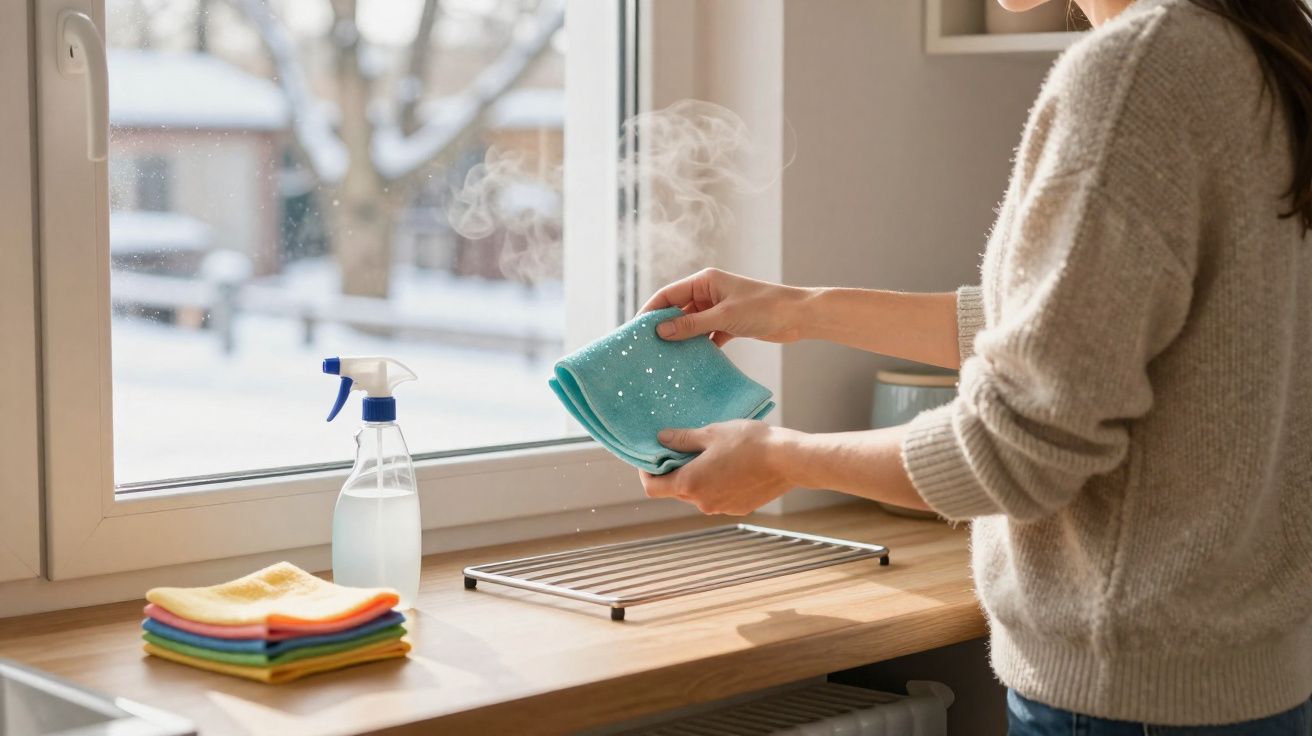
If water is pooling or running down the glass, do not wait for it to evaporate. Use an absorbent cloth, towel or squeegee to lift the water before it soaks into frames, sealants and nearby walls.
| Action | Effect on condensation |
|---|---|
| Wipe windows each morning | Stops water soaking into frames and sealants |
| Do a daily short airing | Lowers indoor humidity overall |
| Keep steady, low heating | Warms the glass and limits droplet formation |
Extra support: monitor humidity and improve airflow (new)
A small hygrometer (often built into weather stations) makes condensation easier to manage because it shows when humidity is climbing into the problem zone. If readings regularly sit above 60%, focus on ventilation after cooking and bathing, and consider leaving internal doors open at times to help air circulate-except when you are deliberately containing moisture in kitchens and bathrooms.
You can also improve airflow around windows by keeping trickle vents open (if fitted) and avoiding heavy curtains pressed tightly against cold glass, as trapped air pockets can encourage dampness on the pane and around the frame.
Why mould on windows is not just a cosmetic nuisance
Mould thrives on surfaces that stay damp and on corners with poor ventilation. Once it takes hold around window frames and sills, spores can spread into curtains, soft furnishings and even clothing.
For people with asthma, allergies or weakened immune systems, mould exposure can worsen symptoms. Even otherwise healthy adults may develop coughing, throat irritation or headaches with ongoing exposure.
Condensation is the warning sign; mould is what follows when moisture is left unchecked.
That is why reducing dampness matters more than repeatedly scrubbing away marks. Cleaning products can remove visible growth, but if the window continues to get wet, the mould is likely to return.
Humidity explained plainly (no jargon)
Two ideas make condensation easier to understand: relative humidity and cold surfaces. Relative humidity is simply how much moisture the air contains compared with what it could hold at that temperature. Warm air can carry more water vapour than cold air can.
When warm, damp air meets a cold window, the air cools rapidly at the surface and cannot keep all that moisture in vapour form. The extra water becomes droplets-this is condensation.
This is also why small adjustments can be enough: slightly warmer glass, slightly drier air, or slightly better circulation can stop condensation on windows altogether.
Real-life examples: small changes that you can see
Picture a typical flat where a family cooks dinner with no lid on the pan, the extractor hood off, and the kitchen door open. Steam drifts into the hallway and then the living room, where larger, colder windows are waiting. By the time dinner is served, the glass is already misted.
Now replay the same evening with three tweaks: lids on pans, the extractor running, and the kitchen door shut. By the end of the meal, the windows are noticeably clearer and the living room humidity is lower. The building has not changed-only the routine has.
A second example: a compact bedroom where the radiator is turned off overnight and clothes are drying on an airer. Day after day, water collects along the bottom edge of the window, and small black mould marks begin to appear around the frame. Keeping the radiator on a low setting and moving laundry to a better-ventilated area can reduce new condensation within days.
These consistent, modest shifts are the real “most effective method” for reducing condensation and mould on windows-not a miracle spray or a single gadget, but a reliable pattern that keeps air drier, glass warmer and moisture under control.





Comments
No comments yet. Be the first to comment!
Leave a Comment