
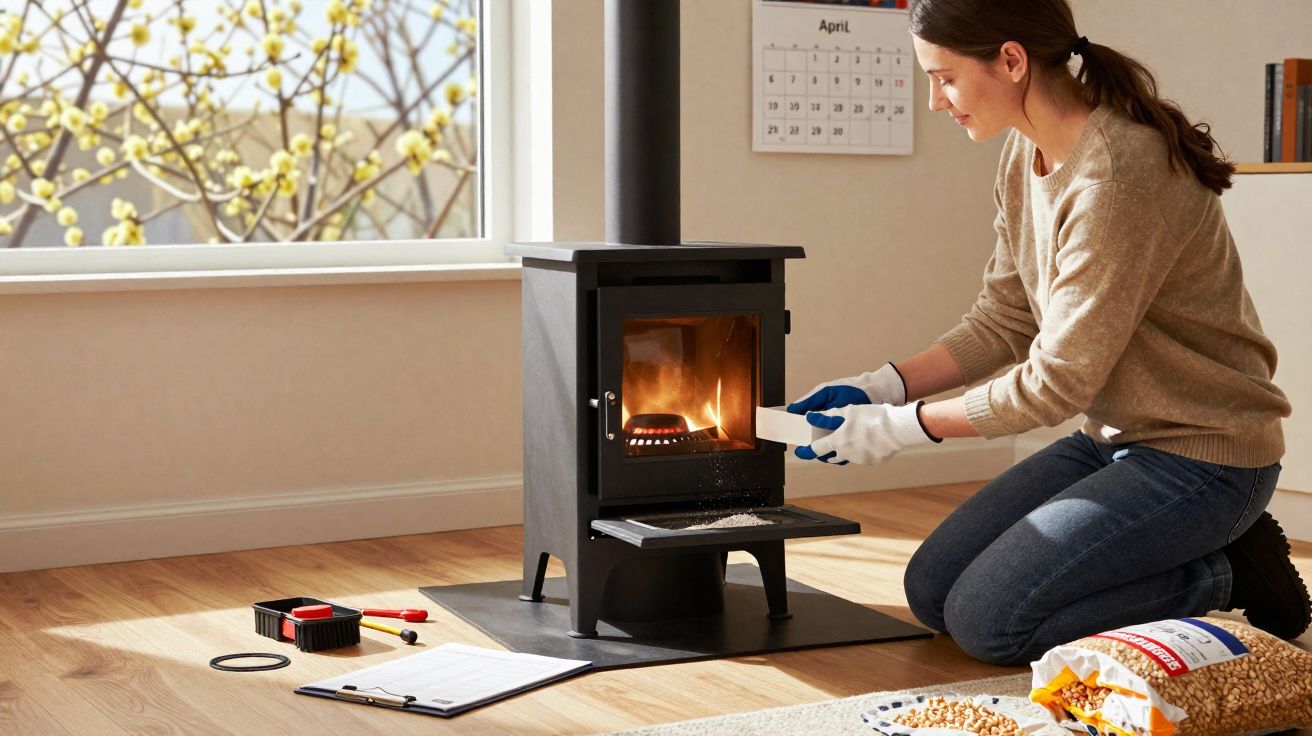
The heating season is nearly over, outside temperatures are climbing, and the pellet stove is only ticking over now and then. This quiet spell is exactly when many owners make the biggest mistake: they switch the appliance off and then ignore it for months. That is a costly oversight that can not only lead to expensive repairs, but in the worst case may also create a safety risk.
Why a Spring Check for Your Pellet Stove Is Essential
Even when your pellet stove is running far less in spring, it still operates at very high temperatures each time it lights up. That process creates soot, dust and fine ash residues. These particles build up inside the appliance and in the flue passages, often completely out of sight.
If you ignore your pellet stove in spring, you risk a drop in performance, faults and higher heating bills next season.
The consequences of neglecting the spring check include:
- narrowed air and smoke channels
- poorer efficiency, meaning the stove needs more pellets to produce the same heat
- increased wear on seals and components
- a greater chance of faults just when the weather turns cold again
Taking a little time for maintenance in spring helps keep combustion clean and eases pressure on the household budget, because an efficient pellet stove uses noticeably less fuel.
Keeping a short maintenance log is also worthwhile. Recording cleaning dates, service visits and any unusual behaviour makes it easier to spot patterns early and gives you a useful reference if a fault appears later.
The Key Steps in Spring Maintenance
Clean the Heart of the Stove: Burn Pot and Ash Box
The burn pot, sometimes called the burner pot or burn basket, is the central zone where combustion takes place. Ash and clinker residues gather there and can obstruct the air supply.
A sensible routine is important here: many specialists advise checking the burn pot every day during the heating season and carrying out a thorough clean at least once a week. By the end of the season in spring, it is wise to be especially meticulous.
A dedicated ash vacuum with a HEPA filter is ideal for this job. Ordinary household vacuum cleaners can be damaged and may blow ash dust back into the room air.
It is essential that the ash has cooled completely before you start. Glowing remnants can remain hot for hours after the stove has been switched off and may cause a fire in the bin or the vacuum cleaner.
Check the Seals: Small Cracks, Big Consequences
The seals around the door, ash compartment and inspection openings ensure that the pellet stove draws in air in a controlled way. If they become brittle, hard or cracked, stray air enters the combustion chamber. That disrupts the balance of combustion and pushes fuel consumption up.
A quick spring inspection is often enough: open the door, look closely at the seal and run a finger along it. If it feels stiff, shows splits or has gaps, it should be replaced. Replacement seals are comparatively inexpensive, especially when set against the extra cost of inefficient burning.
Keep the Glass Clear
A soot-covered viewing window does not just block the flames from sight; it is also a warning sign. Heavy deposits usually point to incomplete combustion, too little air or poor-quality pellets.
For cleaning the glass, use a specialist cleaner for stove and fireplace windows together with a soft cloth. Harsh abrasives or scratchy sponges leave fine grooves that allow soot to build up even faster in future.
A tried-and-tested practical trick is to dampen a cloth with a little ash and rub it over the cold glass. The fine ash acts as a gentle abrasive and removes the soot film without chemicals.
Keep the Air and Flue Passages Free
A pellet stove needs regulated air supply and an unobstructed exhaust route if it is to burn cleanly. Any restriction in the air channels or the flue pipe affects the flame directly.
The main trouble spots are:
- combustion-air intake openings
- internal air passages inside the appliance
- the flue pipe between the stove and the chimney
Light soiling can usually be removed with a brush and an ash vacuum. Heavy deposits and the chimney itself should be dealt with by a qualified professional, both for safety reasons and to comply with the manufacturer’s instructions.
Legal Requirements: Annual Servicing Is Mandatory
In many countries, strict rules apply to solid-fuel heating appliances, including pellet stoves. The source text refers to a national regulation requiring annual servicing by a qualified specialist company. The professional:
- thoroughly cleans the appliance inside and out
- checks safety-related components such as sensors, seals and electronics
- tests the control system and adjusts it if necessary
- carries out the prescribed sweeping work in the flue path
After the inspection, the owner receives a service certificate - and in the event of a dispute with the insurer, that document can be extremely valuable.
Anyone who fails to comply with these requirements risks trouble with the insurer if the worst happens. After a fire or smoke incident, one of the first questions is often: was the stove maintained properly by a professional?
Why Spring Is the Best Time for Servicing
Spot Problems Before They Become Serious
If the stove is checked thoroughly straight after the heating season, damage can be identified before it turns into an emergency. Hairline cracks in fire bricks, burnt-out seals or worn feed mechanisms are noticed when there is still time to repair them, rather than on the first frosty morning in December.
More Available Appointments, Often Better Prices
Heating engineers and stove specialists are traditionally fully booked in autumn. Spring is usually far calmer. Waiting times are shorter, and some businesses offer servicing packages on more favourable terms. Planning ahead saves stress and, occasionally, real money.
Better Performance, Lower Costs
A pellet stove that has been cleaned and correctly adjusted can work much more efficiently. Many owners report that fuel use falls noticeably after a full service, even though the living rooms stay just as warm. In that sense, the cost of servicing is often recouped through lower pellet consumption.
Common Pellet Stove Mistakes - and How to Avoid Them
- Putting off cleaning: Even with limited use, residues still build up. If you leave them too long, they become much harder to remove later.
- Using cheap pellets: Lower-grade pellets create more ash and dust and clog the stove more quickly.
- Leaving the hopper full for months: Pellets absorb moisture from the air. They swell, break down and can jam the auger or drop chute.
- Delaying the annual service: Minor issues remain hidden until they return as an expensive fault.
What Many People Do Not Realise: Risks and Everyday Practical Tips
Pellet stove owners often think first about comfort and heating bills. Safety rarely gets much attention as long as everything appears to be working. Yet a blocked flue can increase the risk of carbon monoxide exposure - a gas that has no smell and can become dangerous without warning. A working smoke alarm is essential, and a carbon monoxide alarm in the room where the stove is installed is strongly recommended.
Useful everyday rules of thumb:
- Store ash only in non-combustible containers, ideally with a lid.
- Keep pellets dry and well ventilated, and do not place them directly on concrete, because concrete can release moisture.
- Read the instruction manual at least once per season - many manufacturers specify clear intervals for cleaning and servicing.
If you are unsure which tasks you are allowed to carry out yourself, ask a specialist company. Many firms offer brief introductions and show you which jobs an owner can safely handle and where a professional is needed for insurance or safety reasons.
One more point is often overlooked: the pellet stove is a technical heating appliance, not a decorative fireplace. If you give it an hour or two of proper attention in spring, you help ensure trouble-free, safe and more economical operation - exactly when dependable warmth still matters.





Comments
No comments yet. Be the first to comment!
Leave a Comment