
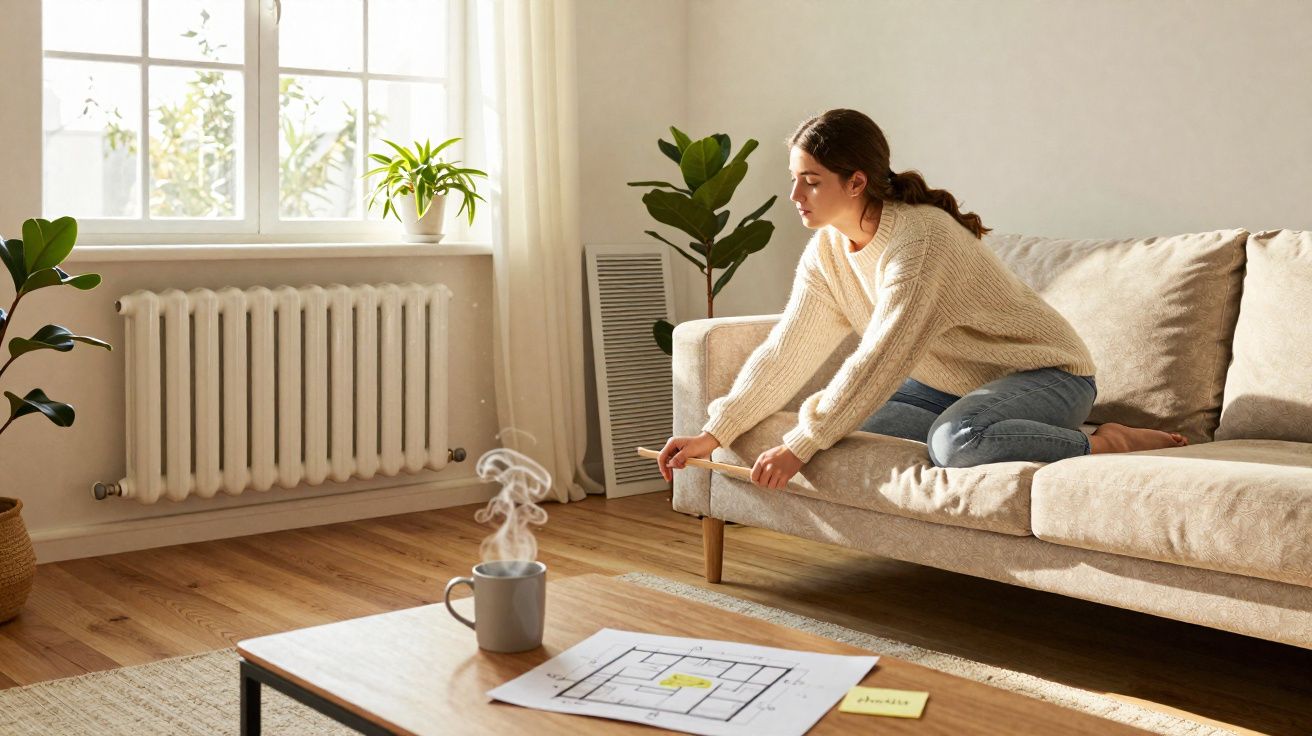
The heating is running, the thermostat is glowing a comforting 21°C, and yet the lounge still feels like a gentle form of torture. You add socks, a blanket, an oversized hoodie… but that sly little chill keeps curling round your ankles. The air isn’t truly cold, yet the room never quite feels properly warm either-almost as if the heat disappears the moment it leaves the radiators. Walk from the hallway into the kitchen and it’s like stepping into a different climate zone. Your face feels fine, your feet feel icy, and you keep nudging the thermostat upwards, convinced the boiler is being lazy.
And still, that persistent, irritating cold hangs around.
Something in the room is quietly undermining the warmth.
The hidden reason your heated home still feels cold
When a home feels chilly, most people point the finger at the boiler. But the problem is often much closer-and pushed right up against the wall: furniture. One oversized sofa jammed against a radiator can turn an otherwise decent heating system into a pricey leg-warmer for your couch. Heat leaves the radiator, hits the back of the upholstery, and simply… stops. The warm air never gets the chance to circulate into the room.
So you turn the heating up, assuming the system is underpowered, when the real issue is the positioning.
And just one blocked radiator in the wrong space can throw off the comfort of the whole house.
Imagine this: a couple in a semi-detached house in Leeds calls out a heating engineer, certain their boiler is on its last legs. He arrives, inspects the boiler, taps a few pipes, runs his checks-everything is working as it should. Then he walks into the living room and pauses, staring at a huge corner sofa swallowing the wall… including the main radiator. “That’s your issue,” he says, and pulls the sofa about 20 centimetres forward.
Within half an hour, the room feels noticeably different: gentler, warmer, and less draughty at floor level.
Nothing else changed-just a small gap that let warm air rise and spread into the space.
The principle is straightforward: radiators and vents don’t heat furniture, they heat air. When that air can’t move, your heating loses a big chunk of its effectiveness. It’s like trying to warm your hands with a hair dryer aimed at a brick-the brick gets hot, your hands don’t. Heavy curtains, shelving units, beds, and even laundry draped over radiators all steal heat before it can travel. Most of the time we aren’t cold because the heating is broken; we’re cold because the heat can’t reach us.
Once you look at it this way, room layout stops being purely decorative.
It becomes an invisible thermostat.
Furniture placement around radiators and vents: the detail that decides if you feel warm
The rule is simple: don’t park anything bulky directly in front of a heat source. Where possible, leave 20–30 cm between radiators and furniture-enough space for your hand to slide behind comfortably. That small gap gives warm air room to rise and move across the room, rather than dying against a wooden backboard or thick fabric.
If you’ve got wall vents, low grilles, or a forced-air system, the rule matters even more. Those low openings near the floor need to breathe. Shift TV units, storage boxes, and even piles of shoes away from them. The clearer the route, the more evenly the warmth will spread.
Many people feel a quiet sort of guilt when they realise their layout has been working against them. “I’ve basically been paying to heat my chest of drawers,” one woman told an energy adviser after finding her bedroom radiator trapped behind a tall unit. And she’s far from alone. We tuck beds under windows, shove sofas tight to walls, and let long curtains fall over radiators because it looks tidy and cosy-then wonder why the floor level feels oddly cold.
Let’s be realistic: hardly anyone rearranges their home every season like a handbook suggests.
Even so, one focused afternoon of moving things can let you drop your thermostat setting by a couple of degrees.
That’s a saving you notice twice-on your skin and on your bill.
“Radiators don’t just need to be on, they need to be free,” says a heating engineer based in Manchester. “Nine times out of ten, when someone says their house feels cold, I don’t start with the boiler. I start by walking room to room and looking at what’s blocking the heat.”
Quick checklist to stop heat getting trapped
- Keep radiators clear: Leave space above and in front; avoid big sofas, beds, or cupboards blocking them.
- Shorten or tie back thick curtains: Let warm air rise into the room instead of getting stuck behind fabric.
- Uncover vents and grilles: No shelves, boxes, rugs, or furniture sitting on top of heat sources or air returns.
- Lift furniture slightly: Legs rather than full bases help warm air flow underneath and around items.
- Test the airflow by hand: If you can’t feel a clear wave of warmth reaching into the room, something is in the way.
A warmer home starts with how you place things, not what you buy
Once you start paying attention to how space affects warmth, you’ll notice it everywhere. That stylish armchair suddenly looks like it’s hoarding heat from the radiator. Those long, dramatic curtains feel less “hotel chic” and more like a thermal wall hiding a small sun behind them. You begin to picture invisible rivers of warm air trying to move around obstacles you’ve accidentally built.
You don’t need to overhaul the whole house overnight. One room at a time is plenty.
Shift a bed, pull a cabinet a hand’s width away from the wall, or raise a sofa onto legs. Then pay attention to how the room feels the next day.
Home warmth is surprisingly emotional. It isn’t just a number on a thermostat-it’s whether you feel like settling down with a book, or you keep pacing because you can’t shake that chill. A small placement change can make a rented studio feel welcoming, or make a new-build feel less echoey and harsh. We’ve all had that moment when you walk into someone’s place and immediately think: “How is it so cosy in here?”
Often it’s not underfloor heating or a fancy boiler.
It’s simply giving heat room to live in, not just exist.
And you can improve that today-no technician, no big budget-just a willingness to slide the sofa a little to the left.
Two extra tweaks that help once the layout is right
If you’ve freed up your radiators and vents and it still feels uneven, a couple of small, practical checks can make the warmth more consistent. First, make sure radiator valves (including TRVs) aren’t being accidentally knocked or half-closed behind furniture-this can limit heat output without you noticing. Second, keep vents and grilles free of dust build-up; even a thin layer of fluff can reduce airflow and make rooms feel sluggish to heat.
It’s also worth being careful with drying clothes on radiators. Beyond trapping heat, it can increase indoor moisture, which may make the air feel colder and contribute to condensation on windows. If you need to dry laundry indoors, aim for good ventilation and keep the radiator itself as clear as possible so the heat can still circulate.
| Key point | Detail | Value for the reader |
|---|---|---|
| Keep radiators and vents clear | Leave 20–30 cm in front and avoid blocking with large furniture or long curtains | Warmer rooms without raising the thermostat, lower energy bills |
| Rethink furniture layout | Move sofas, beds, and storage away from main heat sources; favour legs over solid bases | More even warmth, fewer cold spots near the floor |
| Observe how heat moves | Use your hand to feel airflow; adjust curtains and objects that trap warm air | Better comfort with the same heating system, no extra equipment needed |
FAQ
Question 1: Why does my house feel cold even when the thermostat says it’s warm?
Answer 1: A thermostat only reads the air temperature near its sensor-it doesn’t measure how heat is travelling through the room. If radiators or vents are obstructed, the air near the sensor may be warm while the rest of the space stays chilly.
Question 2: Is it bad to put a sofa in front of a radiator?
Answer 2: Yes-especially if the sofa is pushed flush against it. The fabric absorbs and traps the heat, stopping warm air circulating into the room, which leaves you colder and costs more to achieve the same comfort.
Question 3: Do curtains really affect how warm a room feels?
Answer 3: They can. Thick, long curtains that cover radiators can prevent heat from rising properly. Shortening them or tying them back allows warmth to spread into the room rather than staying trapped along the window wall.
Question 4: Can small changes really reduce my heating bill?
Answer 4: Yes. When heat sources are unobstructed, many people can lower the thermostat by 1–2°C while feeling just as comfortable, which can noticeably cut energy use over the season.
Question 5: What’s the first thing I should move if I only change one thing?
Answer 5: Start with the largest item blocking the main radiator or vent in the room you use most-usually the living room. Pull it away, then live with the change for a few days and judge the difference in comfort.


Comments
No comments yet. Be the first to comment!
Leave a Comment