
Many households are living with a strange mismatch: shelves full of laundry products and lovely fragrances, yet the washing machine itself reeks like a blocked drain. In plenty of cases, the cause is right there in front of you-tucked just under the door of a front-loader.
Washing machine rubber door seal: the hidden corner that breeds grime, mould and bad smells
It’s easy to assume the drum is a self-cleaning chamber, endlessly flushed with hot water and detergent. In practice, the picture is far less comforting. One of the grimiest parts of a washing machine is also among the most overlooked: the rubber door seal.
This pliable ring around the drum opening prevents water from spilling across your kitchen or utility room floor. However, its ridged, folded design creates an ideal hiding place for what the machine is meant to remove. Over a matter of weeks, a tacky build-up develops: partially dissolved washing powder, heavy fabric softener, soap scum and lint from clothing.
Add hair, pet fur and the occasional tissue forgotten in a pocket, and the mixture turns into a grey sludge that collects in the lowest section of the seal. You often won’t spot it unless you carefully pull the rubber back and peer into the folds.
That rubber ring is not just a seal; it’s a reservoir where moisture, detergent and organic debris quietly accumulate.
Once that muck is present, the washing machine environment does the rest. After a cycle finishes, the tub remains warm and humid-especially in winter, when windows stay closed and bathrooms or utility spaces have poor ventilation. Moisture clings to the rubber, and the residue provides a steady food source.
That combination is exactly what bacteria and microscopic fungi require. Over time, dark specks or black patches appear on the seal-these are mould colonies. They release musty or sour-smelling gases which can gradually transfer to fabrics.
This is why clothing can come out with unexplained marks or a faint “damp cellar” odour, even if you use heavily scented detergent. Every wash sends water through that contaminated area.
If mould takes hold in the seal, it can damage the rubber, threaten the watertight barrier and send odours through the entire machine.
Why bleach is tempting - and why it’s a bad idea
When the rubber looks blackened, bleach often feels like the obvious solution: strong, inexpensive and reassuringly “final”. Even so, manufacturers generally discourage using bleach on this particular component.
Bleach is corrosive. With repeated use it can make rubber porous and brittle, encouraging fine cracks. Those cracks aren’t only a leak risk; they also create extra crevices where dirt and microbes can lodge even more stubbornly.
There’s another drawback: bleach can cover up smells without removing the underlying sludge. If grime remains packed under the seal, the odour usually returns as soon as the chemical effect wears off.
The under-£1 “weapon” that cleans the seal without damage
A milder approach, widely favoured by technicians and careful homeowners, is plain white vinegar. It’s inexpensive, easy to find, and typically much kinder to rubber than bleach.
White vinegar’s mild acidity breaks down limescale and soap scum, helping to lift mould and residue from the rubber folds.
What you need for a deep clean
- A clean microfibre cloth or an old cotton towel
- Household white vinegar (roughly 5–8% acetic acid; sometimes labelled 12–14°)
- An old toothbrush for awkward corners
- Optional: disposable gloves if the seal is heavily soiled
Step-by-step: reclaiming your rubber seal
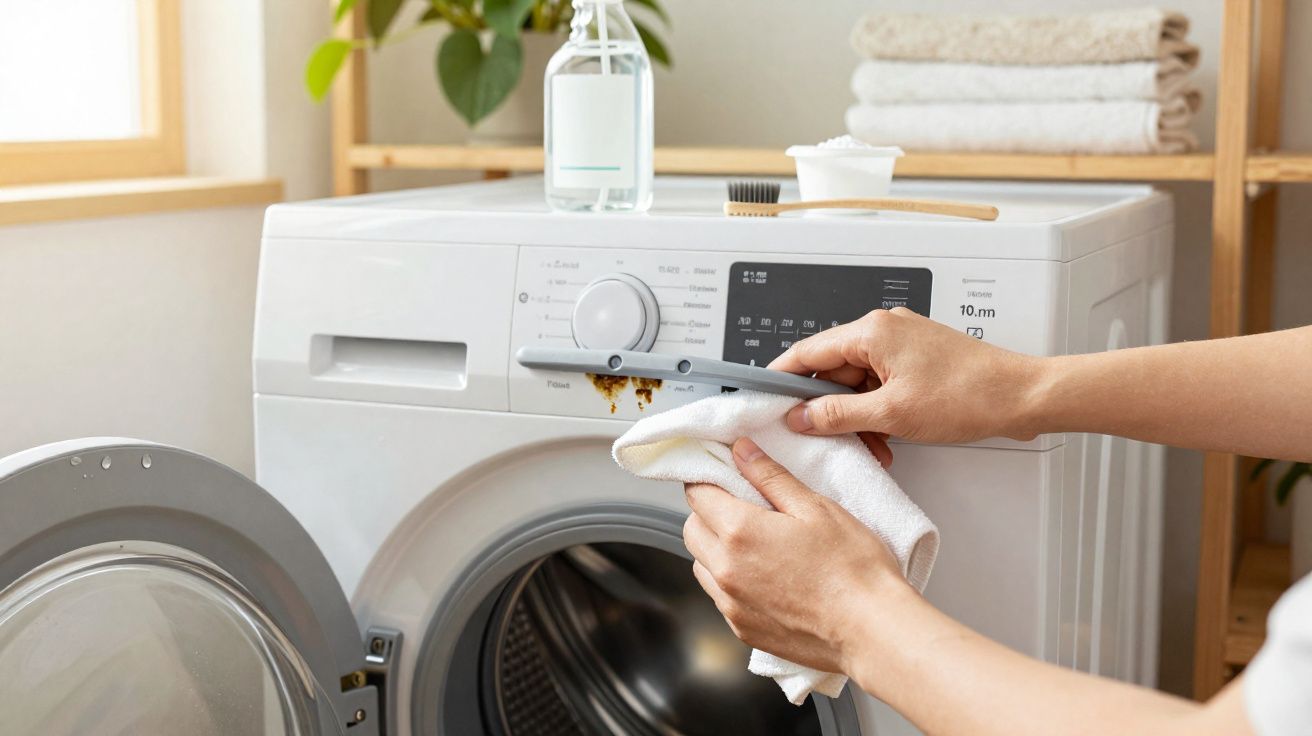
Switch the machine off and open the door wide. With one hand, carefully peel back the rubber door seal to reveal the inner channel. Many people are genuinely startled by what they find the first time.
Soak your cloth in white vinegar so it’s properly wet rather than slightly damp. Start by wiping the visible rubber surface. Then push the cloth into the groove to reach the sludge that sits at the bottom. Work your way steadily around the full circle, rinsing and re-soaking the cloth as it becomes grey.
If you’re dealing with stubborn black spots, hold the vinegar-soaked cloth against the affected patch and leave it there for 5–10 minutes. The mild acid needs time to soften limescale and loosen fungal growth. After that, scrub with the toothbrush using short, firm strokes.
Repeat as necessary until the rubber feels smoother and the worst staining has lifted. It may not look brand new, but the active mould layer and much of the residue should be removed.
A monthly vinegar wipe can keep the seal flexible, limit limescale and stop grime turning into a permanent crust.
Two daily habits that stop mould before it starts
A proper clean helps immediately, but lasting improvement comes from small routines after every wash. They take seconds, yet they interrupt the damp-and-decay cycle that mould depends on.
Reflex 1: dry the seal after every cycle
When the programme ends and the drum is empty, take a towel or dishcloth and run it all the way around the rubber door seal, gently pressing into the fold. The aim is to remove visible droplets and pick up loose debris before it settles.
That quick pass eliminates standing water that mould loves. It also gathers hair and lint, so there’s less material to rot between washes-and less scrubbing to do during your monthly deep clean.
Reflex 2: let the machine breathe
Once the last sock is out, avoid shutting the door firmly. When the door is closed, damp air and detergent traces stay trapped in a sealed space-the exact conditions microbes thrive in.
Leaving the door slightly open between washes allows air to circulate, helping the drum and seal dry naturally.
Even a narrow gap can help. Over a few hours the interior surfaces cool and dry, and smells fade rather than build. Many users find that this single habit nearly eliminates that “wet dog” odour in the laundry area.
How this grime affects more than just smell
A dirty seal isn’t only unpleasant-it can affect your washing results. Residue can transfer onto fabrics, particularly pale items and sportswear. That’s one reason “clean” laundry sometimes emerges with grey streaks or small dark marks near edges.
Build-up can also coincide with reduced machine performance. A contaminated seal often appears alongside a blocked detergent drawer or a clogged filter, which can make rinsing less effective. Clothes may feel less soft, and people with sensitive skin may react to leftover surfactants and fragrance trapped in fibres.
| Problem noticed | Likely link with the door seal |
|---|---|
| Musty smell on clean clothes | Mould and bacteria living in damp rubber folds |
| Grey streaks on light laundry | Dirty sludge releasing during the spin cycle |
| Visible black spots on the seal | Established mould colonies feeding on residue |
| Occasional small leaks at the door | Rubber losing flexibility or blocked by debris |
Cold washes, eco cycles and why they change the game
Modern habits can unintentionally worsen seal problems. Many households now favour low-temperature washes and eco cycles to reduce energy use. That’s good for bills, but not always kind to internal hygiene.
With less heat, detergents-especially washing powder-may not dissolve fully. The extra residue then clings to the rubber door seal. Mould also does well when temperatures rarely exceed 40°C. Without the occasional hot wash, the inside of the machine never receives a proper thermal shock.
A practical tactic is to run an empty 60°C or 90°C cycle once a month with a cup of white vinegar in the drum. This helps flush the pipes, the drum and the rear of the seal. It won’t replace manual cleaning, but it supports it.
Two extra checks that make the vinegar clean work better
If the rubber door seal keeps getting slimy quickly, it’s worth reviewing two adjacent trouble spots. First, pull out the detergent drawer and rinse it-sticky fabric softener and detergent gel can build up there and continuously feed residue back into the wash water.
Second, check the filter (where your model has one). A filter partially blocked with lint, hair and small debris can slow drainage, leaving more moisture behind after each cycle. Less leftover water means less time for mould to spread.
Water hardness, detergent dosing and hidden residue
Hard-water areas tend to see more limescale, which gives soap scum something to cling to. At the same time, using too much detergent or softeners can leave an oily film that coats the rubber door seal and attracts lint. Following the dosing guidance for your water hardness and load size helps reduce the “sticky base” that grime and mould latch onto.
When the seal might need replacing
In some cases, cleaning won’t be enough because the rubber is already compromised. If the seal has deep cracks, is permanently misshapen, or still smells strongly after thorough cleaning, replacement is often the safest route.
A worn seal may leak slowly, creating hidden puddles beneath the machine and, in flats, risking water damage to neighbours. Many models allow a competent DIYer to fit a new seal using basic tools, although older machines or integrated units can be more awkward. Even so, the price of a replacement seal is usually far lower than buying a new appliance.
Key terms and real-life scenarios
Two words commonly printed on detergent packaging but rarely explained are surfactants and softeners. Surfactants are the active cleaning agents that loosen and lift dirt from fabric. If they don’t rinse away properly, they can cling to clothing and coat the machine’s internal surfaces. Softeners are oily compounds designed to coat fibres; unfortunately, they also coat rubber door seals, creating a tacky layer that lint and mould readily stick to.
Picture a busy family home: daily loads of school uniforms, sports kits and pet blankets. Most washes are cold, with generous softeners to keep everything smelling “fresh”. The washing machine door stays shut to make the room look tidy. Within a month, the rubber door seal becomes a damp ring of detergent paste, hair and fluff. Odours start to rise. A few weeks later, someone notices stripes on white shirts and a mild itch after wearing them. That progression is common-and entirely avoidable once you know where the build-up forms and how to deal with it.
By combining low-cost white vinegar with quick daily habits, you can stop that poorly designed yet unavoidable rubber fold from becoming a hygiene and performance problem. The washing machine returns to its proper role: genuinely cleaning your clothes, rather than quietly spreading unseen grime.






Comments
No comments yet. Be the first to comment!
Leave a Comment