
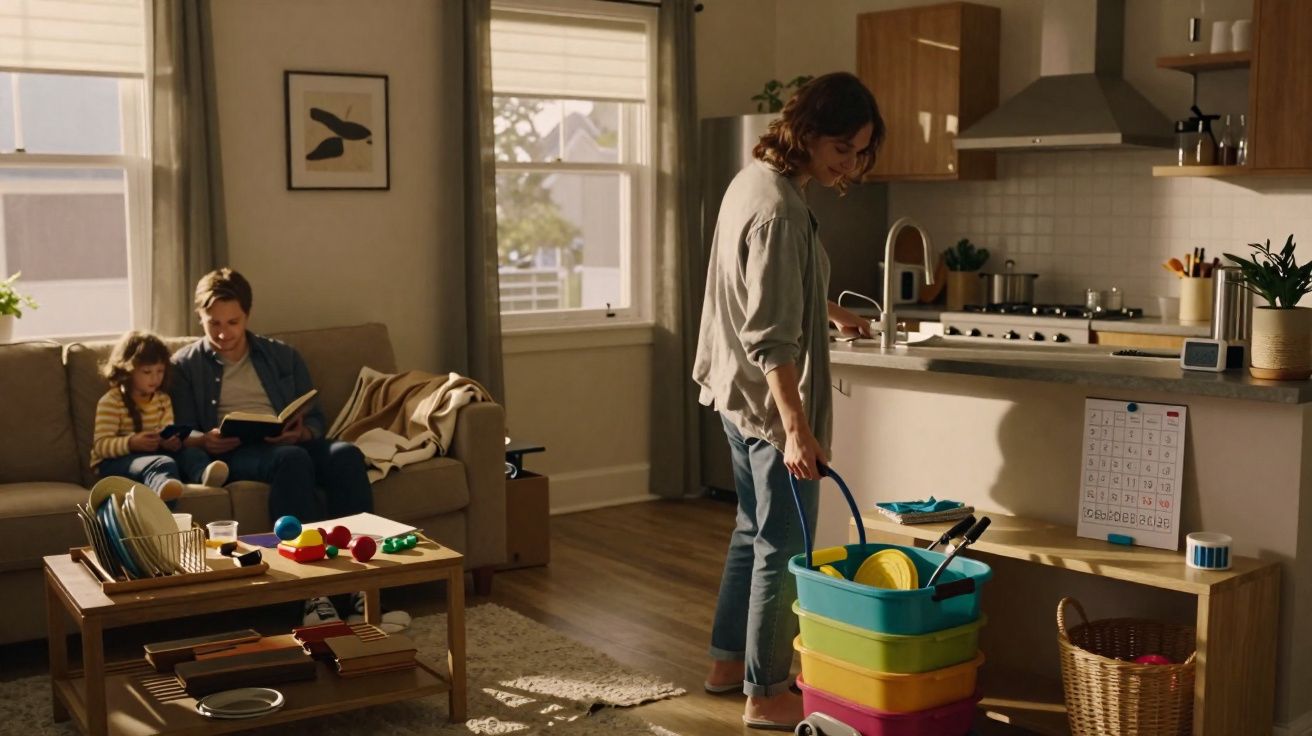
The night I realised my cleaning routine had tipped into something unhealthy, I was crouched behind the loo, polishing a mark that no one would ever notice. My tea was cooling on the table, my phone wouldn’t stop vibrating, and I was working up a sweat over a dust bunny that had apparently been living its best life for months.
When I finally stood up and took a proper look around, something didn’t add up. The flat was already clean. Not show-home clean - just the normal, perfectly acceptable kind of tidy you can actually live in. And still, my brain hissed: “You haven’t done the skirting boards.”
So I left the skirting boards. Nothing terrible happened. That small act of not-doing felt weirdly life-changing.
When “daily clean” quietly becomes a full-time job
There’s a sneaky point where wiping down the worktop stops being a quick habit and turns into a constant mental weight. The change is gradual, so you rarely spot it happening. One week you’re doing a ten-minute tidy after breakfast; a month later you’re scrubbing grout at 10 p.m. because it’s “on the list”.
A big driver is the relentless stream of perfect homes online: shining sinks, towels folded into identical thirds, and people cheerfully claiming they mop “every single day”. You glance at your own very normal mess and conclude you must be falling behind.
So you add another daily task. Then another. Before long, your mind never really clocks off at home.
A friend of mine, Clara, had a handwritten “daily cleaning” checklist stuck to her fridge. At the start it was reasonable: washing-up, wipe the counters, a quick sweep. Over time, it grew as she copied what she saw in cleaning videos: wipe doors, hoover the sofa, sanitise the remote, clean inside the microwave.
One evening she rang me, half giggling and half shattered. “I’ve just spent 18 minutes clearing crumbs out of the cutlery drawer before bed,” she said. “I’ve basically hired myself as a part-time cleaner.”
By then, Clara was spending close to 90 minutes a day on “daily” cleaning - and saving the weekends for “deep cleaning”. Come Sunday night, she felt more wrung out than refreshed.
That heaviness isn’t imaginary. Brains don’t cope well with endless unfinished loops. Every job you label as “daily” sits in your head like a tiny alert you can’t fully dismiss. You can ignore it for a while, but it keeps quietly pinging.
Multiply that feeling by 10 or 15 tasks and your home becomes a permanent to-do list. Some things genuinely benefit from frequent attention - washing-up, rubbish, basic kitchen hygiene. But plenty of other jobs can happily live on a weekly (or even monthly) rhythm without your life falling apart.
And realistically? Almost nobody does all of it every day. When someone insists they do, something else is usually paying the price - sleep, downtime, relationships, or mental space.
Resetting your daily cleaning routine: from daily guilt to smart rotations
My turning point came from doing something that felt almost rebellious: I made a “non-daily” list. I wrote down everything I believed I should do every day, and asked one blunt question: What’s the worst that happens if this waits?
- Toilet: every 2–3 days
- Floors: deal with obvious bits daily if needed; a proper hoover twice a week
- Mirrors, doors, skirting boards: weekly, or even fortnightly
Spoiler: the bathroom didn’t become a horror film.
Instead of chasing everything at once, I started rotating. One small “extra” a day - not ten. Monday: bathroom sink and mirror. Tuesday: change the bedding. Wednesday: dust one room. The flat stayed just as liveable; the real change was that I stopped feeling trapped by it.
The common snare here is an “all or nothing” mindset. If we don’t complete every task, every day, we decide we’ve failed - so we either overdo it relentlessly, or we give up and panic-clean when things get grim.
A kinder approach is to set a daily time budget rather than a never-ending task list. Set a timer for 15–20 minutes and do what matters most that day: washing-up, wipe the surfaces, a quick sweep. When the timer goes and the skirting boards are still dusty, they can wait for “Skirting Board Thursday” (or whatever daft name makes you smile).
That way your home stays consistently good enough - instead of “perfect” for one stressed hour and tense for the rest of the week.
An organiser once said something to me that snapped everything into place:
“A home is meant to be lived in, not audited. If you’re trying to pass an imaginary inspection every night, you’ll fail at actually living there.”
A useful mental switch is asking: Is this hygiene, or is this aesthetics? Hygiene tends to deserve regular attention: food surfaces, the bathroom sink, rubbish. Aesthetics can often slow down with no real consequences.
- Daily: washing-up, kitchen counters, obvious spills
- 2–3 times a week: quick bathroom wipe-down, swift floor pass
- Weekly: dusting, mirrors, changing sheets
- Every 2–4 weeks: skirting boards, windows, deep-cleaning appliances
- Occasionally: the unseen stuff, like behind the fridge
“Good enough” cleaning without feeling like you’ve given up
There’s a surprisingly valuable skill in noticing a minor mess and deciding - deliberately - not to deal with it right now. Not because you can’t be bothered, but because you’re choosing your energy. That sock on the floor can wait until your next “reset moment”. The toothpaste specks on the mirror can go on tomorrow’s quick list, instead of becoming tonight’s guilt.
A practical way to make that choice easier is to set a few visible checkpoints - small signs the day is “done”:
- The kitchen worktop is mostly clear
- The sofa is ready to sit on
- The bathroom sink wouldn’t make you cringe if someone popped in unexpectedly
If those are fine, you’re finished for the day. You’re allowed to sit down.
You’re maintaining a home, not curating a showroom.
Another easy mistake is borrowing routines from people who aren’t living your life. The influencer who squeegees her glass shower after every use may also have no children, no pets, and a partner who rarely cooks. A home with three kids, a dog shedding everywhere, and constant meal prep runs on different rules.
There’s no prize for doing more daily chores than necessary. There is a slow, quiet burnout that creeps in when every evening ends with “just one more thing”. If you feel resentment while wiping crumbs, that’s a sign the schedule is wrong - not that you are.
So shift the blame from yourself to the system, then rebuild the system to fit an actual human life.
“When I stopped pretending I could keep everything spotless every single day, I started enjoying cleaning again,” a reader told me. “It stopped feeling like punishment and started feeling like care.”
Two additions that make a “daily reset” easier in real households
If you live with a partner, flatmates, or children, it helps to agree a shared baseline for the daily reset - even if it’s modest. For example: washing-up done, rubbish dealt with, and the main walkway clear. When expectations are spoken out loud, you’re less likely to silently shoulder everything (and then feel furious about it).
It also helps to reduce friction: keep a microfibre cloth where you actually use it, store bathroom wipes in the bathroom, and put a small handheld vacuum/crumb sweeper where the mess happens. When tools are convenient, you’re more likely to do quick hygiene tasks without turning them into a full production.
Layer your chores: hygiene first, everything else later
One helpful trick is to sort tasks into visible “layers” of priority:
- Health-critical: fridge, food surfaces, bathroom hygiene, rubbish
- Daily comfort: washing-up, a usable table, a sofa you can sit on
- Aesthetic extras: shiny taps, folded throws, an empty laundry basket
- Deep background: inside the oven, window tracks, behind furniture
- Zero-urgency: that mysterious cupboard you open once a month
When you can see the layers, it’s far easier to let some jobs breathe instead of chasing them every single day.
A home that’s clean enough for life, not for judgement
The real change isn’t about sponges or mop heads - it’s about permission. Permission to run your home according to your real rhythm, with busy weeks and slow Sundays, rather than an algorithm’s idea of “daily reset perfection”.
When you stop treating every corner as a daily responsibility, you start noticing what you were trading away: an extra half hour in bed, a conversation that doesn’t end with “I should go and clean the bathroom”, a walk you actually take. Dust sits on a shelf for one more day. Life starts moving again.
Most of us recognise the moment we’ve been scrubbing to impress absolutely no one. Often, that’s exactly when a cleaning routine shifts from control to support. Some tasks genuinely deserve a place in your daily life. The rest are completely fine waiting their turn.
| Key point | Detail | Value for the reader |
|---|---|---|
| Separate hygiene from aesthetics | Put daily effort into washing-up, food areas and bathroom basics; move looks-focused jobs to weekly | Less stress without sacrificing health or basic cleanliness |
| Use time budgets, not endless lists | Set 15–20 minutes for a “daily reset” instead of 15 different tasks | A clear stopping point that reduces guilt |
| Rotate non-daily chores | Do one small “extra” each day rather than trying to do everything at once | A consistently “good enough” home with far less burnout |
FAQ
Question 1: How often should I actually clean the bathroom if I’m not doing it daily?
Answer 1: In most homes, a quick wipe of the sink and toilet every 2–3 days plus a deeper clean once a week is plenty. Daily bathroom cleaning can help in large households, but it isn’t mandatory for everyone.Question 2: Is it “dirty” if I don’t hoover every day?
Answer 2: Not at all. Many people hoover twice a week and spot-clean visible mess in between. Pets, allergies, or toddlers might mean doing it more often, but daily hoovering is a preference - not a rule.Question 3: Which tasks genuinely deserve daily attention?
Answer 3: Washing-up, kitchen counters, obvious spills, rubbish (especially if it smells), and a quick visual reset of your main living area. These tend to have the biggest impact on hygiene and mental load.Question 4: How do I stop feeling guilty when I skip a chore?
Answer 4: Decide ahead of time what’s truly daily and what belongs on a weekly rotation. If a task is scheduled weekly and you don’t do it today, you haven’t “skipped” - you’ve followed the plan.Question 5: Can a home still look presentable without constant cleaning?
Answer 5: Yes. Focus on visible surfaces, entry points, and one or two “anchor zones” such as the sofa and dining table. When those are calm, the whole home feels under control - even if the skirting boards are patiently waiting their turn.





Comments
No comments yet. Be the first to comment!
Leave a Comment