
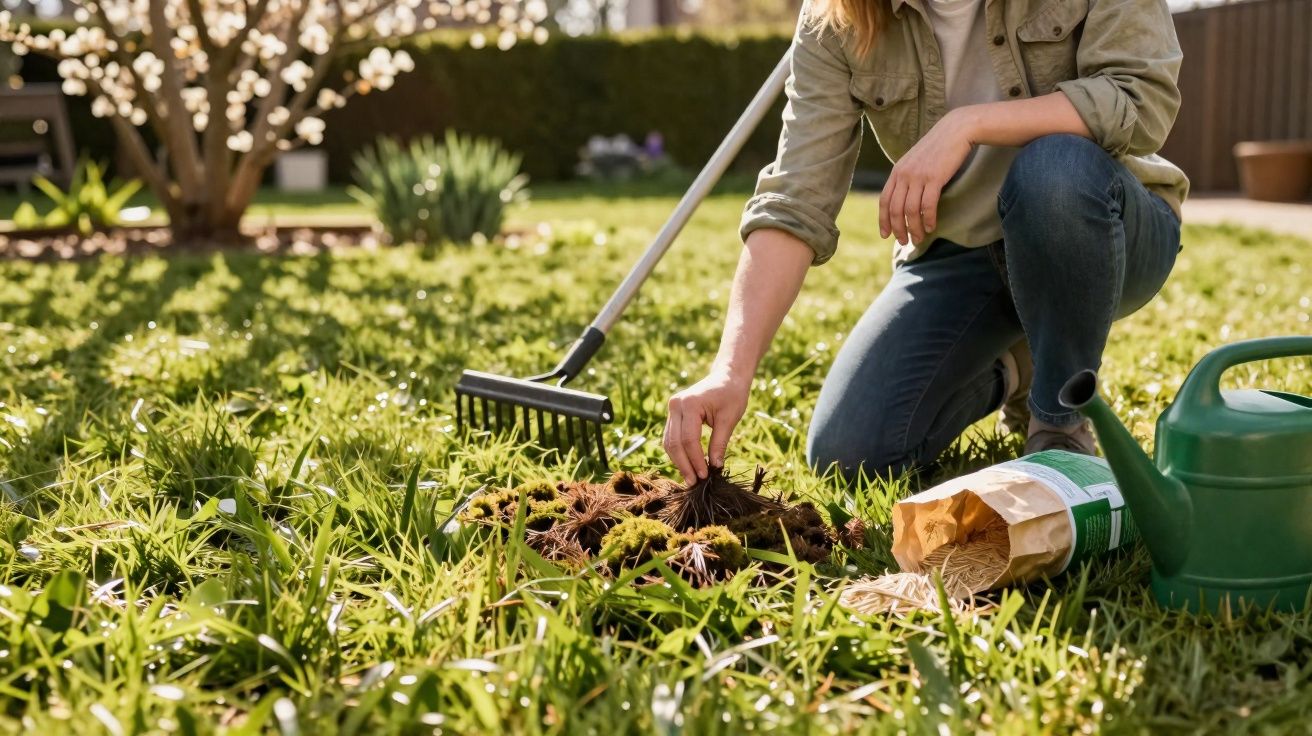
Many home gardeners reach for the scarifier with enthusiasm in spring - and, within a few days, undo much of what the winter left behind.
After a wet winter, the lawn often looks like a greenish sponge, packed with moss and tangled debris. That is precisely when many people get the urge to give it a hard “comb-through” and assume everything will look tidy again. But scarifying without a proper plan usually does more harm than good, leaving you with a brown, patchy mess by May.
Why the lawn suffers so badly after winter
Rain, snow and a lack of sunshine put the turf under pressure for months on end. The soil compacts, water sits on the surface, and the roots receive too little air. At the same time, so-called lawn thatch builds up: dead grass blades, clippings and fallen leaves.
The result is a lawn that slowly suffocates. The blades turn yellow, gaps appear, and moss gets the perfect opening.
Moss is not just a cosmetic issue; it is a warning sign that the soil is stressed, too acidic and compacted.
Typical signs that your lawn is struggling with thatch and compaction include:
- The ground feels springy or spongy underfoot.
- After rain, puddles remain for several minutes.
- Moss dominates while grass grows only sparsely.
- Thick lumps of thatch and moss collect on the rake.
Only when these signs are clearly present does it make sense to consider scarifying. Before that, restraint is the wiser approach.
The spring lawn mistake that can ruin your grass
The biggest danger is scarifying too early and too aggressively. Many people begin as soon as the first mild weekend arrives in March, even though the soil is still icy and the grass is barely growing. At that point, the lawn does not yet have the strength to close up the damage.
Scarifying a lawn before it is properly growing amounts to scalping it, leaving moss and weeds with free rein.
Common spring mistakes include:
- Scarifying immediately after the first mild weekend, even though the soil is still below 8°C.
- Setting the blades too deep, so they tear out roots instead of just lifting thatch.
- Working on wet, heavy ground, which causes the machine to dig trenches and smear the surface.
- Scarifying straight after laying a new lawn, before the roots have had time to establish.
The outcome is brown areas, bare patches, more weed pressure and plenty of frustration.
When scarifying a lawn really makes sense
For most temperate regions, the ideal window falls between March and May. The calendar date matters far less than the condition of the lawn itself.
Three simple checks help you decide:
- Soil temperature: At least 8°C to 10°C. At that point the grass starts growing actively again.
- Growth: The lawn has already been mown two or three times, which shows it has the energy to recover.
- Soil moisture: The surface is slightly damp, but not muddy. There should be no standing water.
Young lawns need patience. During the first one to two years, scarifying should be very light at most. In many cases, it is better simply to loosen the surface and rake gently until the turf is densely rooted.
Scarifying your lawn step by step
If you work in a structured way rather than just tearing into the grass, a scarifier can genuinely help. Here is the process in clear steps.
1. Preparation: strengthen the lawn first
At the start of the season, a light feed with a specialist spring lawn fertiliser is worthwhile. This gives the grass nutrients before it is stressed. A few days later, mow the lawn fairly short, to around 3 to 4 centimetres, and collect all the clippings in the box.
2. Choose the right ground conditions
Scarify only when the soil is:
- not frozen,
- not waterlogged,
- not dry, hard and dusty.
The ideal surface is slightly moist and still offers some give underfoot without feeling muddy.
3. Set the machine correctly
Depth is what separates proper lawn care from destruction. The blades should score the turf lightly, not rip it apart.
| Setting | Effect | Risk |
|---|---|---|
| 2–3 mm depth | Thatch and moss are loosened while the roots remain largely intact. | Suitable for most lawns. |
| 4–5 mm and deeper | Roots are damaged and bare patches appear. | Risk of scalping; only for special cases. |
Run the machine in steady, even lines across the lawn. In badly thatched areas, you can make a second pass at right angles, but only if the first pass has not already weakened the turf visibly.
4. Tidy up after scarifying
All loosened thatch must be removed completely. If it is left behind, it will block air and water again. The best tools are a sturdy metal rake or a lawn mower set to collect.
A neatly raked lawn often looks worse at first glance - and that is exactly when recovery begins.
Aftercare: soil care to stop moss coming back
Removing the thatch is not the end of the job. The soil is now open in many places, and that is where the battle between moss and grass is won.
One of the most important steps is correcting the pH level. Many lawns are too acidic, not least because of years of using iron(II) sulphate against moss. It may scorch moss cushions, but it also makes the soil even more acidic - a classic boomerang effect.
Instead, a lime-based soil improver such as dolomitic limestone is a better choice, as it gently raises the pH. The dosage depends on the soil type and the product instructions. If you are unsure, a simple soil test from a garden centre is a sensible first step.
A further useful measure is to check the lawn over the following weeks. If moss returns quickly in the same places, the real cause is often shade, poor drainage or repeated compaction rather than the moss itself.
Overseed bare patches and water correctly
Scarifying often reveals more bare ground than expected. If you ignore it, you are inviting weeds. Special lawn overseeding mixes help fill gaps with robust grasses.
How to proceed:
- Lightly loosen the soil in bare areas.
- Spread the overseed evenly, but not too thickly.
- Rake in lightly or press it down so the seed makes contact with the soil.
- Keep it moist, but do not drench it - frequent light watering is better than infrequent heavy watering.
For the first few days after scarifying, the lawn should be walked on as little as possible. Every footprint compresses the delicate areas again.
Common myths about moss and scarifying
Many garden owners see moss as the main problem. In reality, it is usually only a symptom. Shade, damp conditions, a low pH, poor nutrition and mowing too low all create the perfect environment.
A few widespread misconceptions, checked quickly:
- “The more often, the better”: One scarifying session, at most two, per year is enough. More than that weakens the turf.
- “Moss killers solve everything”: Products that only kill moss, without any follow-up measures, often make the soil problems worse in the long run.
- “Shorter is healthier”: Constantly mowing extremely low encourages moss. A cutting height of 4 to 5 centimetres is usually healthier.
Scarifying as part of complete lawn care
Scarifying is only one part of lawn care. Without the right watering regime, an appropriate cutting height and regular but not excessive feeding, the results will remain disappointing.
For example, a lawn in partial shade that is always kept short and sits on heavy, wet soil will soon become thatched again, even after perfect scarifying. In such cases, added sharp sand can improve drainage, mowing height may need adjusting, and very shaded areas might be better converted to ground cover rather than grass.
Anyone who takes the time once a year to assess the soil, check the level of thatch and then act thoughtfully will save themselves frantic rescue work in the height of summer. The real skill is not to treat the scarifier as a miracle cure, but as a tool that does great things at the right moment - and can destroy a lawn within days if used at the wrong time.





Comments
No comments yet. Be the first to comment!
Leave a Comment