
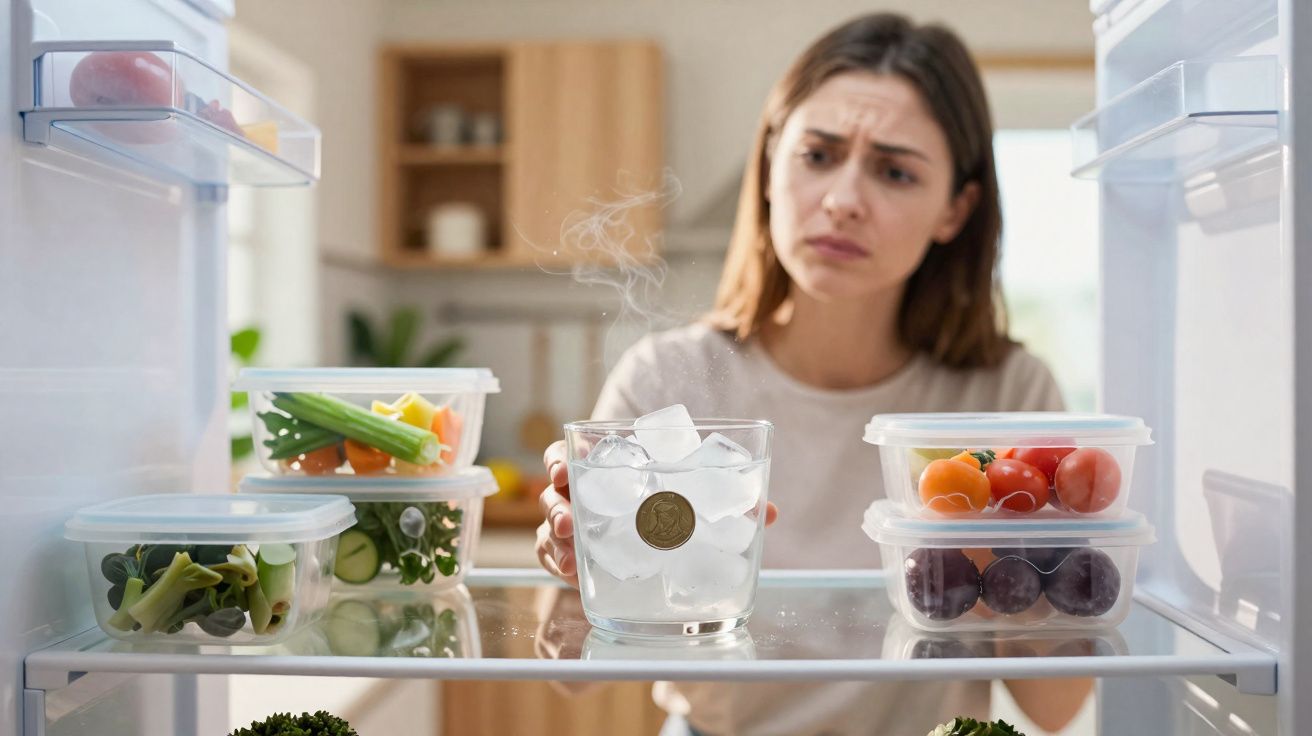
You return from a trip to find the oven clock blinking and the kitchen looking perfectly ordinary-almost suspiciously so. The freezer is humming away, the door seal feels icy, and nothing appears amiss. But an awkward doubt sits behind every pack of mince and every tub of ice cream: did everything stay properly frozen, or did a hidden power cut turn your freezer into a short-lived breeding ground for bacteria?
A hidden risk every time the power goes off
A freezer can feel like a guarantee: food goes in rock-hard and comes out weeks later looking much the same. The catch is that most of what matters happens when you’re not there to notice.
If there’s a power cut while you’re at work, asleep, or away for the weekend, the freezer temperature can creep up and then drop again before you return. The food may still feel firm on the outside and the packaging can look completely normal. Even so, a few hours of mild warmth can be enough to let bacteria multiply.
Freezing pauses most microbial growth. Thawing restarts it. Repeated cycles of thaw and refreeze give bacteria a head start you cannot see or smell.
Food safety authorities in Europe and North America repeat the same point: freezing does not sterilise food. It simply slows or stops microbes that are already present. Once temperatures rise above roughly 5°C, many bacteria become active again and-given the right conditions-can double in number about every 20 minutes.
Picture a chicken portion in a freezer that loses power for several hours. The core temperature slowly climbs towards fridge temperature, or higher. Any Salmonella or Campylobacter present can begin multiplying. When power returns and everything refreezes, you may be left with significantly more bacteria than you started with-and no reliable way to tell by sight or smell.
The coin and ice trick: a low-tech “black box” for your freezer during a power cut
A practical household method, often shared in food safety campaigns and on social media, is the coin and ice trick: keep a coin on top of a frozen block of water in your freezer.
A single coin, sitting on frozen water, can act as a crude flight recorder for your freezer, showing how far the temperature rose while you were away.
How to set it up step by step
- Fill a small bowl, mug, or ramekin with tap water.
- Put it on a flat, easy-to-spot shelf in the freezer.
- Leave it until the water is frozen solid.
- Place a coin flat on top of the ice.
- Return the bowl to the freezer and keep it there long-term.
After that, the coin becomes a quiet witness. If the ice never melts, the coin stays on top. If a power cut lasts long enough for the ice to melt and later refreeze, the coin will sink into the water and become trapped lower down once the ice sets again.
How to “read” the coin after a suspected power cut
Where the coin ends up gives you a simple clue about what happened inside the freezer while you were away.
| Coin position | What likely happened | What to do |
|---|---|---|
| Coin still on top of the ice | The ice never melted; the freezer stayed cold enough | Food is likely safe; still check for odd smells, damaged packaging and use by dates |
| Coin sunk slightly below the surface | Partial melting; the temperature rose, probably not for very long | Be cautious with high-risk foods (meat, fish, dairy); consider cooking soon or discarding |
| Coin at the bottom of the bowl | The ice fully melted and refroze; prolonged loss of freezing temperature | Treat contents as potentially unsafe; discard perishable items |
If the coin hasn’t moved, your freezer probably stayed within a safe range. That doesn’t make old or poorly stored food safe, so keep doing basic checks: look for swollen packs, severe freezer burn, split containers, and anything that smells “off” once thawed.
If the coin is clearly trapped deep in the ice-or sitting at the bottom-you have evidence that the freezer stopped freezing for a meaningful period. In that situation, the safest assumption is that meat, fish, cooked dishes, ready meals, seafood, ice cream, and dairy-based desserts may no longer be safe.
When the coin has clearly dropped, the question is not “can I save this food?” but “do I want to risk days of vomiting for a few pounds’ worth of groceries?”
Why refreezing food can be so risky
A common myth is that if food refreezes, the problem disappears. Unfortunately, that’s not how bacteria behave.
Freezing stops most bacteria from growing, but it does not undo growth that already happened. If food warmed up and bacteria multiplied dramatically, refreezing simply locks a larger number of microbes in place. When you later thaw and eat the food, those microbes are still present.
Some bacteria can also produce toxins that can remain harmful even if the bacteria later die. That is one reason people can become ill from food that looks and smells fine-you may be dealing not only with microbes, but with the by-products they left behind.
Which foods are most vulnerable?
Some frozen items are consistently treated as higher risk after a power cut or repeated warming and refreezing. Food safety agencies regularly flag:
- Raw or minced meat and poultry
- Fish and seafood, especially shellfish
- Ready-to-eat meals and cooked dishes
- Dairy desserts, ice cream and frozen yoghurt
- Food for babies, toddlers, pregnant women, elderly people, or anyone who is immunocompromised
By contrast, frozen bread, plain fruit, and some vegetables are generally lower risk from a microbiological point of view-though their texture and flavour may suffer after thaw–refreeze cycles.
Other simple checks to use alongside the coin and ice trick
The coin and ice trick is useful, but it’s strongest when paired with a few everyday habits that reduce your chances of food poisoning after a blackout.
- Keep a fridge/freezer thermometer inside and check it regularly (many freezers are designed to hold around -18°C).
- During a power cut, avoid opening the freezer-each opening releases cold air and speeds thawing.
- Label frozen items with the date you froze them and the original use by date.
- Store high-risk foods (meat, fish, leftovers) together so you can assess them quickly if something goes wrong.
- Defrost food in the fridge, not on the worktop.
If you live in an area with frequent outages, a battery-powered temperature logger or an alarm thermometer can give more precise information than a coin. Still, for most households, the coin remains a near-zero-maintenance way to spot that the freezer warmed up when nobody was watching.
One more practical step that’s easy to overlook: if you’re going away, consider turning your freezer temperature slightly colder (if it has a control and the manual allows it) and making sure the door seal is clean and intact. A good seal and a colder starting point can buy you time if a power cut occurs.
You may also want to check whether your home insurance policy covers spoiled freezer contents, and whether your electricity supplier offers any compensation for prolonged outages. It won’t make the food safe, but it can soften the financial sting when the safest choice is to throw items away.
What happens in your body during food poisoning
Food poisoning is often dismissed as a “dodgy tummy”, but outcomes can range widely. Mild cases may mean several hours of nausea, cramping, and diarrhoea. More serious infections can bring high fever, persistent vomiting, dehydration and-particularly for vulnerable people-hospital admission.
Bacteria such as Salmonella, Listeria, Campylobacter and certain strains of E. coli can be spread through mishandled frozen food. Symptoms can appear within hours or take several days, which makes it difficult to connect the illness with that questionable lasagne retrieved from an uncertain freezer.
Throwing away a freezer drawer of food is frustrating; spending three days in the bathroom or an A&E ward is worse.
Practical scenarios: when to be strict, when to be pragmatic
Consider two examples. In the first, you return from a 10-day holiday and the oven clock is flashing. The coin is right at the bottom of the bowl, frozen in place. That strongly suggests the freezer warmed enough for the ice to melt fully, then refroze before you got back. In that case, treating all high-risk foods as unsafe is the sensible call, even if it feels wasteful.
In the second example, you pop out for the afternoon, a storm causes a brief outage, and later you notice the coin has dropped only a few millimetres. The ice is still largely intact and your thermometer reads just below 0°C when the power returns. Here, you might keep some lower-risk items, use them promptly, and cook thoroughly-while still binning anything intended for babies, pregnant women, or anyone with a weaker immune system.
Being strict for the most vulnerable people and more flexible with genuinely low-risk foods can help balance waste concerns with protecting health.
Words you may see on labels and what they really mean
When a freezer’s recent history is uncertain, label wording becomes even more important. Common terms include:
- “Use by” date: a safety deadline. After this, the food may be unsafe, even if it has been frozen and then thawed.
- “Best before” date: a quality marker. After this, taste and texture may decline, but safety is not automatically affected.
- “Do not refreeze once thawed”: the manufacturer assumes domestic handling where temperature abuse can happen. Ignoring this instruction increases risk.
A coin in a bowl won’t change the biology, but it can give you a clear visual warning when the line between “probably fine” and “definitely risky” may already have been crossed.


Comments
No comments yet. Be the first to comment!
Leave a Comment