
Most of us give the fridge a proper once-over: shelves get scrubbed, drawers get wiped, and anything past its use-by date gets binned. Yet a surprisingly filthy spot is often ignored entirely-even though it can be one of the grimiest areas in the whole kitchen.
The forgotten hole at the back of your fridge (the fridge drain hole)
At the rear panel of many modern fridges, usually just above the vegetable drawers, you’ll find a narrow channel that leads to a small drain hole. This fridge drain has a straightforward purpose: it gathers condensation and directs it to a collection point at the back of the appliance, where the moisture can evaporate.
Because it’s out of sight, that little opening rarely gets any attention. Over time, it can accumulate dust, crumbs, splashes of sauce, fragments of salad leaves and even mould. As the build-up grows, the drain hole can clog, the water no longer flows as it should, and a thin puddle can start forming inside the fridge.
A drain hole that’s only about 1 cm wide can quietly become a warm, damp breeding ground for bacteria and mould spores.
This area sits in a dark, humid microclimate-exactly the sort of conditions many micro-organisms prefer. Add occasional drips from raw meat packaging, dairy spills or vegetable residue, and you’ve got an ideal mix for contamination you won’t necessarily notice straight away.
Why a blocked fridge drain makes your fridge dirtier than it looks
Condensation is normal in a working fridge. Every time the door opens, warmer air enters, cools rapidly, and releases moisture. That water collects on the back wall and is meant to run down into the fridge drain.
When the drain is blocked, the water can’t escape. Instead, it pools along the rear panel or gathers at the bottom of the compartment. It may look harmless, but a shallow layer of standing water changes the environment inside your fridge.
- Moisture keeps surfaces damp for long periods.
- Damp plastic plus tiny food residues can feed bacteria.
- Mould spores (which are always present in small amounts) can suddenly flourish.
Each time you open the door, shifts in temperature and air pressure can help move those spores around the fridge.
Moisture from a blocked drain doesn’t just sit there-it can help spread spores onto uncovered food and packaging.
Fresh herbs, cheese, leftovers cooled and stored without lids, or fruit left on an open plate can all become easier targets. Visible mould might take days to appear, but contamination can begin well before anything looks “off”.
The one-minute cleaning trick that actually works
The upside is that cleaning the fridge drain hole is one of the quickest hygiene jobs in the kitchen-often faster than wiping a shelf.
Step-by-step: how to clean the fridge drain safely
- If you plan to pull the fridge out or do a more thorough clean, switch it off at the socket first.
- Remove the vegetable drawers or clear the bottom shelf so you have a clear view of the back wall.
- Find the narrow groove and the small drain hole at the rear, just above the drawers.
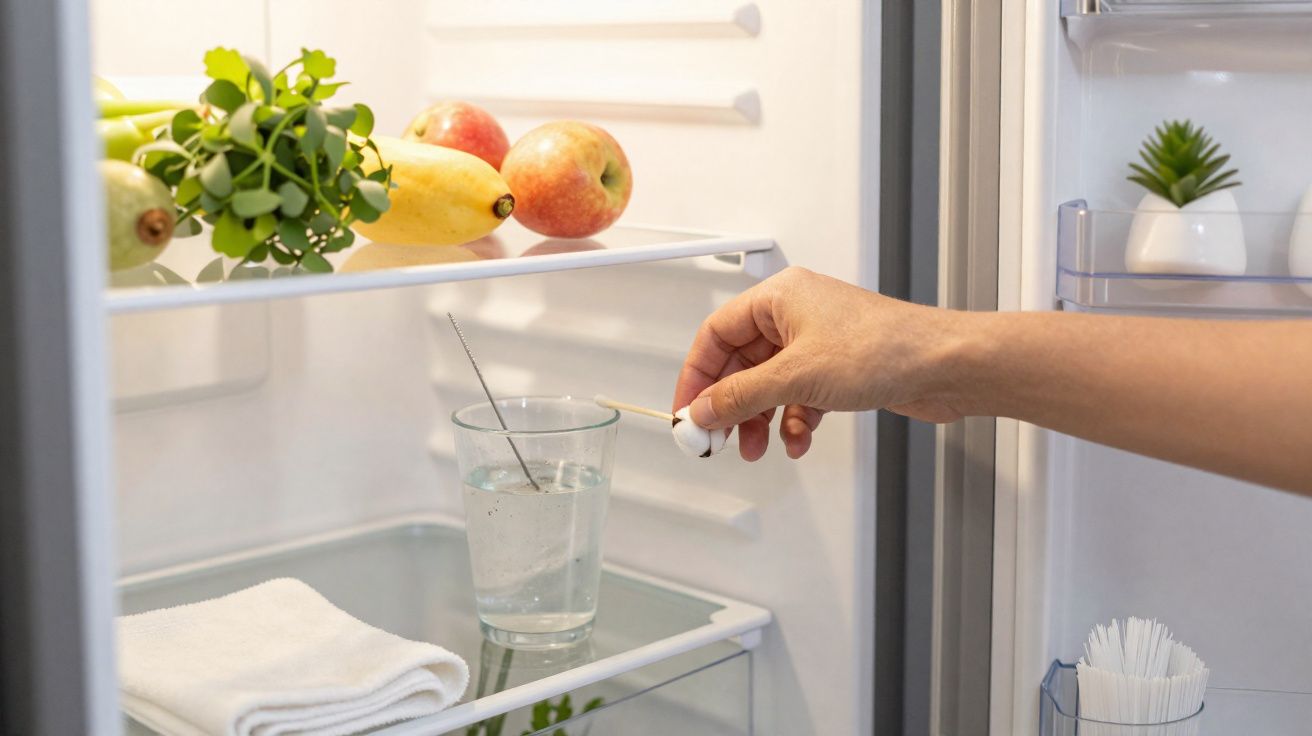
- Using a thin brush, a cotton bud, or the cleaning tool that sometimes comes with the appliance, gently loosen any debris.
- Mix a small cup of warm water with a few drops of washing-up liquid or a splash of white vinegar.
- Pour a little into the groove and check whether it drains freely.
- If the water doesn’t run away, repeat the gentle brushing and carefully work through the blockage.
Most blockages clear with warm water, a little detergent and a thin brush or cotton bud.
Avoid metal skewers, knives or other sharp tools: manufacturers often advise against them because they can damage internal components. A flexible plastic straw or a pipe-cleaner-style brush is typically safer and does the job well.
Don’t overlook the hidden drain tray at the back of the fridge
The drain hole usually feeds into a small plastic drain tray (or pan) at the rear of the fridge, often positioned above the compressor. This is where the condensate from inside the appliance collects before it evaporates.
In many homes, the drain tray is never checked from the day the fridge is installed. Over time, dust, greasy cooking vapours and tiny food residues can settle there, then dry around the edges-or contribute to persistent smells.
How to check and clean the water tray
- Carefully pull the fridge away from the wall so you can reach behind it.
- Locate the shallow plastic tray on or near the compressor.
- Slide it out or tilt it only if the design allows (refer to your user manual if you’re unsure).
- Tip any dirty water down the sink.
- Wash the tray with hot water and washing-up liquid, rinse thoroughly, then dry and refit it.
A neglected drain tray can be the real cause of that “fridge smell”, even when the interior looks spotless.
If you notice a sour or musty odour whenever you open the door, the fridge drain hole and the drain tray should be among the first areas you inspect.
How often should you clean the fridge drain?
For most households, a quick clean every 1–3 months is usually sufficient. If your fridge sees heavy use-lots of fresh produce, frequent spills, or children opening the door repeatedly-more regular checks are worthwhile.
| Household situation | Suggested drain cleaning frequency |
|---|---|
| One person or a couple, light fridge use | Every 3 months |
| Family with children | Every 4–6 weeks |
| Shared house with heavy fridge traffic | Monthly |
| After major spills or leaks | Immediately |
To make it easier to remember, link the drain clean to a task you already do, such as checking use-by dates or wiping the door shelves.
Health, odours and food waste: what’s really at stake
A dirty drain hole doesn’t usually cause a dramatic bout of food poisoning on its own, but it can contribute to a general build-up of contamination in the fridge. That background contamination can shorten the life of fresh foods and encourage faster mould growth on items such as bread, cheese and fruit.
Damp, unclean areas also play a big part in stubborn odours. It’s easy to blame strongly scented foods, when the real culprit is a mouldy groove at the back.
Keeping the drain clear helps your fridge do what it’s designed to do: slow down bacterial growth on your food.
There’s an efficiency aspect too. If standing water freezes on the back wall or interferes with airflow, the appliance may have to work harder to maintain a steady temperature-something that can gradually push up electricity use.
Why mould and bacteria cope in fridges better than you might expect
A fridge is cold, but it isn’t a freezer. Most are set to around 3–5 °C. At these temperatures, many bacteria don’t stop completely-they simply multiply more slowly. Mould can be even more resilient, particularly in damp corners.
Condensation, drips from raw meat packaging, vegetable rinse water and forgotten leftovers can all provide microscopic “food” for micro-organisms. When those nutrients settle in the drain groove, they can support colonies you can’t yet see.
That’s why these habits work best together: cover food, wipe spills as soon as they happen, and keep the fridge drain clear. Each step reduces the conditions micro-organisms need to multiply.
Two extra checks that support a cleaner, safer fridge
If you’re already doing a quick maintenance routine, it’s worth adding two related checks that help prevent moisture problems and reduce food waste.
First, make sure the fridge temperature is staying in the safe range. If items regularly feel warmer than they should, or the fridge is packed so tightly that air can’t circulate, condensation can increase and the drain may have to cope with more water than usual.
Second, take a moment to inspect the door seals. A split, dirty or poorly fitting seal lets warm air in more often, which increases condensation and can make the back panel wetter. Wiping the seals with warm soapy water and ensuring the door closes properly can reduce the conditions that lead to a blocked drain hole.
Turning a tiny task into a long-term habit
Think about your next “big” fridge clean: shelves come out, old jars get thrown away, drawers get scrubbed. Adding the fridge drain hole to that routine typically takes about a minute, yet it removes one of the most persistent sources of moisture and grime in the appliance.
For anyone with allergies or asthma, this is especially relevant. Mould spores developing inside the fridge can add to airborne irritants in the home-particularly in smaller kitchens with limited ventilation.
Seen in that light, cleaning the drain hole isn’t just about a tidy appliance. It’s a simple, low-cost habit that supports better hygiene, fewer unpleasant smells and food that stays fresh for longer-thanks to one tiny opening that’s easy to miss.





Comments
No comments yet. Be the first to comment!
Leave a Comment