
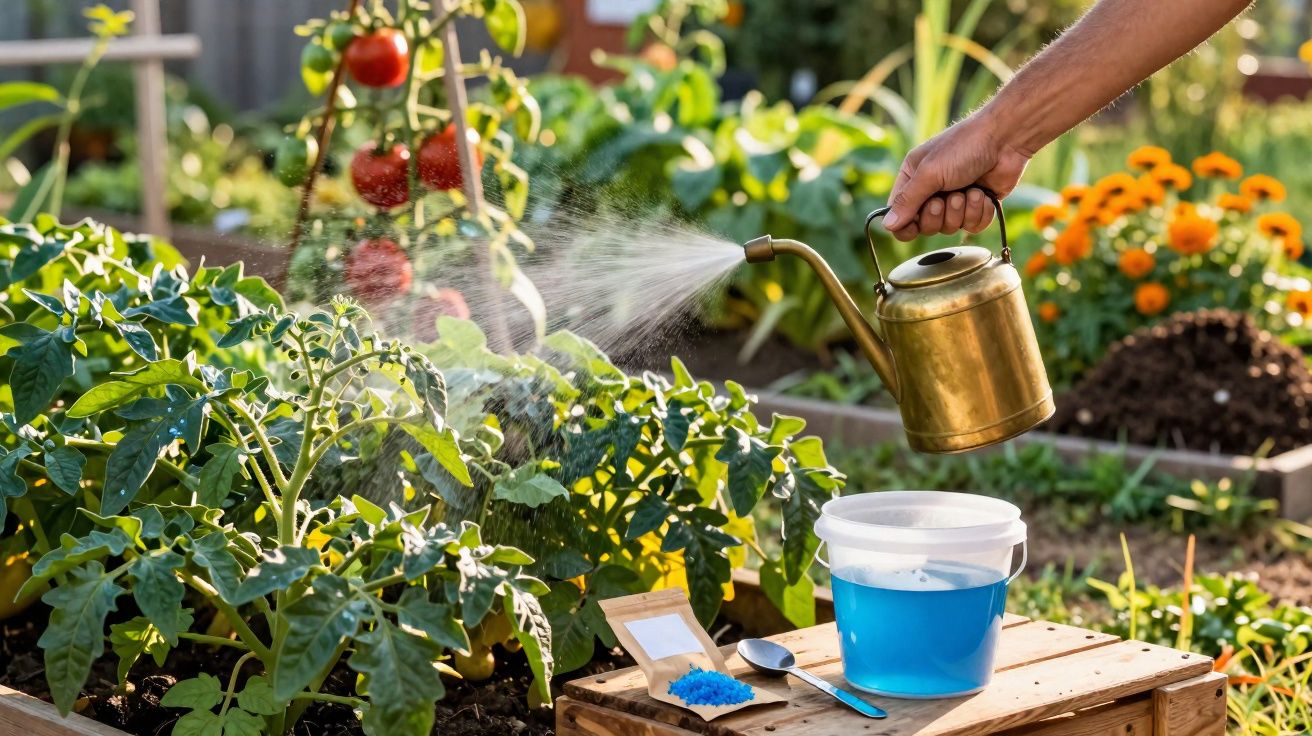
When tomatoes and potatoes suddenly turn brown, it is often already too late - yet an old 1970s method can still save the harvest.
Many amateur gardeners know the heartbreak: for weeks they nurture their tomatoes, then a spell of warm, damp weather is enough to send everything downhill within days. Leaves discolour, fruit rots, and the plants seem to collapse almost overnight. For a long time, this outcome appeared unavoidable. In the 1970s, however, garden owners relied consistently on a copper-based treatment that sharply reduced fungal attack. That knowledge is now enjoying a remarkable revival.
How potato and tomato blight destroys whole beds
Why tomatoes and potatoes are so vulnerable
The dreaded brown rot - more commonly known as potato and tomato blight, or late blight - is a fungal disease that mainly attacks tomatoes and potatoes. It thrives when warmth and moisture come together. That is why it often appears in gardens in midsummer, when days are hot and nights bring condensation, or when rain keeps returning.
The damage is especially deceptive because it often begins almost unnoticed before accelerating at speed. Many gardeners only realise what is happening once the problem is already well advanced.
Typical signs include:
- Leaves with yellow or brown spots that spread further
- Darkened, soft stems that later die back
- Brown, sunken patches on fruit that rot quickly
If these early signs are ignored, the fungus can wipe out an entire crop within just a few days.
The pathogen spreads through spores in the air. Wet foliage, cramped spacing and watering over the leaves act like a turbo boost. That is why the disease used to hit poorly ventilated, densely planted gardens in particular - and still does today.
The blue classic from the 1970s: copper against fungal infection
Bordeaux mixture: what the “blue spray” actually is
What sounds almost routine in many older gardening manuals sounds almost exotic to younger gardeners: spraying a copper-based solution to protect plants in advance. The products in question are based on copper sulphate and are usually sold as Bordeaux mixture.
This bluish liquid leaves a fine film on the leaves. There, the copper acts as a shield against fungal spores. The active ingredient does not penetrate deeply into the plant; instead, it stops new spores from germinating on the surface. For that reason, the method is best suited to prevention rather than rescue when the crop is already on the brink.
Many older gardeners still remember a fixed Saturday ritual: mix, stir and spray before the sultry thunderstorms arrived and sent the spores into overdrive.
Benefits - and the limits of the method
Copper products are still regarded as an effective weapon against blight. The substance is highly toxic to the fungus, tolerated by the plant in the correct dose, and even permitted in limited amounts in organic growing.
However, that “in moderation” part is crucial. Copper is a heavy metal and builds up in the soil. If it is sprayed carelessly year after year, soil life, earthworms and tiny organisms are harmed in the long run.
The old method does work, but today it demands more judgement: little, targeted use and always alongside other protective measures.
Modern gardening advice therefore recommends using copper only sparingly, sticking strictly to the dosage instructions and combining it with other gentler strategies.
How home gardeners mix and spray the copper mixture correctly
Step by step to the blue protective layer
Anyone wanting to use the traditional copper treatment should work carefully and precisely. A typical set-up for a medium-sized vegetable garden looks like this:
- Plant sprayer or pressure sprayer with a capacity of around 10 litres
- 30–40 grams of copper-based powder (Bordeaux mixture, exactly as stated on the packaging)
- Bucket and stirring stick for preparing the solution
- Gloves, and possibly a face mask and protective goggles
The powder should be stirred into water gradually until everything has fully dissolved. The solution is then poured into the sprayer. Important: always follow the manufacturer’s instructions and never add “just a bit more” for safety’s sake. In this case, more does not help; it only harms the soil and the environment.
Timing is crucial
Copper treatment works best before the fungus becomes visible. Anyone waiting until the first fruit has already turned brown is usually already chasing the problem rather than preventing it.
Proven practice includes:
- First spraying just before critical weather patterns, such as warm, damp days in early summer
- Further applications after heavy rain, once the protective film has been washed off
- A maximum of five or six treatments per season, and fewer in dry summers
It is also worth keeping a short weather and treatment diary. If you note rainfall, spray dates and the first symptoms, it becomes much easier to recognise the danger periods next season.
The ideal time to spray is in the morning, when the weather is dry and calm. That allows the film to settle evenly without droplets running off or drifting away. Midday heat and strong sun increase the risk of leaf scorch and should be avoided.
Suitable crops in the vegetable garden
Copper treatment is especially suitable for highly vulnerable plants such as:
- Outdoor tomatoes and tomatoes in an open greenhouse
- Potatoes, especially in wetter regions
- Grapevines, as well as sensitive outdoor aubergines and cucumbers during prolonged wet conditions
Anyone growing only a few plants in containers can usually reduce applications significantly, because pots near the house are easier to monitor and move if necessary.
Practical tips: how to make the protection even more effective
Common mistakes that actually encourage the fungus
Many problems are caused not by under-spraying, but by poor cultivation practice. Typical traps include:
- Tomatoes planted too tightly, leaving insufficient space
- Watering directly over the leaves, especially in the evening
- Not removing the first infected leaves
- Choosing varieties for yield alone, rather than for resilience
A better approach is an airy structure: tie plants to stakes or strings, thin out side shoots and remove the lower leaves that touch the soil. A drier microclimate around the plants noticeably slows the fungus.
Anything that is already clearly infected should be removed at once and disposed of with household waste rather than added to the compost heap, so the pathogen does not survive into the next planting cycle.
How garden professionals combine copper with natural remedies
Experienced gardeners now rarely rely on copper on its own. They use a whole toolkit of measures to keep the number of sprays as low as possible. Popular options include:
- Nettle slurry to strengthen plants generally
- Horsetail broth, which firms up tissue and makes fungal infection more difficult
- Garlic or onion extracts with a mild fungicidal effect
- Bicarbonate sprays, which temporarily alter the leaf surface environment
When several strategies are combined intelligently, much less copper is needed - and the harvest is usually more reliable.
Classic cultivation methods also help: crop rotation, meaning no tomatoes in the same spot year after year, and companion planting with herbs such as basil, which can improve the microclimate and attract beneficial insects.
A garden between tradition and ecology
How much copper can healthy soil tolerate?
Copper occurs naturally in soil. It becomes a problem when substantially more is added over many years than can be broken down or bound. At that point, soil life suffers. Earthworms become less common, microorganisms fall out of balance, and the result may later be compacted ground that is hard to work.
Anyone who has sprayed heavily over previous decades should therefore pause, mulch generously and work in organic matter. Compost, leaves and green manure loosen the soil, support humus formation and help bind nutrients.
Practical examples of a more resilient vegetable garden
A resilient garden against blight rests on several pillars. Measures that have proved successful include:
- Rain covers or simple shelters over tomatoes to keep the leaves dry
- Generous plant spacing for better air circulation
- A mulch layer of straw or grass clippings so soil water does not splash onto the leaves
- A preference for robust varieties, even if they yield slightly less
- Prompt removal of the first affected leaves, rather than hoping that “it will be fine”
Anyone who takes these basics seriously only needs copper as an occasional protective shield in exceptional wet summers. That is the strength of the old 1970s method: it works when it is embedded in a modern, cautious growing system, rather than being used automatically every weekend as it once was.
In that way, the experience of earlier generations is combined with today’s environmental care - and the chances rise that tomatoes, potatoes and grapevines will still give a generous harvest even after a wet summer.

Comments
No comments yet. Be the first to comment!
Leave a Comment