
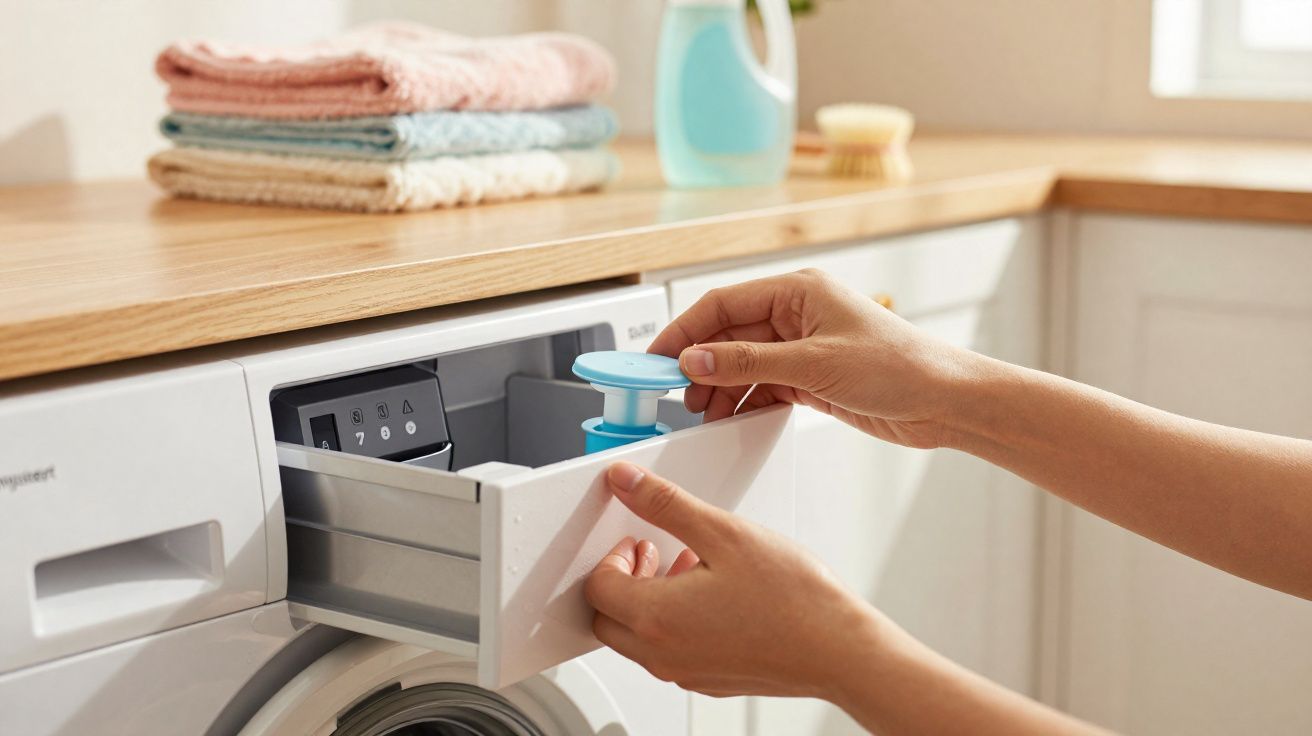
Anna tugged the detergent drawer open with one hand, phone in the other, and stared at a tiny, stubborn plastic flap at the back. She brushed away the dried powder around it, paused, then slid the drawer shut again without touching the “mystery” piece. As usual.
Her jeans came out looking flat. The towels felt stiff and scratchy. She blamed the detergent, the brand, even the water quality in her block of flats. It never crossed her mind that the discreet bit of plastic she’d ignored for years might be the real reason.
Most people couldn’t tell you what that part is called, never mind what it does. Yet it quietly decides whether your laundry comes out fresh and soft - or merely passable.
The fabric softener siphon insert: the mystery part hiding in plain sight
Pull out your washing machine drawer and take a proper look. In most modern machines you’ll find three sections: one for pre-wash, one for the main wash, and a smaller one - often marked with a flower symbol or “III” - sometimes with a blue or clearly marked plastic piece that looks almost ornamental.
That “ornamental” piece is usually the fabric softener siphon insert (also called a softener cap on some models). Sometimes it looks like a little tower, sometimes a cap, and sometimes a removable flap with a tiny hole or slit. Manufacturers vary the shape, but the idea is the same: it’s the bit that controls when the softener is released into the drum.
Without it, the softener doesn’t arrive at the right point in the cycle - or it doesn’t leave the compartment properly at all.
In a suburban laundrette on a wet Tuesday, a technician pulled one out and let it drop into his palm, as if he were revealing a magic trick. He pointed out that a customer’s softener compartment was still nearly full after the wash. “See? It never went anywhere,” he said, turning the piece over to show a crust of sticky blue residue.
She’d spent months saying her clothes “never smell like they do in the bottle”. She switched brands, poured in extra, aired everything on the balcony. The whole time, it was the blocked siphon insert stopping the softener from flushing out as intended.
Manufacturers receive plenty of calls about “detergent issues” that aren’t actually about detergent. One major European brand has shared that a sizeable proportion of complaints about poor rinsing or softener “not working” come down to drawer parts being dirty, missing, or incorrectly fitted.
Here’s what’s happening in simple terms. The insert acts as a siphon system. During the softener stage, water flows into that compartment and the level rises. Once it reaches a specific height, the shape of the insert triggers a rapid siphon effect - a quick surge that pulls the compartment’s contents out in one go and into the drum.
If the insert is missing, fitted upside down, or clogged with residue, the siphon doesn’t trigger. Instead of a proper flush, you get a slow trickle. The outcome is either:
- the softener leaks out too early (often before the final rinse), or
- it sits in the drawer until you open it afterwards and wonder why it’s still full.
That’s why the same machine can suddenly seem “weaker” even though nothing has actually broken. Often it’s simply this small part, quietly failing to do its job.
How to use the fabric softener siphon insert properly
Remove the drawer completely.
On many machines you’ll need to press a small release tab to pull it all the way out.Identify the softener compartment.
Look for the flower icon or the “III” marking, then locate the removable insert sitting inside.Take the insert out and clean it.
Rinse it under hot water. Use your fingers or a soft brush to clear the hole or slit. Don’t be surprised if you remove a lot of slippery build-up.Refit it exactly as it was.
Click or slide it back into place so it sits flat and stable. If it wobbles or doesn’t sit correctly, it won’t siphon properly.
On your next wash, stick to the max line. That ridge inside the compartment isn’t just there for show. If you fill above it, the siphon can activate too early and release the softener at the wrong stage.
Let’s be honest: hardly anyone does this routinely. Most people never remove the drawer at all. They pour the products in, close it, and assume everything will sort itself out. So when towels turn rough and T-shirts feel older than they should, it doesn’t occur to anyone to question that silent plastic insert.
The classic mistake is believing “more product equals better results”. So the compartment gets overfilled. The softener then seeps out during the early part of the programme rather than the final rinse. The result: laundry that smells strong but doesn’t feel properly soft - and a machine that gradually collects sticky residues.
Another common problem is binning the insert during a big clean-out. Some people assume it’s packaging, a transport piece, or an unnecessary extra. Once it’s gone, the softener dosing loses its timing and the whole system becomes far less precise.
A washing machine engineer described it like this:
“On the phone, people are convinced their machine is on its last legs. About half the time, I just tell them to clean or refit that little insert in the drawer. Ten minutes later, their ‘faulty’ machine is suddenly washing better.”
To put it plainly, here’s what this part changes day to day:
- It ensures the softener is released during the final rinse, not earlier.
- It stops product sitting in the compartment indefinitely.
- It reduces thick build-up that can turn musty over time.
- It helps each capful of softener reach your laundry rather than going straight down the drain.
Once you watch it working - the level dropping at exactly the right moment - you’ll never see the drawer the same way again.
What changes when you start paying attention to this tiny part
There’s a noticeable shift once you understand what that insert is doing. You start pulling the drawer out with a bit more purpose. Instead of tipping liquids in at random, you treat each section as a proper dosing tool, not just a set of vague plastic wells.
People often say their machine feels “like new” once the drawer is genuinely clean and the siphon insert is back to working order. The scent of the softener suddenly matches what the bottle promises. Towels feel less like cardboard. Whites stay brighter for longer because detergent and softener are doing their jobs at the right stages, rather than mixing too early into a messy cocktail.
This tiny component can also reshape how you think about maintenance. That small monthly habit - remove, rinse, refit - quietly helps extend the life of your machine, with no specialist tools and no technical know-how. It takes less time than a short song on the radio.
Extra tip: prevent build-up before it starts
If you regularly wash at low temperatures (for example, 20–30 °C), residues are more likely to accumulate in the drawer and around the siphon insert. Every few weeks, consider running a hotter wash (check garment labels first) or a drum-clean programme if your machine has one. Wiping the drawer housing (the cavity the drawer slides into) can also help, as grime often forms there and gets pulled back into the compartments.
Quick safety and product guidance
Avoid mixing products in ways the manufacturer doesn’t recommend. In particular, never add bleach directly into the softener compartment, and don’t combine thick softeners with powders that can cake in the drawer. If your softener is very viscous, diluting it slightly (according to the product guidance) can help it flow and siphon more reliably.
| Key point | Detail | Benefit to you |
|---|---|---|
| Identify the part | A small insert or cap in the softener compartment, often removable and marked | Helps you know what to check when washes start feeling less effective |
| Clean it regularly | Rinse with hot water and lightly brush once or twice a month | Improves fragrance and softness, and reduces “mystery” performance issues |
| Dose correctly | Don’t exceed the “max” line so the siphon can work | Cuts waste and helps each wash cycle perform as intended |
FAQ
What is the removable part in my softener compartment actually called?
It’s most commonly called a fabric softener siphon insert or softener cap, and it controls when the product is released into the drum.Can I run the machine without this insert?
Yes, the machine will still operate, but the softener often drains too early or fails to flush out properly, which can lead to poorer rinsing and less effective results.How often should I clean the drawer and the insert?
In most homes, once a month is sufficient. Clean it more often if you use very thick softener or mainly wash at low temperatures.Why is my softener compartment always full after a wash?
Usually the siphon insert is clogged, missing, or incorrectly seated, so the flush effect can’t trigger during the rinse phase.Does this apply to all washing machine brands?
The shapes and symbols differ, but almost all drawer-based machines use a similar siphon system for the softener compartment, regardless of brand.






Comments
No comments yet. Be the first to comment!
Leave a Comment