
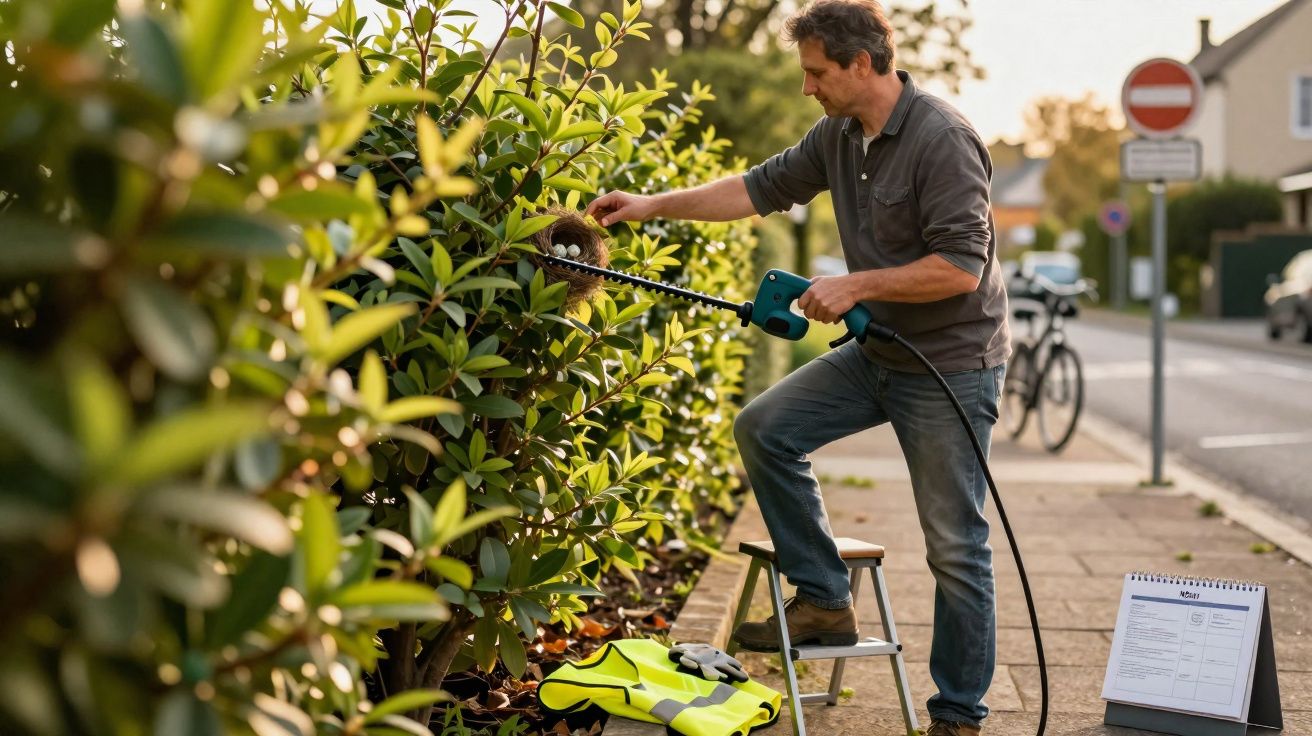
Warnings are currently spreading across social media: trimming hedges in spring is said to be banned, and some posts even claim it can lead to prison. That is exaggerated, but the underlying point is correct: anyone who destroys breeding birds or their nests while cutting back hedges may be breaking the law - even in their own garden. A recent case from France shows how quickly a routine front-garden job can turn into an expensive problem.
A sensible precaution is to keep a simple note of when you last cut your hedge and whether you checked for nests first. If a dispute ever arises, that record can show that you acted carefully rather than carelessly.
Why the period from March to July is so critical
Between mid-March and the end of July, the main breeding season for songbirds takes place across central Europe. During this time, hedges and shrubs become genuine nurseries of nature. Blackbirds, chaffinches, robins and many other species prefer to build their nests in dense bushes and hedges that provide shelter from wind, rain and predators.
As leaves emerge in spring, the foliage thickens and the hedge looks full and healthy. That is exactly what makes it attractive to animals - and deceptive for gardeners. From the outside, it is often impossible to see whether a nest is already hidden inside.
Anyone who takes a firm approach to a hedge during the breeding season risks sending nests, eggs or young birds through the shredder, quite literally - often without even realising it.
The consequences can be severe: eggs may be destroyed, fledglings can be injured or killed, and even if a cut merely exposes the nest, the birds lose their protection. The remaining chicks are then left vulnerable to cats, crows and martens. In addition, hedgehogs, insects and other small creatures lose an important refuge.
What the law actually allows - and what it does not
In both France and Germany, there is no nationwide rule that simply forbids hedge cutting after a specific date. Instead, the legal position is shaped by species protection and the safeguarding of habitats - and that protection can be very broad in individual cases.
German law: no fixed date, but clear limits
In Germany, the Federal Nature Conservation Act is the key law governing what is permitted in the garden. One central provision is Section 39, which bans severe interventions in hedges and woody plants between 1 March and 30 September. Only gentle shaping and maintenance cuts are allowed - and even then, only if no occupied nests are affected.
At the same time, many bird species are strictly protected. Anyone who intentionally, or through gross negligence, destroys nests, eggs or young birds can face substantial fines under further regulations, or in serious cases even a criminal complaint.
Destroying the nests of protected bird species and their habitat is not treated as a harmless mistake, but as an interference with nature that may be punishable.
The French case: a maximum of €150,000
France has similar protection rules. In the case described, a homeowner used a hired electric hedge trimmer in March to cut her hedge to an exact finish. Shortly afterwards, the nature protection authority arrived: destroyed goldfinch nests had been found in the hedge. The officials responsible pointed out that destroying the nests of this strictly protected species can, in theory, be punished by up to three years in prison and a €150,000 fine.
That maximum penalty is more of a theoretical ceiling for especially serious cases, such as organised poaching or large-scale habitat destruction. Even so, the case shows how seriously the authorities take the issue - and that private front gardens are not outside nature protection law.
Additional rules for farmers and local authorities
While private gardeners are usually bound only by general species and habitat protection rules, farmers and public land are sometimes subject to even stricter requirements.
- Farmers receiving EU agricultural subsidies often have to observe fixed closed periods for hedge cutting.
- Some regions specify time windows during which hedges and trees must not be cut at all.
- Local councils may impose extra rules on grounds maintenance and road safety.
In France, a specific requirement under EU agricultural policy prohibits many farms from carrying out any hedge or tree maintenance between 16 March and 15 August, except in clearly defined exceptional cases. Comparable rules also exist in Germany when subsidy funding is involved.
How amateur gardeners can maintain hedges lawfully
Anyone reaching for the shears in spring should think not only about the look of the garden, but also about the law and the natural world. A few straightforward steps can help avoid conflict.
Key rules for hedge cutting
- Leave major cutting back until autumn or winter - frost-free days between November and February are ideal.
- Be restrained between March and the end of July, and only carry out light shaping if it is truly necessary.
- Check the hedge from the inside: use a torch or gently part the branches to look for nests.
- Stop work immediately if a nest is found and leave the area undisturbed until the breeding season is over.
- Check local council rules, for example on the council website or in the official gazette.
If you find a nest, that is actually a good sign: your garden is alive, and the best protection is to leave the shears and saw alone at that point.
What if branches are dangerous or visibility is poor?
Sometimes there is no easy alternative: a branch hangs over the road, the hedge spills onto the pavement, or it blocks a junction. In those cases, road safety takes priority. The sensible approach is then to:
- contact the relevant authority first - usually the environmental health or regulatory department, or the local planning office;
- explain the situation, ideally with photos;
- ask whether a short-term clearance or assistance is possible.
Many councils send their own staff or commission specialist contractors when there is an immediate danger, because they are properly trained for the task.
Why hedges matter so much for biodiversity
Hedges are often described as miniature nature reserves in built-up areas. They offer shelter, food and nesting sites - especially in places where there are otherwise very few structures for wildlife.
A dense hedge often hosts several different “residents” at once:
- birds that breed or rest there,
- hedgehogs searching for cover at ground level,
- insects such as wild bees and butterflies,
- small mammals like shrews.
If you trim your hedge lightly just two or three times a year and avoid heavy cutting during the breeding season, you are helping these species almost by accident. The plant choice matters too: native species such as hornbeam, privet, hawthorn and blackthorn provide far more habitat and food than sterile rows of conifers.
Another advantage of native hedge plants is that they usually need less intensive maintenance once established. That means fewer drastic cuts, less garden waste and a more resilient boundary that copes better with dry spells and cold weather.
Practical examples: how to plan hedge cutting through the year
A well-planned annual routine helps reduce stress and risk. One possible schedule is:
| Period | Recommended work |
|---|---|
| January–February | Heavy reduction, shaping and rejuvenation of old hedges - in frost-free weather |
| March–July | Only light corrections, visual nest checks, and removal of problematic branches in coordination with the council |
| August–October | Final maintenance cut so the hedge goes into winter in good condition |
If you follow this approach, the risk of breaching nature protection law drops to a minimum - and you avoid unpleasant surprises from neighbours or the authorities.
Legal position, fines and the real risk to your wallet
The maximum penalty of €150,000 set out in French law sounds dramatic, but in private gardens it is practically never imposed in full. Much more realistic are far smaller sums - yet even three-digit or low four-digit fines can hit many households hard.
In Germany, breaches of rules protecting hedges and woody plants can also lead to administrative offence proceedings. The size of the fine depends on the federal state and the individual case. Someone who can be shown to have destroyed a nest belonging to a protected species is in a much worse position than someone who merely missed the right date by a small margin without causing harm to animals.
There is also a social dimension: many neighbours react strongly when hedges are cut back drastically in the middle of the breeding season. Complaints to the authorities can be filed quickly, and that may trigger an inspection.
Balancing hedge care, nature and safety sensibly
There is no contradiction between a well-kept garden and nature protection. With a little planning and consideration, it is possible to achieve both. Useful rules of thumb include moving the main cut into the winter months, acting cautiously during the breeding season, and looking for nests one extra time if anything is uncertain.
A thoughtful approach to hedges pays off in several ways. Garden work becomes less stressful, the risk of expensive mistakes falls, and in the end the wildlife that makes a garden feel truly alive also benefits. For many homeowners, that is a pleasant side effect worth far more than a perfectly straight hedge in March.






Comments
No comments yet. Be the first to comment!
Leave a Comment