
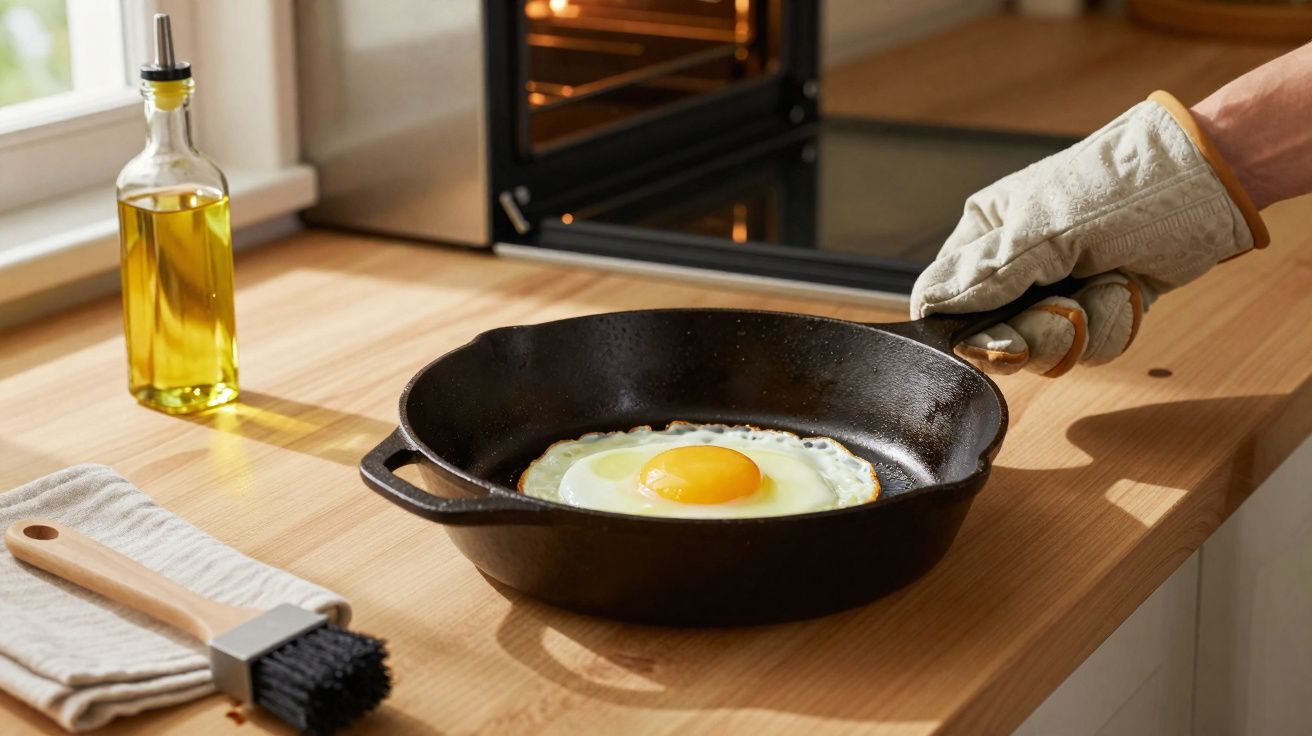
Many people still have an old cast-iron pan or roasting tin tucked away somewhere, inherited from a relative but used only rarely: it is too heavy, too rustic, and everything seems to stick to it. Yet this sturdy cookware can be transformed with a simple, traditional method into an almost perfect non-stick pan - without Teflon or any other coating.
Why cast iron is making a comeback
In grandmother’s kitchen, cast-iron pots and pans often took pride of place. Today, they are more likely to be pushed to the back of a cupboard, while lightweight aluminium or stainless-steel pans dominate day-to-day cooking. That is a shame, because cast iron offers major advantages:
- It holds heat exceptionally well.
- It spreads heat evenly, which makes it ideal for frying.
- It is almost indestructible and can last for decades, even generations.
For many people, the biggest frustration is that food sticks: a fried egg tears apart, potatoes catch, and the pan can also rust if it is dried or stored incorrectly. The answer is a traditional technique that many people have simply forgotten.
Part of cast iron’s appeal is that it improves with use. Unlike many modern pans, it does not need to look flawless to work well; in fact, regular cooking often makes the surface smoother, darker and more reliable over time.
With the right treatment, a bare cast-iron pan can become smoother and more non-stick over time than many Teflon pans - and it stays that way.
Cast iron pan seasoning: the key method
The heart of the process is known as seasoning, sometimes called building up a patina. During this process, the rough, porous surface of cast iron is treated with very thin layers of oil and then heated strongly. The oil changes chemically under heat. It forms a hard, smooth, dark, glossy layer that bonds tightly to the metal.
The result is a natural non-stick surface, completely free of plastic coatings. This protective layer helps prevent rust, improves frying results, and makes the pan easier to use every time you cook with it.
Why food sticks so badly before seasoning
Cast iron is not naturally smooth. Under a microscope, its surface looks like a landscape full of tiny pores and hollows. When the pan is heated, those pores open up even more. Fat and food residues can seep in and bake on.
Without a protective layer, something else happens too: the metal reacts with oxygen and moisture. It begins to rust, especially if the pan is left damp for a long time or standing in washing-up water. Rust spots make the surface rougher, which causes even more sticking - a vicious circle.
The patina created during seasoning acts like a seal: water-repellent, rust-resistant and surprisingly smooth.
Step-by-step: how to season cast iron properly
If you treat a cast-iron pan thoroughly once, you create the foundation for years of relaxed cooking. The process is straightforward and mainly requires a bit of time and patience.
1. Prepare it properly
- New cast-iron pans: They are often coated with a thin layer of wax or a protective film. That needs to come off. Wash the pan with hot water and a little washing-up liquid, scrub it well, then rinse thoroughly.
- Older, neglected pans: Remove rust and any old, hardened grease with coarse salt and a stiff brush or a scourer made of steel wool. In stubborn cases, fine sandpaper can help.
By the end, the metal should look as clean, matte and even as possible.
2. Dry it completely
Moisture is the enemy of a good patina. After cleaning, do not just wipe the pan dry; instead:
- dry it in the oven at about 100°C for a few minutes, or
- warm it on the hob over a medium heat until no steam is visible at all.
Only when the pan is completely dry should you move on.
3. Choose the right oil
An oil with a high smoke point is best for seasoning. Good options include:
- flaxseed oil
- rapeseed oil
- refined sunflower oil
- grapeseed oil
The type matters less than the amount. One common mistake is using far too much. You only need the tiniest splash. Spread the oil over the whole pan with kitchen paper in a very thin layer - inside, outside, and even over the cast-iron handle.
If the pan looks shiny or starts to form droplets after oiling, you have used too much. The surface should only have a slight sheen.
4. Season it in the oven
Now comes the crucial step:
- Preheat the oven to 230–250°C.
- Place the pan upside down on the oven rack.
- Put a tray underneath to catch any drips.
- Leave it in the hot oven for about an hour.
- Switch the oven off and let the pan cool slowly inside the closed oven.
During this process, the oil begins to smoke, changes, polymerises and hardens. The surface becomes darker, usually turning brownish to black.
5. Repeat the process
One layer is rarely enough. Two to four rounds usually produce much better results. After each session, the pan becomes a little blacker, smoother and glossier.
Anyone who cooks regularly with the pan will continue building the patina in everyday use - especially when making fried potatoes, steaks or pan dishes with a little fat.
Everyday care: how to keep the patina strong
Cast iron is not complicated, but it does react badly to the wrong care. A few simple habits will keep the surface in good condition for a long time.
- Use no washing-up liquid, or very little: Harsh cleaners can weaken the patina. Warm water and a brush are usually better.
- Do not soak it: Leaving the pan in water for hours can cause rust.
- Dry it immediately: After washing, dry it straight away and put it on the hob briefly until it is completely dry.
- Oil it lightly: Once dry, rub in an ultra-thin layer of oil with a cloth, especially if it will be stored for a while.
- Use gentle utensils: Wooden or silicone spatulas are kinder to the patina; metal spatulas are better reserved for well-seasoned pans.
If something has burnt on stubbornly, heat a little water in the pan and loosen the residue with a wooden spoon. For larger patches of damage or rust, simply start a fresh seasoning cycle.
A good habit for home cooks is to treat the pan after any aggressive cleaning or after it has been used in very wet cooking. A quick wipe of oil before storage can make a noticeable difference, especially in damp kitchens or over the winter months.
The clear advantages over Teflon and similar coatings
Anyone who has used a well-seasoned cast-iron pan often finds that it outperforms modern non-stick pans in several important ways:
- Durability: A properly cared-for cast-iron pan can last for decades. Many never end up in the bin.
- No coating concerns: There is no plastic layer to scratch or peel away over time.
- Heat resistance: Cast iron handles very high temperatures, making it ideal for searing and oven cooking.
- Environmental impact: Keeping one pan for life saves resources and reduces waste.
- Appearance: The deep black, glossy surface looks elegant and brings a professional kitchen feel to the hob.
An inherited cast-iron pan is not scrap metal, but a sustainable high-tech tool - just without the high-tech appearance.
What cast iron is especially good for
Seasoned cast-iron pans really shine with dishes that need high heat and stable temperature.
| Dish | Benefit of cast iron |
|---|---|
| Steaks | strong crust, even browning, juicy centre |
| Fried potatoes | crisp surface, no sogginess, deep roasted flavour |
| Pancakes and crêpes | almost no sticking with a good patina, lovely colour |
| Braised dishes | heat stays in the pot for a long time, even cooking |
| Bread and pizza | excellent crust, oven heat distributed well |
Typical mistakes - and how to avoid them
People new to cast iron often run into the same issues. Here is a quick guide to what you should avoid:
- Using too much oil during seasoning: this leads to a sticky, patchy surface. Several very thin coats are better than one thick one.
- Cleaning the pan in the dishwasher: the strong detergent damages the patina, and rust is almost guaranteed.
- Putting the pan away while it is still damp: rust spots can appear surprisingly quickly.
- Using it only rarely: cast iron improves with regular use. If you only take it out once a year, you are wasting its potential.
Health, material science and a little chemistry
When oil is heated in a thin layer, it forms a network of hardened molecules. This layer is solid, does not dissolve in water and binds so strongly to the metal that it behaves almost like part of the pan itself. It does not flake off in strips like a damaged synthetic coating might.
Many people also value cast iron because it avoids the substances that are sometimes discussed in connection with coated pans. If you prefer something tried and trusted, cast iron with a properly built-up patina is a very traditional and reliable choice.
It is also interesting that each cast-iron pan gradually adapts to the way it is used. If you often cook eggs, the surface may become especially slick for omelettes and fried eggs. If you fry a lot of meat, you may end up with a deep, dark patina that gives food an excellent roasted flavour.
That old pan in the cupboard is therefore not a nostalgic ornament, but an invitation to turn a forgotten object into a genuine favourite. Once it has been properly seasoned, it shows what it can do with every fried egg and every steak - without Teflon, without throwaway thinking, and with a great deal of pleasure in cooking.


Comments
No comments yet. Be the first to comment!
Leave a Comment