
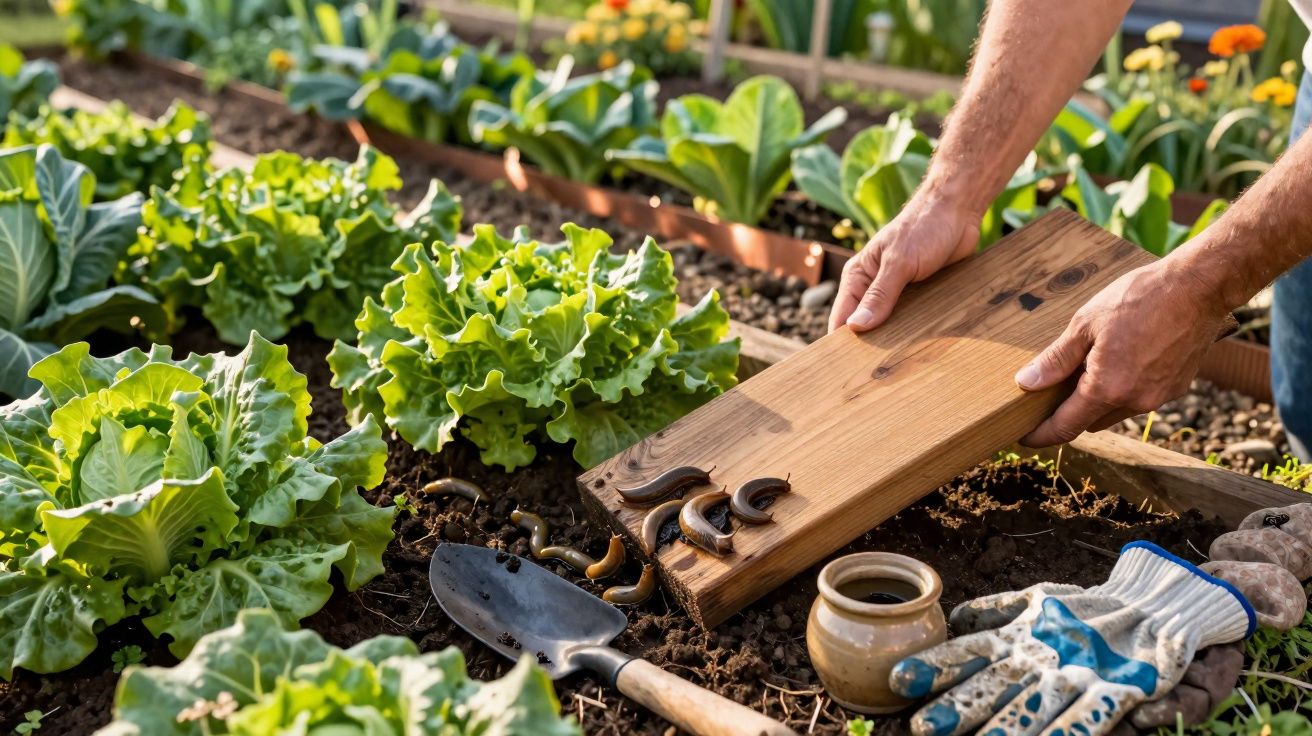
Many amateur gardeners wake up in disbelief after a damp night: young lettuces have vanished, and bean stems have been neatly clipped off.
The answer may be hiding in a very ordinary wooden board.
Anyone with their own growing area knows this quiet disaster after a wet night. There is nothing left of the tender seedlings except slime trails and gnawed stems. Rather than reaching for the poison box from the garden centre again, more and more gardeners are turning to a surprisingly simple method: a piece of untreated wood, placed in the right spot, replaces expensive chemicals and works with remarkable reliability.
Why Slugs Love Wood So Much
Slugs are not monsters, but highly specialised molluscs. Their entire bodies are made up of delicate tissue covered in mucus. Without constant moisture, they dry out very quickly and die. That is why they are mainly active at night, when the soil and plants are wet, and spend the day hiding in cool, dark places.
A plain board laid on the ground exploits that weakness ruthlessly. Wood can absorb water and release it slowly again. Beneath an untreated board, a small microclimate develops that is almost like a spa retreat:
- shaded and protected from light
- consistently moist, but not dripping wet
- relatively stable in temperature
That is exactly what a slug is looking for early in the morning. Instead of spreading themselves across the whole bed, they gather under the tempting shelter - and that is where the gardener is waiting.
A simple board turns into a free slug hotel overnight - with a human-managed check-out first thing in the morning.
Wooden Boards for Slug Control: Which Wood Works and Which Does Not
Not every piece of wood is equally suitable for this method. The key point is that the material must be untreated and absorbent. Varnished planks, coated furniture panels or chipboard are of little use, because they repel water or may contain harmful substances.
Suitable pieces of wood at a glance
- old solid-wood boards, for example spruce, fir or pine
- leftover beams or shuttering boards
- untreated shelf boards or timber planks
- thick wooden slats, or several laid side by side if necessary
Before putting one out, it is worth giving it a quick check: if the surface feels natural and slightly rough, with no lacquer layer or visible coating, the board is generally suitable. Heavily rotted wood can also work, although it often falls apart more quickly.
How to Trap Slugs with Boards Step by Step
With a little routine, the method can become almost a morning gardening ritual. The main steps are easy to remember.
- Choose the location: Place boards directly beside bed edges, lettuce rows, strawberry plants or freshly planted areas. That is where slugs are most likely to seek shelter.
- Moisten the soil: Water the earth under the planned spot well in the evening, or dampen it with a watering can.
- Moisten the underside of the board: Give it a quick splash of water or spray it with the rose attachment.
- Lay the board flat: Keep it as close to the ground as possible, without large gaps underneath. A small stone at one edge is enough as a spacer, so you can lift it easily in the morning.
- Check it in the morning: Early on, before it gets too warm, lift the board carefully - most of the slugs will be packed closely together underneath the wood.
- Collect the slugs: Pick them up with gloves, a small trowel or sticks, and remove them from the vegetable garden.
What to do with the collected slugs has been debated in gardening circles for years. Some gardeners take them far away to woodland edges, while others kill them quickly, for example with a targeted cut or hot water. Anyone who takes animal welfare seriously should at least ensure the shortest possible suffering and not simply leave the animals to die in sealed buckets.
A further advantage is that the board method gives you a better sense of when the problem is worst. If you note down which board catches the most slugs after rain, and in which part of the garden, you will quickly spot patterns that would otherwise go unnoticed. That makes it easier to place future boards more effectively.
The method is also most productive in damp conditions. After a dry spell, catches often fall, which is perfectly normal. The first mild evening after rain is usually when the boards become most attractive.
Why a Board Is a Real Alternative to Slug Pellets
Many gardeners still reach for slug pellets almost by instinct. Products with active ingredients such as metal-based compounds are rightly criticised. Even products approved for organic growing carry risks.
If a toad, hedgehog or bird eats poisoned slugs, the active ingredient can move on through the food chain. Pets such as dogs and cats can also come into contact with pellets that have been scattered around. Introduced slug species may react in unexpected ways, while native species and other animals suffer.
The board does not kill slugs chemically - it makes their habits predictable and turns those habits against them.
The wooden method works completely without poison, protects soil life, compost worms, hedgehogs and toads, and in practice costs almost nothing. Many amateur gardeners already have suitable boards sitting in a cellar or garage. The only real “cost” is a little time in the morning and a certain amount of squeamishness when collecting the slugs.
Using Boards to Understand the Garden Better
Wooden boards are not just traps; they are also a diagnostic tool. Where especially many slugs are hiding tells you a great deal about the garden:
- areas with soil that stays damp for long periods
- dense, poorly ventilated corners with plenty of hiding places
- spots that suffered heavy leaf damage in the previous year
If you look closely over several days, patterns become visible. You may find that one particular bed edge is especially affected because there is too much wild growth there or because mulch has built up too thickly. Or an old stack of boards nearby may already be serving as a slug hotel without anyone noticing.
These observations can be turned into long-term action: changing the layout of paths, thinning out corners, or adjusting watering habits. The better you understand the routes and preferences of the animals, the more precisely you can reduce pressure on vulnerable crops.
How Boards, Barriers and Beneficial Wildlife Work Together
Wood alone will not always fully control a heavy slug year. The method becomes much stronger when it is part of a wider set of measures.
Tried-and-tested combinations for everyday use
- Mineral barriers: Scatter rough materials such as sharp gravel, coarse sand or shell grit around especially vulnerable beds. The abrasive surface irritates the soft underside of slugs.
- Encourage beneficial wildlife: Hedgehogs, toads, ground beetles and birds all eat slugs. They need hiding places such as brush piles, stone piles, leaf piles and areas free from poison.
- Water with care: Water in the morning rather than in the evening. The soil dries out a little before nightfall, making the garden less inviting for nocturnal slug raids.
- Adjust plant choices: Protect particularly vulnerable crops such as young lettuce at the start under horticultural fleece, in pots or in a raised bed, and only plant them out once they are more robust.
- Move the boards around: Shift the wooden boards slightly from time to time so that new gathering points are created and the population is reduced step by step.
What Gardeners Should Also Bear in Mind
Many slug species have always lived in our gardens and are part of the wider ecosystem. The real problem is the mass outbreak of slugs, especially introduced species that have very few natural predators. The aim should therefore be to regulate numbers, not to wipe out every single animal.
Using boards means intervening in this balance deliberately, but in a controlled and manageable way. That creates a good compromise between a decent harvest and consideration for other garden inhabitants. Children can also learn, in a hands-on way, how garden cycles work and why every action has consequences.
It is also practical that boards can be used for years. Over time they will become darker, cracked and a little rotten, but that often makes them even more attractive to slugs because more moisture can enter the wood. Only when the wood finally breaks down should it go on the compost heap, where it becomes soil again - and the cycle closes.
Anyone who starts putting boards out in spring can intercept much of the slug wave early in the year. That means lettuce, beans and strawberries are no longer a midnight buffet for hungry slime trails, but end up where they belong: on the plate.


Comments
No comments yet. Be the first to comment!
Leave a Comment