
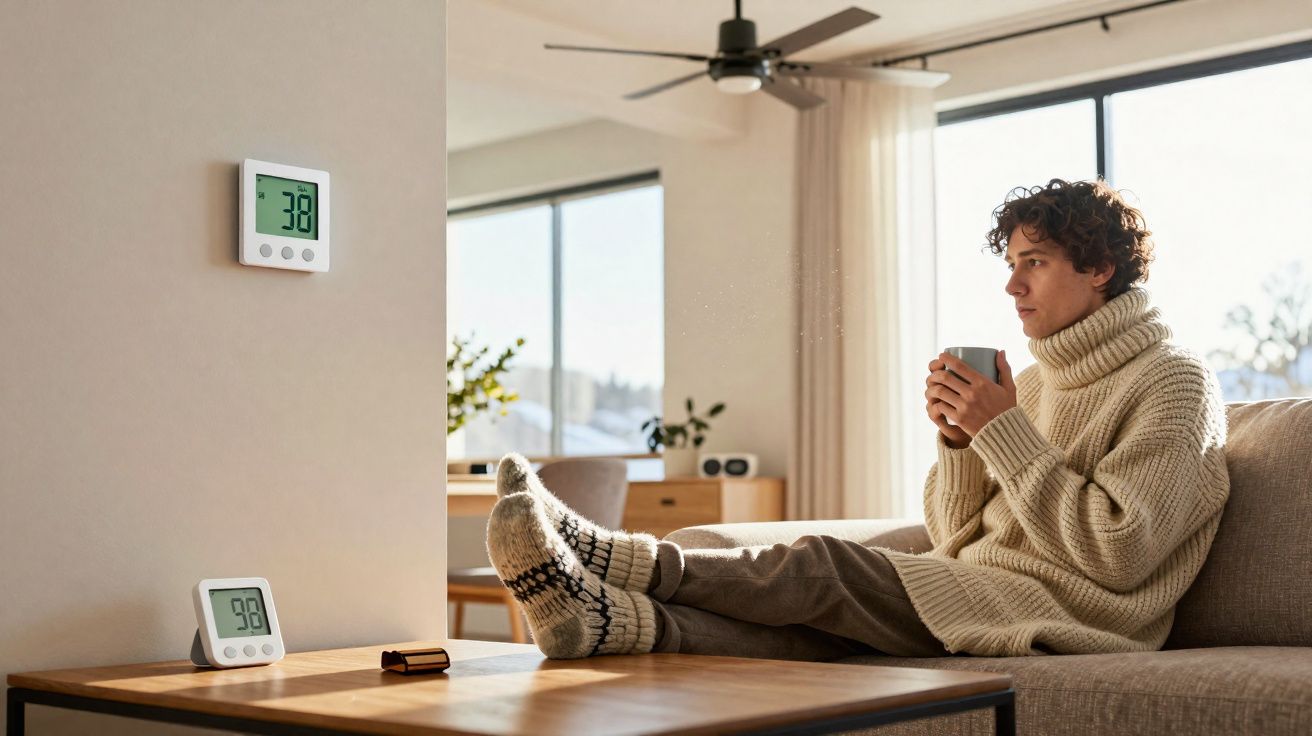
You look at the thermostat for the fifth time. It’s sitting there, unapologetically displaying 21°C, like a confident little signboard. Meanwhile your toes are sending urgent complaints. The air has that biting edge, you can almost make out your breath in the hallway, and the blanket that used to feel “snug” now feels more like emergency equipment. For a moment you wonder whether you’re coming down with something, imagining it, or simply ageing.
Then you spend time at a friend’s place, where 19°C somehow feels warmer than your so‑called 21°C. Same jumper, same time of year-completely different comfort.
Something doesn’t add up.
Why your home feels colder than the thermostat says
Start with the key point: a thermostat isn’t a perfect judge of comfort. It’s a small sensor measuring the temperature of the air right where it’s mounted. If it happens to sit in a slightly warmer pocket of the home, it can happily report 21°C while the room you actually use is nearer 18°C. A difference of just a few degrees is enough to shift “comfortable” into “why can’t I feel my fingers?”.
Most properties don’t heat evenly. Warm air collects at ceiling height, a radiator can overcook one part of the room, and a draughty window can undermine another. In other words, the thermostat may be accurate in its own little zone-and still be misleading where you sit, work, watch telly or relax.
Imagine a typical family in a 1970s semi‑detached house constantly bickering about the heating. Dad insists the thermostat must be right because, “It’s digital-how could it lie?” The teenager drifts around in a hoodie and a blanket like the ghost of student debt. In the hallway (where the thermostat is), it feels fine. Walk a few metres into the living room, and the cold starts curling around your ankles.
Eventually they buy a cheap portable thermometer and set it near the sofa. The result: 17.8°C. The thermostat still beams 20°C. That small gap explains the ongoing “Why does this house feel freezing?” saga. One reading, two different experiences.
This isn’t you being dramatic-it’s building physics and layout. Your comfort is shaped by walls, windows, flooring, furniture and how heat is absorbed or lost. A single large cold window can radiate chill and make a room feel unpleasant even if the air temperature is technically “high enough”. Your body doesn’t respond to air alone; it also reacts to the temperatures of the surfaces around you.
Add air movement from under doors, gaps in floorboards, or an uninsulated loft, and you effectively create mini “microclimates” within the same home. A thermostat measures one patch of air; your skin is measuring everything.
Small checks that change everything (thermostat accuracy)
Begin with a straightforward reality check: compare your thermostat against a second, independent thermometer. You don’t need anything fancy-a basic digital room thermometer from a supermarket or online retailer is fine. Put it at “human height” in the room where you spend your time-near the sofa, desk or dining table.
Leave it in place for at least an hour, then compare the figure to what the thermostat is claiming. If there’s a 1–3°C difference, you’ve likely found the reason you keep reaching for an extra layer. This quick test turns a vague sense of discomfort into clear numbers you can act on.
Next, consider the thermostat’s location. Is it in a hallway near the front door? Mounted above a radiator? On a wall that gets afternoon sun? Any of these can skew the readings. The device ends up responding to draughts, hot spots or warmth from nearby pipes, instead of reflecting the conditions in the room where you actually live.
Feeling colder than the display suggests doesn’t make you “fussy”. It just means you’re noticing what a plastic box can’t: the lived reality of the space. Most of us recognise the moment-someone points at the number and declares everything is fine while you’re quietly shivering.
Moving or recalibrating a thermostat can feel oddly daunting, as if you’re breaking an unwritten rule about “not fiddling with the heating”. But this is often where genuine comfort begins. Many modern thermostats allow a manual offset-essentially telling it, “You usually read 1°C too high”-so the system heats to what your home actually feels like.
“Once I moved the thermostat away from the draughty corridor and into the living room, the arguments stopped,” says Laura, a renter who spent two winters blaming her old boiler. “The boiler was fine. The thermostat was just lying to us from a cold wall.”
- Move the thermostat away from doors, windows and radiators
- Use a second thermometer to check the real room temperature
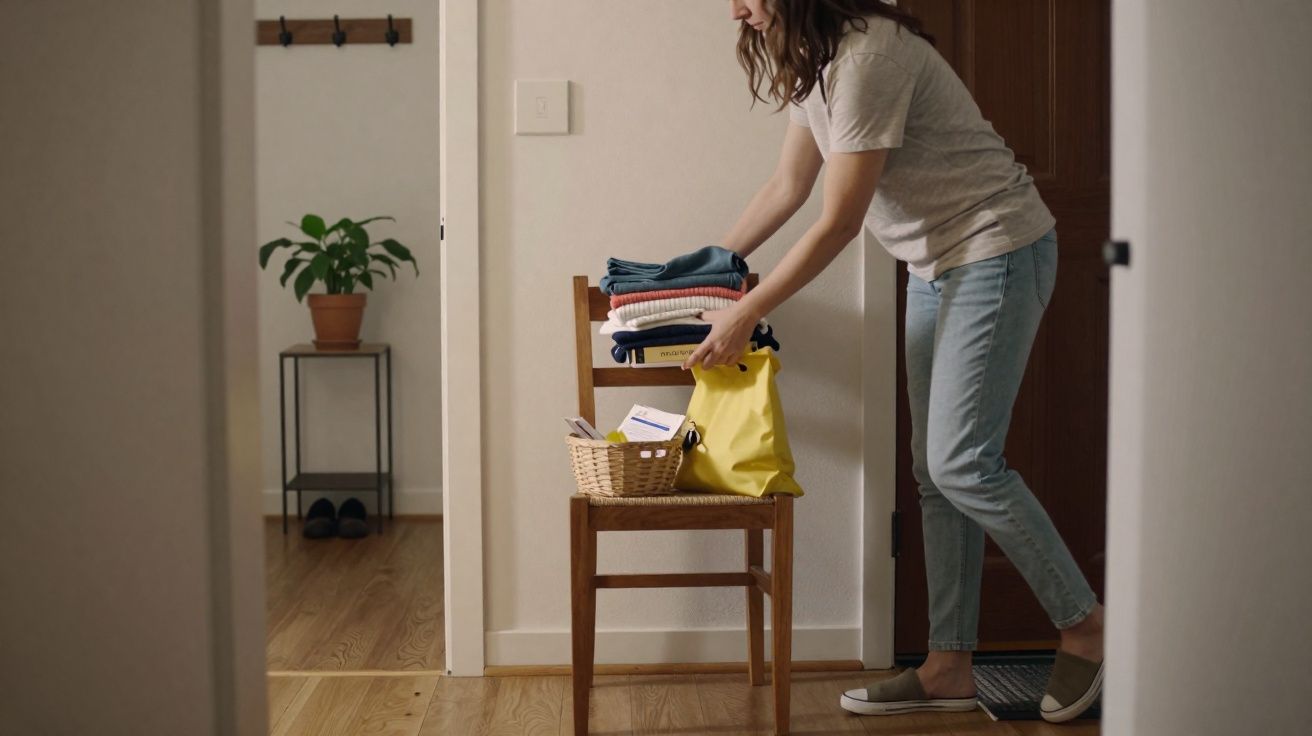
- Seal obvious draughts around windows, letterboxes and floorboards
- Close doors to keep heat in lived-in rooms
- Use thick curtains at night to reduce radiant cold from glass
Living warmer without cranking the dial
Once you’ve confirmed there’s a temperature mismatch, the aim isn’t automatically to whack the heating up. Often, the best results come from tackling the hidden ways your home loses warmth. Try a simple audit: walk slowly around your main room in socks or bare feet and notice where the cold feels strongest-under the door, along the skirting boards, beside the window. That’s effectively your leak map.
Draught excluders, foam strips for windows, and even a basic rug over a cold floor can dramatically change how warm the same thermostat setting feels. A room at 19°C without draughts often feels more comfortable than 21°C with icy air slipping under every door. Sometimes the most effective “upgrade” is a £15 roll of sealing tape rather than a new boiler.
There’s also a side people rarely admit: feeling cold at home makes you second‑guess yourself. “Am I overreacting?” “Is this just adulthood?” So you nudge the heating up, and then the bills land-bringing a whole new kind of chill.
And let’s be realistic: hardly anyone adjusts their heating with scientific precision every day. Most of us prod the controls, hope it works, and grumble from the sofa. Giving yourself permission to test, tweak and experiment isn’t excessive-it’s simply learning how your home behaves, with all its quirks and weak points.
Your sense of temperature is shaped by routine and expectation too. If you’ve spent the day in a warm office, café or gym, your home may feel colder by contrast even at the same numeric setting. On the other hand, people who keep their homes a little cooler through winter often acclimatise and feel comfortable at 19–20°C.
Two extra factors worth checking: humidity and air movement
Humidity and airflow can change comfort just as much as the number on the wall. Very dry air can make a room feel sharper on the skin, while damp air can feel clammy and cold, especially if there’s condensation on windows. If you’re regularly seeing moisture on glass, consider ventilation (for example, extractor fans used consistently and trickle vents left open as intended) alongside heating-because moisture management can reduce that “chilled to the bone” feeling.
Air movement matters as well. Even when the thermometer reads well, a small continuous draught can strip heat from your body. If you can feel air movement near a door or window, sealing that point often improves comfort more than increasing the set temperature.
Heat distribution: making warmth reach the places you sit
If one room is consistently colder than the rest, it may not be the thermostat at all-it could be poor heat distribution. Radiators sometimes need bleeding, furniture can block heat flow, and thermostatic radiator valves (TRVs) may be set too low in the room you use most. In larger homes, zoning (heating the rooms you actually occupy) and balancing radiators can help ensure the living room isn’t stuck at 18°C while a hallway sensor declares victory.
You don’t need to freeze, and you don’t need to roast either. The sweet spot is where the thermostat reading, your feet, and your energy bill are broadly in agreement.
| Key point | Detail | Value for the reader |
|---|---|---|
| Check reality, not just the display | Use a second thermometer in your main living area | Confirms if your thermostat is under- or over-reading |
| Move away from cold or hot spots | Relocate or recalibrate thermostats placed near draughts or radiators | Makes the heating respond to real living conditions |
| Fix comfort, not just temperature | Seal draughts, use rugs and curtains, heat rooms you actually use | Feels warmer without always raising the setpoint |
FAQ
Why does 21°C feel different in different homes?
Because walls, windows, flooring, draughts and humidity all affect how quickly your body loses heat. Two homes showing 21°C can feel completely different in practice.Is my thermostat broken if I feel cold?
Not necessarily. It may be accurate where it’s installed, but positioned in a warmer or less draughty area than where you sit or sleep.Where should a thermostat ideally be placed?
On an interior wall at around chest height, away from direct sunlight, doors, radiators and heat‑producing appliances.Will turning the heating up solve the problem?
It can hide the issue, but you’re likely to spend more without addressing draughts, poor placement, or cold surfaces that make a room feel chilly.Can small changes really make a big difference?
Yes. Shifting a thermostat, sealing a few gaps and adding a rug can make the same temperature setting feel notably warmer and steadier.




Comments
No comments yet. Be the first to comment!
Leave a Comment