
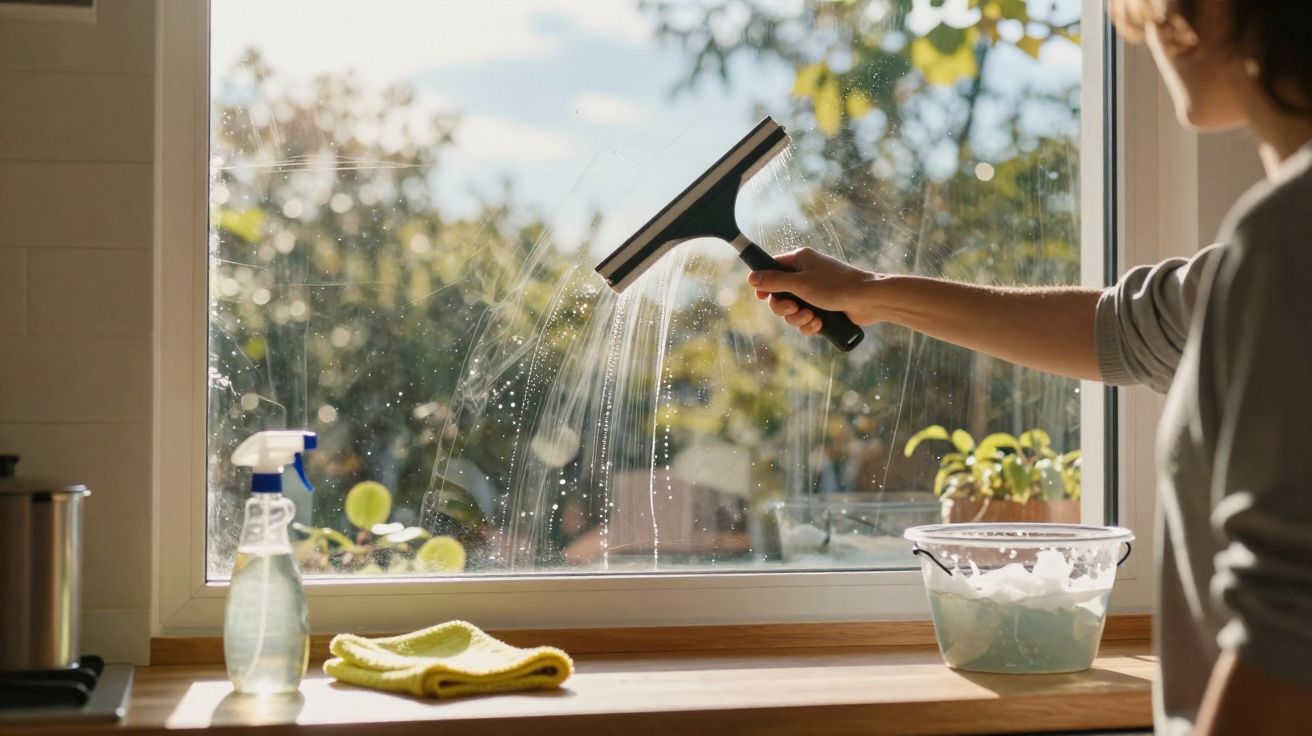
Light flooded the room, and every mote of dust turned into a tiny drifting comet. She misted the glass with real enthusiasm, pleased to be “finally” getting the windows done on a bright, cheerful day.
From indoors, the pane looked flawless: glossy, almost dazzling, with no obvious marks at all. Then she took a step back, tilted her head, changed her viewing angle… and there they were. Long grey trails, curved swipes from her wrist, and faint ghosts of dirty water set into the glass. She went over it again-this time with more pressure-and somehow the finish looked even worse.
Later that evening, the softer light revealed the truth in a different way. Every pass of the cloth, every missed corner, suddenly stood out. It felt as though the sun had stitched her up. Or perhaps the real culprit was something else entirely.
Why sunlight turns your window cleaning into a streaky mess
It sounds sensible to clean windows in full sunshine. Bright light makes it easier to spot finger marks, smears, and old raindrop residue. The catch is that sunlight does more than highlight the dirt-it accelerates what your cleaning solution does once it hits the glass.
When sunlight falls directly on a window, the pane heats up-often far more than you’d expect. That warmed-up glass behaves like a small hotplate. The spray or soapy water doesn’t get enough time to properly loosen grime; it begins evaporating while you’re still wiping.
As the water flashes off, it leaves behind a thin, patchy layer: concentrated detergent plus minerals from tap water. Instead of lifting everything away, your cloth can end up dragging that slightly tacky film across the pane. The finish can look like faint grey brush marks painted over the view-hardly the crystal-clear result you were aiming for.
Professional window cleaners often manage this quietly by avoiding full sun. One London cleaner I shadowed for a morning had a firm rule: no south-facing glass between 11:00 and 15:00. In summer, he would start on the shaded side, then come back as the building’s shadow shifted.
He demonstrated with a quick comparison. He sprayed the same type of glass twice-once in direct sun and once in shade. The sunlit section looked brilliant while it was still wet, but five minutes later it dried unevenly and dull. The shaded section took longer to dry, yet it dried evenly: no tracks, no obvious streaks when you moved your head and caught the light.
He joked that most customers assume rain is the enemy. For him, the real danger is a cloudless blue sky-and a hot, impatient client who wants everything finished “before lunch”. On a cool, overcast morning, his squeegee practically glides.
At heart, it’s straightforward physics. Cleaning products need a little dwell time to break down grease, dust and sticky residue. On cooler glass, the liquid spreads, softens the dirt, and you then remove that dirty layer with a cloth or a squeegee.
On hot glass in direct sunlight, the water component escapes quickly. Evaporation concentrates the detergent and leaves behind minerals from ordinary tap water. That residue dries in irregular patches-often exactly where you paused to change direction or reposition your hand.
Your eyes notice those variations immediately. Human vision is tuned to pick up contrast: glossy versus dull, clear versus hazy. A “streak” is simply an area where drying happened differently to the surrounding surface. Strong sun makes those differences sharper, harsher, and much harder to ignore.
How to clean windows without streaks in direct sunlight (window cleaning tips)
If you can’t avoid a sunny day, timing and technique matter more than effort. Begin with the panes in shade-even if it feels counterintuitive not to start with the brightest windows. By the time you finish one side of the house or flat, the sun angle may have moved and cooled the other side.
Go easier on the product than you think you need. A light mist of cleaner-or a bucket of cool water with a small amount of washing-up liquid-usually performs better than heavy spraying. Work in small sections (roughly the length of your forearm) and wipe or squeegee straight away, before the liquid has time to flash-dry.
Microfibre cloths genuinely help here. They pick up dirt rather than pushing it around, and they absorb quickly compared with an old T‑shirt. Keep two cloths in rotation: one slightly damp for cleaning, and a second one that stays very dry for the final buff-especially along the edges where streaks love to lurk.
On hot days, copy the professionals and clean around the sun. Early morning and late afternoon are far kinder: the glass is cooler and the light is less ruthless. A simple check works well-if the pane feels warm to the touch and you can see a sharp reflection, the odds of streaks jump dramatically.
Avoid turning it into a paper towel marathon. Soft paper towels can shed lint that sticks to any slightly tacky residue. Once you’ve spotted hundreds of tiny fibres lit up by low sunshine, you can’t unsee them. Newspapers used to be effective thanks to their ink and texture, but modern papers don’t perform in quite the same way.
For balcony glazing or large sliding doors, work from top to bottom. Then take a clean, dry cloth and treat it as “edges only” for a final pass. That’s where drips collect, dry quickly, and leave those familiar crescent-shaped marks that seem to appear at sunset.
“The sun doesn’t create streaks-it just shows you how quickly you’re working,” a veteran cleaner told me. “Let the product do its job, and stop battling the glass.”
There’s also a very human side to this. Many of us have finished with a sense of pride, only to catch the pane from a new angle and feel immediate frustration. That isn’t you being “bad at cleaning”-it’s simply glass being brutally honest under changing light.
A few small habits make a bigger difference than most people expect:
- Use cool water (not warm) on sunny days, so the liquid doesn’t evaporate too fast.
- If your tap water is hard, switch to distilled water or filtered water to reduce mineral spotting.
- Swap cloths often; once a cloth is damp and dirty, it starts painting streaks instead of removing them.
Two extra fixes that help with streaks (often overlooked)
If you’re cleaning exterior panes, quickly rinse or wipe away loose grit first (even with plain water). Dust and pollen can act like a fine paste once mixed with detergent, increasing smear marks-especially in dry spring and summer weather.
Also, don’t ignore the frames and seals. Grimy window frames can weep dirty water back onto the glass as you work, creating fresh drips that dry into lines. A fast wipe of the frame with a separate cloth before you start on the pane can prevent “mystery streaks” appearing later.
Practical cheat sheet: what actually prevents streaks
| Key point | Details | Why it matters to readers |
|---|---|---|
| Pick the right time of day | Clean windows early in the morning or later in the afternoon, when the glass is cool and not in direct sunlight. | Slows evaporation so the cleaner can lift dirt properly, giving you a clear finish without redoing the same pane twice. |
| Use two cloths, not one | One slightly damp microfibre cloth for washing, one completely dry cloth for buffing and catching moisture along the edges. | Reduces streaks caused by dirty water and leaves an even shine-especially noticeable when sunlight hits later. |
| Switch to better water | In hard-water areas, mix your cleaner with distilled water or filtered water to avoid mineral spots and cloudy patches. | Prevents chalky marks that only show up once the sun catches the pane, saving you from endless “touch-ups”. |
There’s a psychological layer hiding inside this very practical story. Sunlight is uncompromising: it exposes what we’d rather overlook-dust on the television, crumbs under the table, fingerprints on the patio door. Window streaks are simply the most visible version of that honesty.
On a grey day, the same pane can feel “good enough”. On a bright day, you suddenly notice last spring’s wipe marks as if they were done yesterday. That gap between what we thought we cleaned and what the sun reveals can feel oddly personal-as though the glass is keeping score.
Let’s be honest: nobody truly does this every day. Most people clean windows occasionally, when motivation strikes or mild embarrassment kicks in. That’s exactly why the right timing, the right side of the house, and the right cloth can change the whole experience. Small adjustments, big shift in how you feel when you’re finished.
Next time you reach for the spray bottle on a blazing afternoon, pause and place your hand on the pane. If it’s hot, the sun isn’t helping-it’s competing with you. You might wait an hour. Or you might start with the shaded bedroom window and let the light move across naturally.
And when evening comes, the light softens, and the glass seems to disappear because it’s genuinely clear, you’ll know the lack of streaks wasn’t luck. It was timing, a bit of science, and choosing to work with the day rather than fighting the sun.
FAQ
Can I ever clean windows in direct sunlight without streaks?
Yes, but you must work quickly in very small sections, use minimal product, and immediately finish with a dry microfibre cloth. The glass should feel warm rather than hot; if it’s hot, the cleaner evaporates too quickly and leaves residue behind.Why do streaks only appear later in the day?
While the surface is wet, it looks uniformly shiny. As it dries at slightly different speeds across the pane, detergent residue and minerals settle unevenly. When the sun shifts and strikes the glass from a new angle, those differences suddenly become obvious.Is vinegar really good for streak-free windows?
Yes. A simple vinegar-and-water mix can work very well, particularly if you use soft, distilled water. The fundamentals still apply: avoid hot glass, use a clean microfibre cloth, and dry the surface fully rather than letting it air-dry in direct sun.Do I need a squeegee or are cloths enough?
A good rubber squeegee is extremely helpful on large panes and patio doors because it removes dirty water in one pass. For smaller windows, quality microfibre cloths can be sufficient-provided you keep a separate dry cloth purely for the final wipe.How often should I clean my windows to avoid stubborn streaks?
Most homes are fine with a proper clean two to four times a year, plus occasional spot-cleaning for obvious marks. Regular (but not obsessive) cleaning reduces built-up grime, so each session is quicker and leaves fewer streaks.





Comments
No comments yet. Be the first to comment!
Leave a Comment