
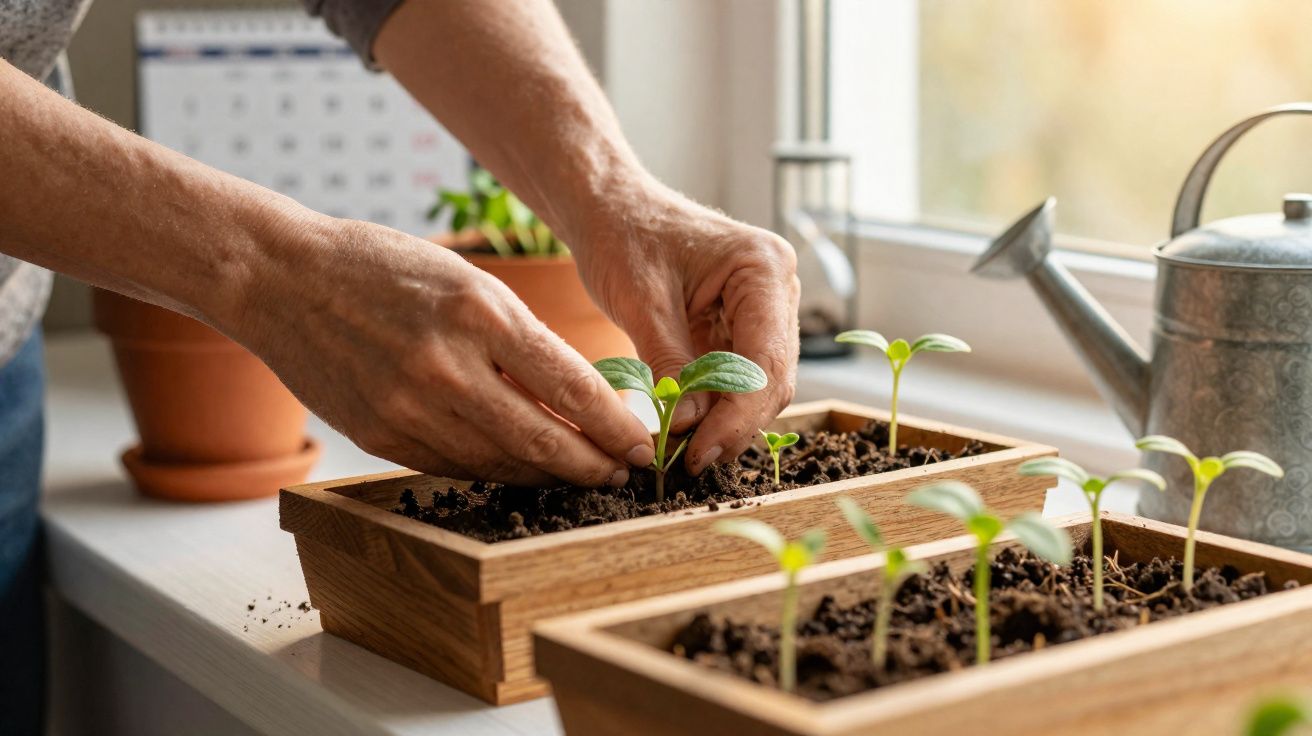
The grow light above the seed tray on the kitchen worktop gave off a faint buzz, bathing the counter in a violet haze. Two-week-old tomato seedlings were already reaching upwards, with stems as fine as cotton and leaves that looked slightly oversized for such young plants. My friend couldn’t have been happier. “They’re flying! These are going to be beasts,” she said, taking photos for Instagram.
By the third week, those very same plants were drooping and turning pale, their roots spiralling in tight circles inside small plastic cells.
They grew quickly.
They didn’t mature well.
When growth happens too quickly, something else pays the price
Step into any garden centre in early spring and you’ll recognise them straight away: the “star” plants that loom over everything else despite being stuck in tiny pots, loaded with buds and shiny foliage. They feel like an easy route to a dream garden, and it’s hard not to feel a flicker of envy.
Return in mid-summer, though, and that early sparkle often fades. Many of those “extra vigorous” starters are the first to stall, wilt, or collapse when heat and dry spells arrive. Speed looked like success in spring; staying power quietly lost out.
A balcony gardener in Paris once told me she used to hit her seedlings with high-dose liquid fertiliser to “get ahead.” Her basil rocketed upwards. By June, she was proudly showing off leaves as wide as her palm.
By August, most of that basil had turned woody, bolted into flower, and effectively called it a day-while her neighbour’s slower, unfed basil was still soft, leafy, and productive. Same plant. Same sun. Different tempo. The explanation wasn’t luck. It was resource allocation.
Plants can’t conjure growth out of thin air. Every centimetre of stem and each new leaf is a choice about where energy and materials go. When we drive early growth with warmth, fertiliser, or very intense light, we encourage speed at the expense of build quality. Roots may lag behind. Defence responses take longer to develop. New tissues can be lush but weak, rather than firm and durable.
That trade-off tends to show up later. Slower growers often put more into deeper rooting, stronger cell walls, and general resilience. A plant made to race on demand is like a teenager fuelled by energy drinks: impressive today, drained tomorrow.
One practical detail that often gets missed: compost and container size can amplify the “sprint”. A very rich mix combined with a small pot can produce a quick burst of soft top growth while roots run out of room. If you’re raising seedlings indoors, aim for a free-draining compost, avoid keeping the surface constantly wet, and make sure there’s gentle air movement (even a small fan on low) to help stems thicken rather than stretch.
How to slow seedlings down properly (without “stunting” them)
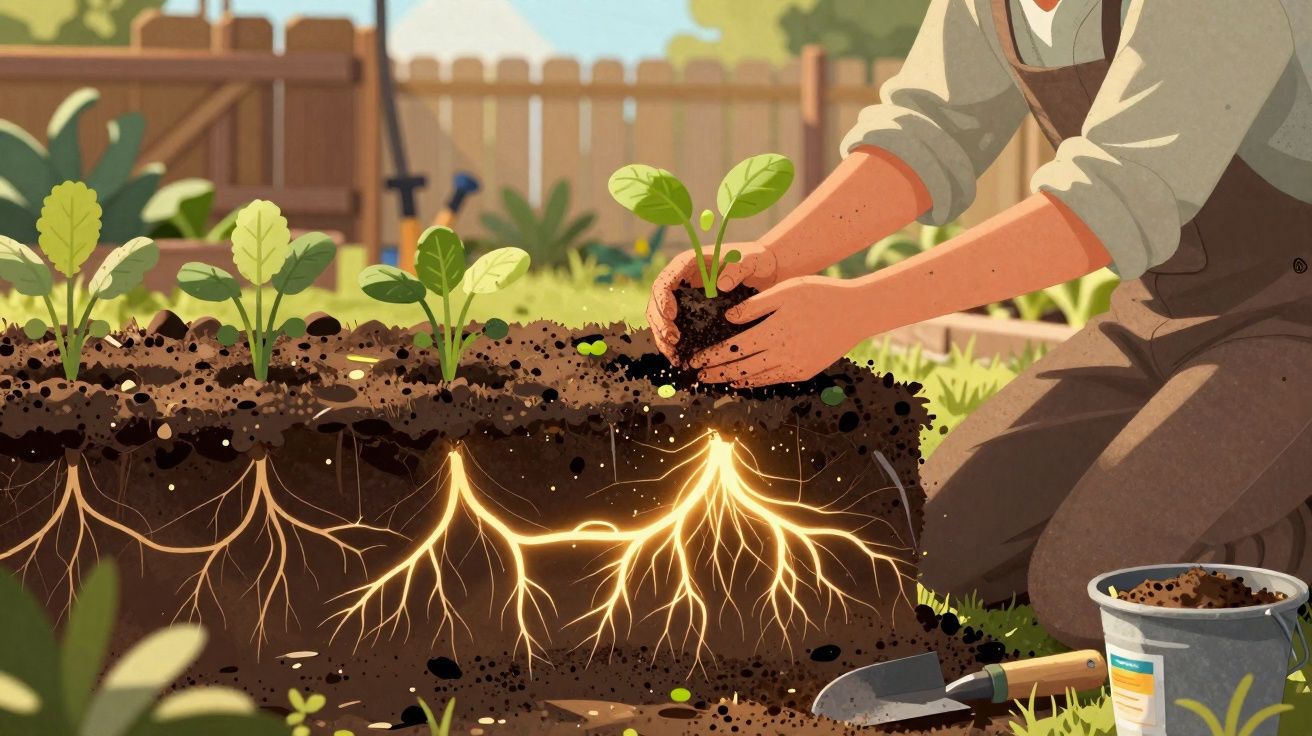
A surprisingly effective approach is to prioritise roots before leaves. In practice, that usually means slightly cooler temperatures, moderate light levels, and feeding that’s careful rather than aggressive. Not “starving” plants-just keeping the dial in the sensible range.
What you’re aiming for is a compact look: sturdy, thicker stems and deep green leaves, not tall, washed-out growth. That’s the shape of a plant building from the foundations upwards. When you pot on, go up only one container size at a time, then water thoroughly but not constantly so roots have a reason to expand. If growth feels calm to you, it usually feels safe to the plant.
Many home gardeners make the same well-meaning mistake: more fertiliser, more heat, more light, assuming it’s all kindness. The intention is right; the balance is off.
Most of us know the moment: a seedling looks “small for its age” and panic sets in. It’s tempting to add extra nutrients or extend the hours under the grow light. That quick fix often produces tender tissue and a plant that peaks early-then fades when real-world stress arrives. And realistically, hardly anyone reads every fertiliser label in full or sticks to every “half-strength” instruction without slipping.
Plants are marathoners, not sprinters. Push them to sprint at the start, and they reach their finish line much sooner.
- Use cooler nights – Let temperatures drop a little after dark to slow shoot growth and promote sturdier stems and stronger roots.
- Choose balanced feeding – Small, regular inputs beat occasional heavy doses that trigger sudden growth spurts.
- Respect spacing – Crowded plants chase light, stretch thinly, and then age faster once stressed.
- Harden off gradually – Short, increasing exposures to wind and sun build tougher tissue for a longer life outdoors.
- Value “boring” plants – Stocky, average-looking starters often outperform the showy giants later on.
A helpful extra check is to watch the pattern, not just the size. If you see rapid stretching between leaf nodes, floppy stems, or leaves getting very large very quickly, treat it as a signal to ease off: reduce feeding, lower temperatures slightly if possible, and ensure the light is close enough (without overheating) to discourage “legging.”
Rethinking what “successful” growth actually means
If you follow a plant through a full year-rather than only through the excitement of early spring-you start to notice a pattern. The plants that settle in, build slowly, and don’t explode at the first warm spell are often the ones that survive heatwaves, heavy rain, and the occasional missed watering. They’re rarely the stars of your April photos, but they’re still productive when autumn arrives.
There’s a quiet shift in how “success” looks once you see that. A plant that lasts, yields steadily, and copes with bad weather is doing something right-even if it never looked dramatic in week three.
| Key point | Detail | Value for the reader |
|---|---|---|
| Slow, steady growth builds resilience | Energy goes into roots, structure, and defence rather than flashy top growth | Plants tolerate heat, drought, and pests more effectively and live longer |
| Early pushing often weakens the base | Heavy feeding and excess warmth encourage soft, short-lived tissue | Fewer mid-season losses and less frustration |
| Roots need as much care as leaves | Pot sizing, watering rhythm, and light balance shape root development | Healthier plants, better yields, and fewer “rescue” interventions |
FAQ: plant lifespan, fertiliser, and fast growth
Question 1: Does using fertiliser always shorten a plant’s life?
Answer 1: No. Sensible, well-timed feeding supports normal development. Problems arise when doses are too strong or too frequent-especially for young plants-driving rapid, lopsided growth.Question 2: Are fast-growing varieties naturally shorter-lived?
Answer 2: Not always. Some plants are bred to grow quickly, set seed, and die (as many annuals do). That’s genetics, not “forcing”. The problem is pushing any plant beyond its natural pace using external boosts.Question 3: Can I undo the harm if I’ve already overfed my plants?
Answer 3: Often, yes-you can reduce the impact. Flush the compost with plain water, pause feeding for a period, and allow time. If new growth comes through slower, firmer, and more compact, the plant is likely recovering from the early sprint.Question 4: Is strong light bad for young plants?
Answer 4: Strong light is beneficial when introduced progressively. A sudden jump to intense light without adaptation can stress seedlings and, combined with rich compost, can encourage fast, weak growth followed by early decline.Question 5: What’s an easy rule to avoid shortening a plant’s lifespan?
Answer 5: If a plant changes dramatically overnight-big new leaves, sudden stretching, or an abrupt burst of flowers-pause the boosts. Aim for progress that feels almost slightly too slow. That “underwhelming” pace is often where long-lived plants thrive.





Comments
No comments yet. Be the first to comment!
Leave a Comment