
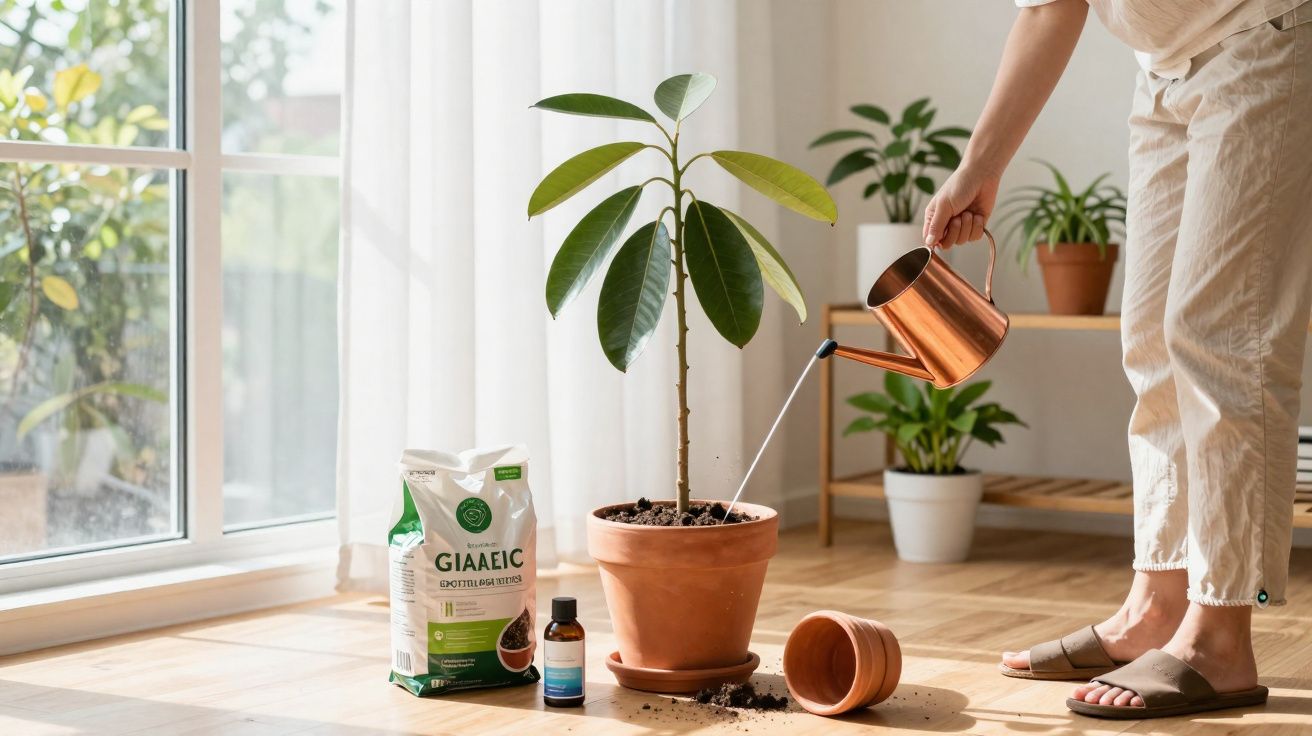
Many people proudly grow an avocado stone in a glass of water, only to be left months later with a thin, yellow plant on the windowsill.
Anyone trying to raise an avocado tree indoors soon discovers the pattern: the stone germinates, the first leaves appear, and then progress seems to stop. The plant stalls, drops its leaves, or suddenly dries out. With a few focused steps, though, this tropical favourite can stay an attractive houseplant for years.
Why avocado trees so often fail indoors
The avocado tree comes from warm, fairly humid regions of Central and South America. In nature, it grows into a substantial tree in loose soil, with plenty of light, steady warmth and enough humidity. On a dry windowsill above a radiator, it faces almost the opposite conditions.
Another problem is that many people treat the avocado stone like a one-off science project: germinate it in water, take a few pictures for social media, and once it becomes more demanding, throw the plant away. If you genuinely want a long-lasting houseplant from the stone, you need to treat it like a tropical plant from the start: the right pot, the right position, careful watering and consistent care.
A healthy avocado tree also responds best when it is given a stable routine. Sudden changes in light, moisture or temperature tend to show up quickly in the leaves, so steady conditions are far more helpful than dramatic interventions.
If you see your avocado tree as a proper houseplant rather than just a glass-of-water experiment, your chances of getting a strong, green plant rise enormously.
Mistake 1: Starting off wrongly with the stone and the first pot
The most common stumbling block happens right at the beginning: the stone goes into water in a hurry, is half forgotten, and later gets shoved into whatever soil is available. A stable plant needs a more considered approach.
How to get the avocado stone started successfully
The first priority is a healthy stone from a ripe fruit. It should be neither damaged nor shrivelled. It then needs warmth: 20 to 25°C is ideal, perhaps on a bright kitchen shelf away from draughts.
There are three workable germination methods:
- In a glass of water: secure the stone with toothpicks so the lower part sits in water while the top stays dry.
- Directly in loose compost: place the stone about two-thirds of the way into a light, humus-rich growing medium, leaving the top exposed.
- In damp cotton wool or kitchen paper: wrap the stone, put it in a container, keep it lightly moist, and move it into compost later.
It usually takes three to eight weeks before the stone splits and the first root and shoot emerge. During this period, the stone must neither dry out nor rot in stagnant water.
The first pot decides how well the plant develops
Once the shoot is a few centimetres tall and the root system is well established, the young plant needs a proper home. A frequent error is choosing a pot that is far too large and filling it with dense, heavy compost. In that case, the roots sit in cool, wet conditions and begin to rot.
A better approach is:
- Use a pot about 20 to 25 cm across with drainage holes in the base.
- Add a drainage layer of expanded clay or gravel at the bottom.
- Top that with loose, nutrient-rich potting compost that has not been compacted.
- Plant the stone only halfway down and spread the roots out gently.
After four to five months, the plant can move up one pot size. Constant repotting is unnecessary, though, and only puts the plant under stress.
Mistake 2: The wrong position - too dark, too hot, too dry
The ideal indoor position for an avocado tree is bright, warm and free from draughts, but not baking in direct sun behind glass. That combination is hard to find in many homes.
East- or south-east-facing windows are particularly suitable, and west-facing windows can also work if a sheer curtain softens the light. The temperature should stay between 18 and 25°C. Cold draughts from a window or a radiator directly beneath the pot create stress.
Because the plant comes from tropical regions, it appreciates a fair amount of humidity. Dry, hot air from central heating can quickly cause the leaves to turn brown.
If you mist your avocado tree daily with low-limescale water and keep it away from direct heat, you can prevent many leaf-drying problems.
Helpful ways to raise the humidity around the plant include:
- placing the pot on a saucer filled with damp expanded clay pebbles
- grouping several houseplants together to create a small microclimate
- airing the room without draughts by opening the window wide for a short time and moving the plant back slightly
In winter, position matters even more. Short days and low light can slow growth dramatically, so a bright spot close to the window is usually better than a warm but gloomy corner.
Mistake 3: Too much or too little water - the classic problem
Few topics cause as much damage to houseplants as watering. With an avocado tree, both extremes are harmful: constant waterlogging rots the roots, while complete dryness makes the leaves droop and fall.
How often should you water, and how much?
The compost should stay lightly moist, not soaked. A simple test is to press a finger 1 to 2 cm into the soil.
- If it feels dry, it is time to water.
- If it still feels clearly damp, wait a few more days.
After watering, any excess water must be tipped away from the saucer. Standing water at the base of the pot is a direct route to root rot.
| Symptom | Likely cause |
|---|---|
| Limp leaves, compost bone dry | Not enough water |
| Yellow leaves, wet and heavy compost | Too much water, poor drainage |
| Brown leaf tips, crisp edges | Air too dry or heat build-up near a radiator |
Hard tap water can also contribute to yellowing over time because the plant finds it harder to absorb nutrients. Stale tap water, filtered water or rainwater works better.
A simple rule helps most of the time: water thoroughly, then let the top layer of compost begin to dry slightly before watering again. That gives the roots moisture without drowning them.
Mistake 4: No nutrients - and then wondering why nothing grows
Avocado trees grow quickly when they get what they need. In a flowerpot, though, the nutrient supply is used up fast. Many people leave the plant in the same compost for years and only add water, which leads to weak growth and pale leaves.
During the growing season from March to October, a potted avocado tree can be given a liquid feed for green plants or citrus plants every two weeks. The dose should follow the instructions on the bottle, or be slightly lower. Too much fertiliser causes brown leaf tips.
Pale green, small leaves and very few new shoots often point to a nutrient shortage - in that case, a regular, gentle liquid feed usually helps.
In autumn and winter, when growth slows, feeding once a month very sparingly is enough, or you can stop altogether if the plant is already in a cool, dim spot.
Mistake 5: Never pruning, never repotting - and the tree becomes unstable
If you simply let an avocado tree grow unchecked, it usually turns into a long, thin, wobbly stem with a few leaves at the top. To make the plant bushier and more stable, it needs its first “haircut” early on.
Pruning an avocado tree for a better shape
As soon as the young tree reaches around 15 to 20 cm, you can pinch out or cut off the tip above the second or third pair of leaves. It may feel severe, but it encourages new side shoots. When those shoots get longer, shorten them a little again so that the plant gradually develops a fuller, more branched shape.
Every two to three years, it is worth repotting the plant into a slightly larger container with fresh compost. When doing so:
- loosen the old, compacted compost carefully
- remove any rotten or mushy roots
- add a new drainage layer and fresh growing medium
From late spring to early autumn, the avocado tree can also spend time in a sheltered spot on a balcony or terrace. It will get more light there and grow stronger, but it should not sit in cold draughts or harsh midday heat.
When moving it outside, introduce it gradually. Sudden exposure to stronger light can scorch the leaves, so a few days in partial shade is usually better than an immediate move into full sun.
Typical problems: yellow leaves, pests, no fruit
Yellow leaves are a warning sign with several possible causes: too little light, too much water, hard water or a lack of nutrients. The answer lies in checking watering habits, position and feeding carefully.
In dry heated air, spider mites often appear, and you can recognise them by the fine webbing on the underside of leaves. Scale insects and mealybugs also sometimes settle on the shoots. A lukewarm shower for the whole plant, followed by wiping it down with diluted soap solution, may be enough for a light infestation.
If you are dreaming of fruit, it is wise to keep expectations realistic. Even under excellent conditions, avocado trees grown from stones indoors very rarely produce fruit, and when they do, it usually takes many years. A more practical goal is a strong plant with rich green leaves and an attractive shape for the living room.
Good hygiene helps here too. Check the underside of leaves regularly, remove dust, and isolate any newly bought houseplants for a short time before placing them near your avocado tree. That reduces the risk of pests moving in unnoticed.
How an avocado tree becomes an easy long-term plant
If you treat the plant as a long-term project, you gain twice over: first, you grow a striking feature plant; second, you learn a great deal about watering, light and nutrients in houseplants more generally. Many of the tips for avocado trees can be applied directly to other tropical plants, such as citrus trees or ficus species.
A simple weekly ritual is very useful: once a week, carry out a quick plant check. Test the compost, wipe dust from the leaves, look for pests, and turn the pot so all sides receive light. That keeps the avocado tree vigorous, and minor problems are spotted early before the plant suddenly ends up bare in the living room.
A well-cared-for avocado tree has one more advantage: it reacts clearly to changes. If you turn the heating up in winter or let the watering slip, it will show you soon enough. That makes it a kind of living indicator for the room’s climate - and, as a bonus, one of the most personal houseplants you can own, because it began life as a snack you enjoyed at home.

Comments
No comments yet. Be the first to comment!
Leave a Comment