
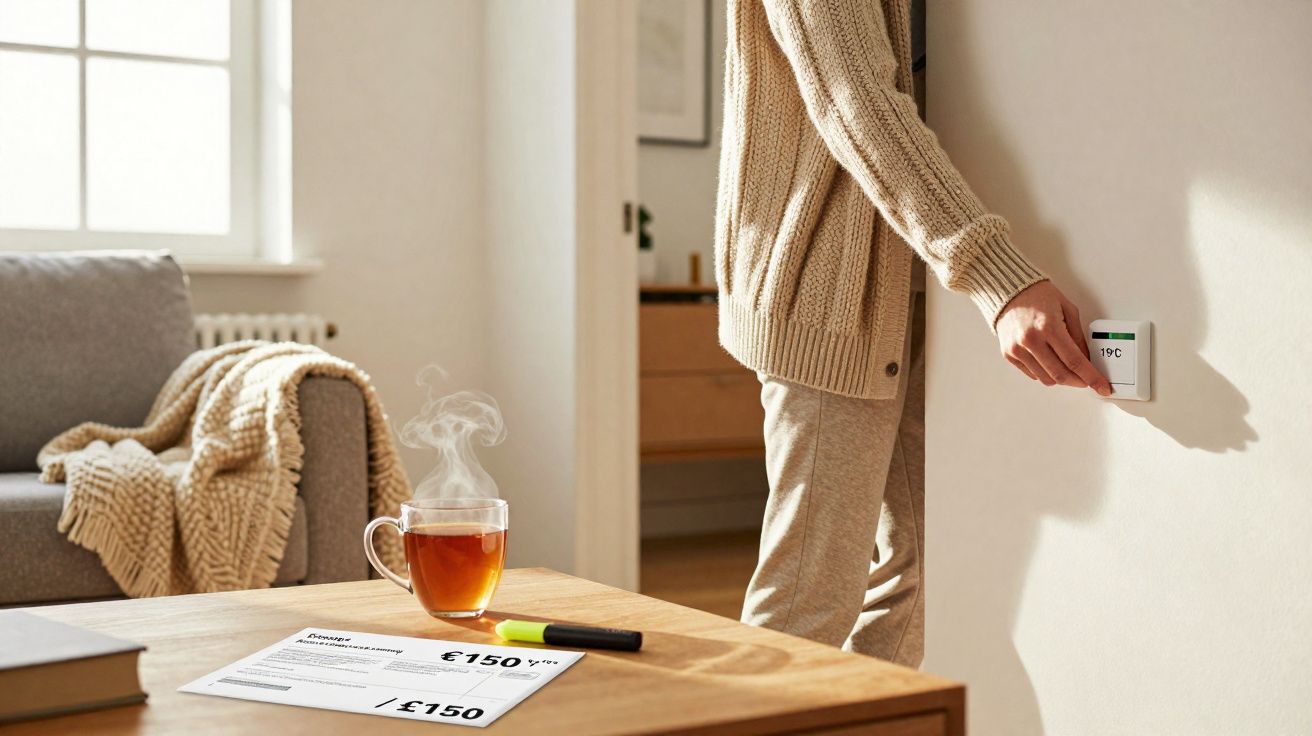
Winter comfort often comes down to the tiny decisions you make on repeat, day after day.
If you set modest thermostat targets that reflect how each room is actually used, you can keep the house feeling steady and take a noticeable slice off your heating bill before Christmas.
Why 19°C keeps homes comfortable
Keeping living areas at 19°C usually lands in the practical middle ground: warm enough to relax, but not so high that you pay to heat air you do not need. Once you start from 19°C, you can fine‑tune individual rooms up or down depending on what you do there, how many people are in the space, and the time of day.
Daytime benchmark: aim for 19°C in living spaces, then adjust by room and routine rather than using one fixed setting everywhere.
A setting your body tends to like
If you run rooms too warm, the air can feel drier and you may end up feeling sluggish sooner. On the other hand, chilly, damp spaces encourage condensation and can aggravate coughs. Bedrooms are often better slightly cooler: it can improve sleep because your core temperature is able to fall naturally overnight, helping you wake less frequently.
Keep indoor humidity around 40–60% to reduce overly dry air and limit condensation on cold windows and external walls.
A number your heating bill will notice
As a rule of thumb, turning the thermostat down by 1°C cuts heating energy by roughly 5–7% (assuming your habits and the weather stay broadly the same). Across an entire heating season, that adds up to meaningful money-particularly with gas, oil or all‑electric heating in a draughty property.
Reduce the setpoint by 1°C and you can usually expect about 5–7% lower heating use, all else being equal.
Room‑by‑room thermostat targets that pay back
Warm the rooms where life happens, rather than trying to keep every corner the same. The “feels like” temperature shifts with sun through windows, heat from cooking, carpets versus hard floors, and how many people are sharing a space.
| Room | When occupied | When away/asleep | Quick win |
|---|---|---|---|
| Living/dining | 19–20°C | 16–17°C | Shut blinds or shutters at dusk to reduce heat loss through windows. |
| Adult bedroom | 16–17°C | 14–15°C | Switch to a winter duvet and drop the setpoint by 1–2°C overnight. |
| Child’s bedroom | 18–19°C | 16–17°C | Avoid unregulated plug‑in heaters that can overshoot and overheat the room. |
| Bathroom | 21–23°C for 30–60 min | 16–17°C | Time a warm‑up to start about 15 minutes before showers. |
| Kitchen | 18–19°C | 16–17°C | Cooking produces heat, so resist pushing the thermostat higher. |
| Home office | 19–20°C | 16–17°C | A rug and a lap blanket can reduce radiant chill at your desk. |
| Hallway/entry | ~17°C | 15–16°C | Keep internal doors closed to limit draughts between zones. |
Six tweaks that stop money leaking
- Set programmed night‑time and “out of the house” setbacks of about 2°C, for both weekdays and weekends.
- Install thermostatic valves on radiators so you can control temperatures room by room.
- Block draughts: refresh window seals, add a door draught excluder, and use heavy, lined curtains.
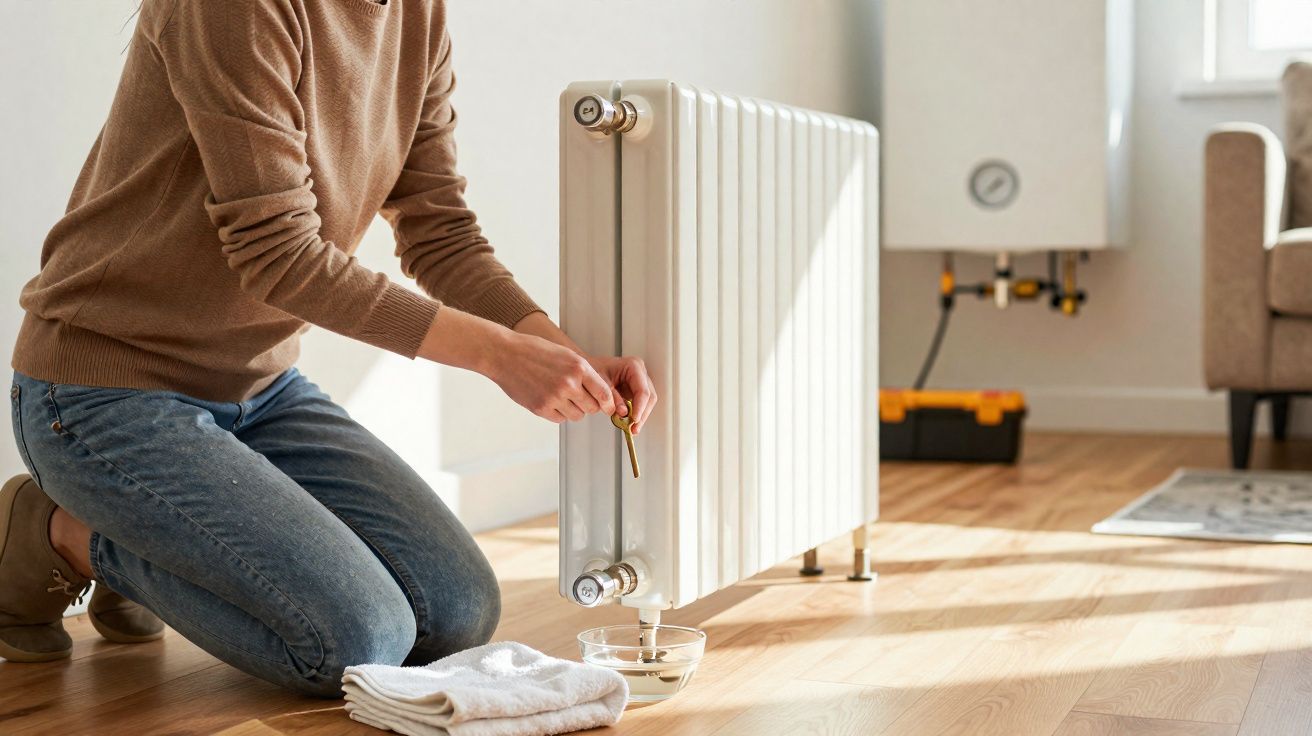
- Bleed radiators and balance the system so heat is distributed evenly throughout the home.
- Ventilate with purpose: open windows wide for 5–10 minutes, then close them to retain heat.
- Close blinds and shutters at sunset, then open them in the morning to capture free solar warmth.
These changes are usually low‑cost and the comfort improvement is quick-especially close to windows and across colder floors where heat loss is felt first.
How £150 disappears - and how to keep it
Imagine a 70 m² flat heated by gas, spending roughly £900–£1,600 on space heating over a typical winter. Dropping the thermostat by 1°C could save about £45–£110. If your living areas are currently set at 21–22°C, cutting 2°C and combining that with smarter night‑time setbacks can often keep around £120–£180 in your pocket.
The biggest losses are commonly around glazing and uninsulated floors. Replacing tired window seals can make it feel 1–2°C warmer near the glass even if the thermostat does not change. Putting a dense rug on tile or laminate reduces radiant chill, so 19°C can feel comfortable where 20°C used to be your minimum.
Combine a 1–2°C setback with sealing and tighter schedules, and the avoided seasonal cost often lands around £150.
What your heating system changes about thermostat control
Natural gas
Gas systems pair well with programmable thermostats and weather‑compensating controls. An annual service helps keep efficiency stable and can spot safety problems early.
Electric
Electric heating is straightforward to regulate accurately, and modern high‑inertia radiators tend to feel smoother than older convector heaters. Because the price per kWh can make overheating expensive, disciplined schedules matter more.
Wood (logs or pellets)
Pellet appliances can modulate their output and may be cheaper per kWh when fuel is properly dried and stored. Regular cleaning and chimney sweeping protect both performance and safety.
Oil
Oil is declining for cost and climate reasons, but many homes still rely on it. Correct boiler settings and an outdoor reset curve help avoid wasteful high‑temperature operation.
Heat pump
Heat pumps perform best in well‑insulated homes using low‑temperature emitters. Rather than frequent on/off cycling, use modest setbacks and steady heating curves to keep the COP high during cold snaps.
Four‑week heating tune‑up plan
- Week 1: bleed radiators, replace window and door seals, and set radiator valves by room.
- Week 2: programme night and working‑hour setbacks, practise short daily airing, and close blinds at dusk.
- Week 3: add a simple hygrometer, fine‑tune ventilation, and hang a thermal curtain where it will help most.
- Week 4: review meter readings, compare comfort notes, and turn down any consistently overheated rooms by one notch.
Pitfalls to avoid
Do not treat a fan heater as a long‑term solution: it consumes a lot of electricity and dries the air quickly. Keeping a lounge at 23°C seldom feels better than 20°C if draughts and dry air are still the real issue-and it costs far more. Also watch thermostat placement: if it is behind curtains or mounted above a radiator, it will misread the room and drive overheating.
Ventilation still matters in winter. Effective extraction removes moisture and odours, cutting condensation and the clammy cold that follows. A £10 hygrometer gives you a daily reference point so you can ventilate briefly and effectively rather than leaving windows on the latch all day.
Thermostat placement, zoning, and radiator balance (small details, big results)
Even with perfect setpoints, comfort suffers if heat is not delivered evenly. If some rooms warm slowly while others overshoot, check radiator balancing and whether furniture or long curtains are blocking airflow. Where possible, create clear “zones” (for example, living areas versus bedrooms) using doors and thermostatic valves, so you are not paying to maintain 19°C in spaces you barely use.
Extra pointers worth trying
Try a simple two‑week test: reduce living‑room and hallway setpoints by 1°C, add a rug near the sofa, close blinds at dusk, and record meter readings. If comfort stays the same, keep the new settings and put the savings towards durable upgrades such as thermostatic valves, heavier curtains, or thicker underlay.
Book servicing for combustion appliances before deep winter and fit a carbon‑monoxide alarm near sleeping areas. If you use a smart thermostat, geofencing can automatically reduce temperatures when the last person leaves. If you rent, low‑cost steps-seals, rugs, draught excluders, and schedule tweaks-often provide the highest return without altering the building fabric.




Comments
No comments yet. Be the first to comment!
Leave a Comment