
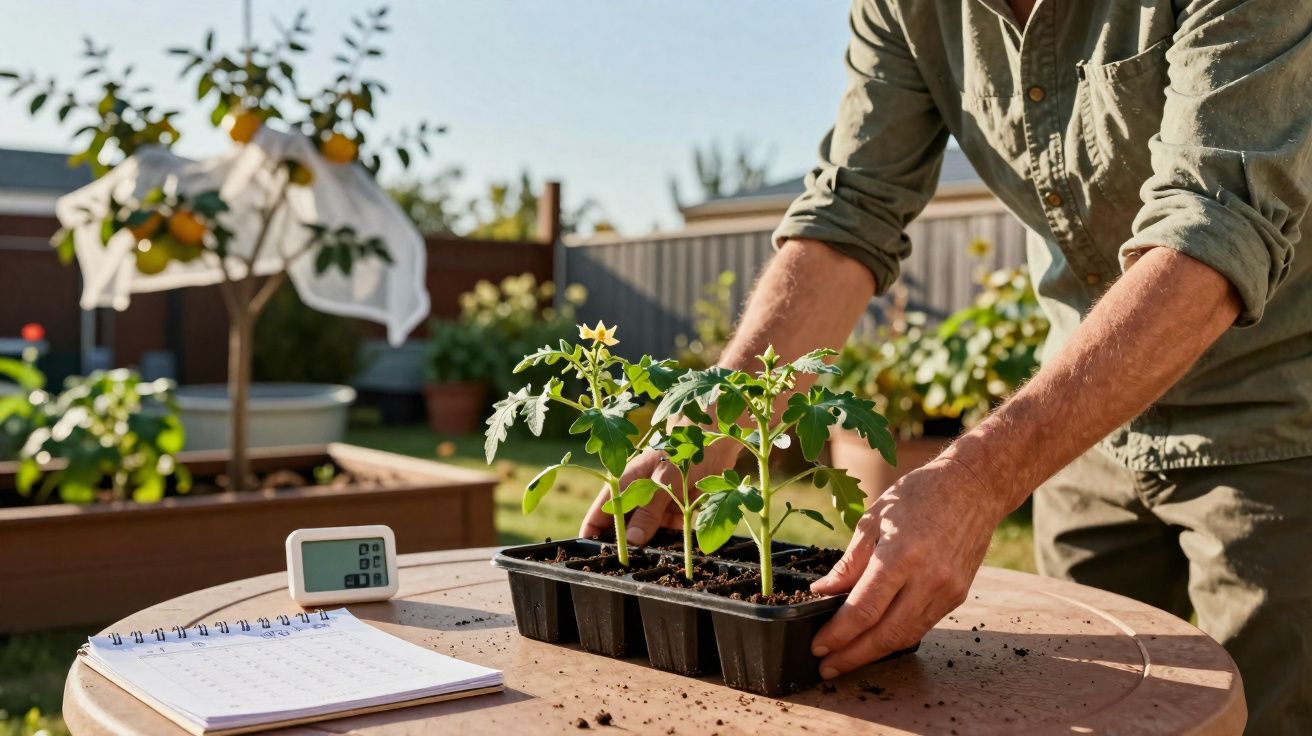
The first warm days make gardeners itch to get planting, garden centres fill up fast, and tomato plants look robust and ready to go. Many people put them straight out into the open ground and then, weeks later, wonder why the plants are weak and stunted. Professional vegetable growers do things differently: before planting out, they give their tomatoes a kind of training camp. It may look like a minor step, but in the garden it genuinely changes everything.
Why Tomatoes Suddenly Falter in the Bed
Temperature shock between the living room and an April night
Anyone who raises tomatoes from seed will know the pattern: for weeks on end, they grow safely on a windowsill or in a warm greenhouse. There, temperatures are usually around 20 degrees, with very little fluctuation. Outdoors in spring, reality looks very different: mild during the day, but often only 5 or 6 degrees at night, sometimes even lower.
If such pampered young plants are moved outside immediately, two worlds collide. The tomato experiences real temperature shock. Its metabolism reacts with stress, growth slows, leaves can discolour, and the plant generally falls behind.
Tomatoes love warmth, but they are not delicate - they simply need to learn in time how to cope with cold and changeable conditions.
That learning process does not happen indoors. Inside, the plants never experience a sudden drop in temperature or a proper day-to-night contrast. That is exactly what comes back to bite them after planting out.
No muscle, no support: when the wind bends the stems
The second problem is wind. A tomato that has stood quietly in the sitting room for weeks has had no reason to strengthen its stem. The cells are full of water, soft, and the main shoot remains thin.
When the first proper gusts hit such plants, this often happens: the stem bends right down to the ground and never straightens again - and in the worst case it snaps altogether. Tomatoes rarely survive that.
Professional gardeners plan for this risk and deliberately train the plants before they go into the garden.
The Professional Routine: Hardening Off Tomatoes Instead of Overloading Them
The crucial step: putting them outside briefly every day
The technical term for this secret professional trick is “hardening off”. It means gradually acclimatising plants to life outdoors. Not a brutal switch from 20 degrees indoors to unpredictable April weather, but a kind of mini climate training.
The routine is straightforward:
- Day 1–2: Put the tomatoes outside for 1–2 hours in the afternoon, in a sheltered, partially shaded spot.
- Day 3–4: Increase the time outside to 3–4 hours, ideally with a light breeze.
- Day 5–7: Leave them outside for most of the afternoon and only bring them in again in the evening.
- After that: Depending on the weather, gradually include the early evening as well, until there is no longer any risk of frost at night.
During this period, something important happens inside the plant: the tomato produces more supportive fibre in the stem, becomes thicker, more stable, and much tougher overall. Anyone who compares the plants before and after a week of hardening off can see the difference with the naked eye.
Without hardening off: long, thin, soft tomato plants.
With hardening off: compact, strong specimens with sturdy stems.
Slowly acclimatising them to real sunlight
It is not only the cold that troubles freshly planted tomatoes; sunlight does too. Light shining through glass is much gentler. Outdoors, the leaves of tender plants can scorch very quickly if they are placed straight into full midday sun.
That is why hardening off always includes light training as well:
- The first few days: only bright light, but in shade or under a light fleece.
- Then: allow a little sun in the morning or later in the afternoon on purpose.
- Finally: gradually introduce them to midday sun too.
If you ignore this process and put tomatoes straight into strong sun, you risk pale, scorched leaves. The plant then loses a great deal of energy that should really go into growth and flowers.
Hidden Danger in the Garden: Late Frost on Fruit Trees
Keeping an eye on the blossom - early in the morning
While the tomatoes are being trained in their pots, something else is happening in the fruit garden: cherry, plum or apricot trees are coming into blossom. The flowers look magical, but they are extremely vulnerable.
A critical moment is the early morning after a cold night. A walk through the garden is well worth it. If you look closely at the blossoms, you can quickly tell whether frost has already done its damage:
- Healthy blossom: the centre is light, fresh and slightly greenish-yellow
- Damaged blossom: the centre is dark, brown or blackened
Those blackened flowers will not produce fruit later on. If you spot them early, you can act when the next cold snap arrives.
Forecasting late frost in time and reacting properly
Late frosts are almost part of every spring. They often arrive unexpectedly in the middle of a warm spell. Experienced gardeners watch the forecast, pay attention to clear nights, and keep an eye on evening temperatures as they fall.
If frost is threatening, smaller trees and shrubs can be protected, for example with:
- fleece covers or old blankets over the canopy
- an extra air layer created with supports and sheeting
- a makeshift frame made from canes and tarpaulin
Measures like these often save a large proportion of the blossom - and with it the summer fruit crop.
Everyday Organisation: How to Manage the Daily In-and-Out
A temporary shelter for cool nights
Dragging all the pots back indoors every evening soon becomes tiresome. For that reason, many amateur gardeners build a simple but effective temporary shelter in the garden or on the balcony.
Typical options include:
- a small polytunnel over a bed
- a simple wooden frame fitted with plastic sheeting
- an old raised bed with a clear cover
During the day, this mini greenhouse stays open so that air and light can reach the plants. In the evening, it is closed to retain the day’s stored warmth and keep out the wind. That way the tomatoes stay outside, but they are not exposed.
Sticking to the routine for 10 to 15 days
Hardening off is not a sprint. A period of ten to fifteen days has proved effective. During this phase, the rule is simple: outside during the day, indoors or under protection at night.
Many gardeners follow the so-called mid-May cold spell as their guide. Until that critical period is over, tomatoes should never spend the night completely unprotected outdoors. Anyone who takes that rule seriously will see far fewer losses.
When Tomatoes Can Really Go Into the Bed
Looking for several signals at once
Experienced gardeners do not rely on the calendar alone; they look for several signs:
| Criterion | When is it right? |
|---|---|
| Night-time temperatures | consistently above about 8 degrees, with no frost in sight |
| Soil temperature | the bed feels warm rather than cold to the hand |
| Plant appearance | compact, sturdy stems and rich green leaves |
Only when all of these signs point in the right direction do the tomatoes move permanently into the open ground. At that point, they can cope with the move without any significant shock.
Planting out confidently: how tomatoes get off to a strong start
Once the plants have been hardened off, planting them becomes much more relaxed. In the bed, they can send out their roots actively straight away because cold and wind no longer bother them so much. Many gardeners also plant tomatoes a little deeper on purpose so that the stem can form extra roots and the plant becomes even more stable.
That is usually how the dreaded “toppled tomato plants” are avoided. Instead, strong bushes develop with plenty of flower trusses and, later, long clusters of fruit.
A useful extra tip is to choose a still, overcast day for planting out if possible. Water the plants in well straight after planting, and keep the soil evenly moist for the first few days without waterlogging it. That helps the roots settle in quickly and reduces the stress of the move even further.
Practical Extras for a Strong Season
What hardening off means for other plants
The same principle does not apply only to tomatoes. Peppers, chillies, aubergines and even sensitive summer bedding plants all benefit from a preparation period outdoors. In short: anything that has been raised indoors should not go from zero to full exposure outside.
Anyone who sets up a fixed hardening-off corner with fleece, a small frame and somewhere to stand pots will make life easier year after year. After that, the routine almost runs itself.
Common hardening-off mistakes - and how to avoid them
The same mishaps keep happening:
- putting plants straight outside all day instead of starting with short spells
- not checking the weather forecast, so cold nights catch the young plants by surprise
- moving tomatoes directly into full midday sun
- leaving the pots in the wind even though the stems are still very thin
If you keep these points firmly in mind, you will save yourself a great deal of frustration and quickly notice that the extra step before planting out does take a little patience, but produces much sturdier plants and a far better harvest.


Comments
No comments yet. Be the first to comment!
Leave a Comment