
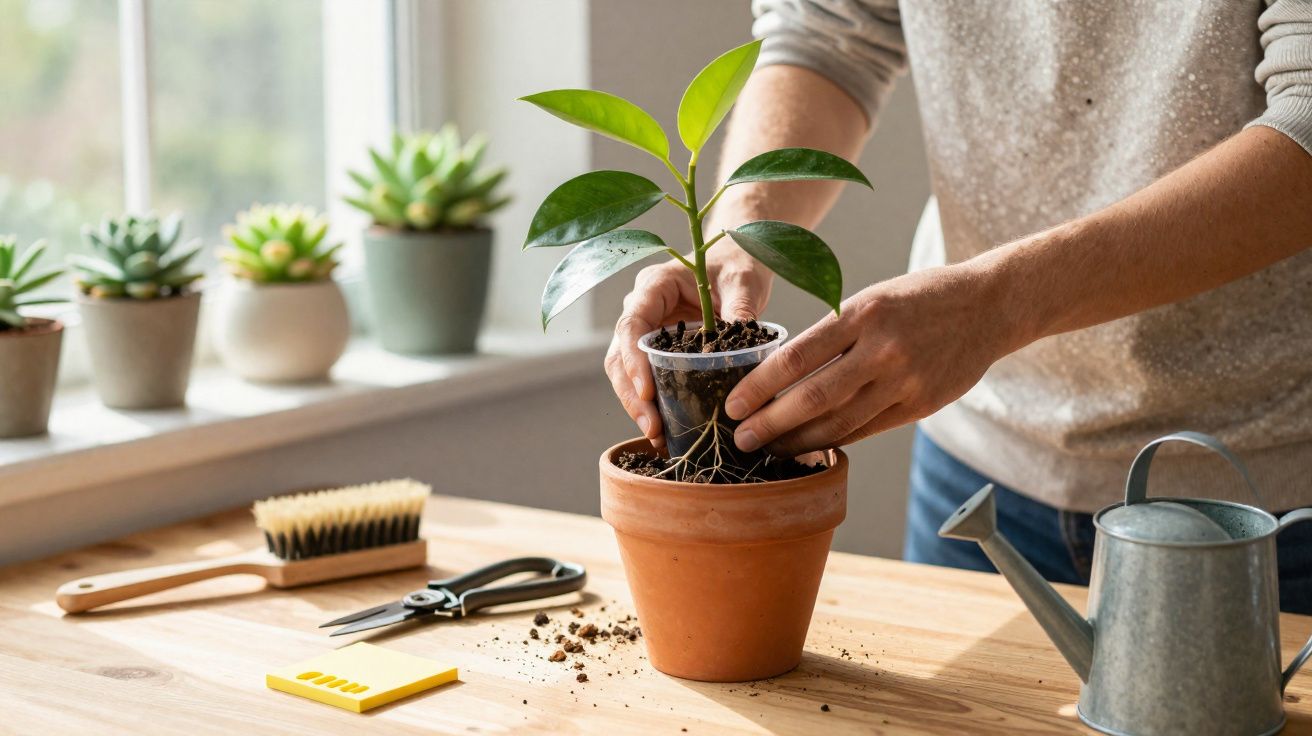
With a few targeted actions, this plant can often be brought back surprisingly well.
Many owners give up on their money tree too quickly, even though the causes are usually rather ordinary: too much water, too little light, or the wrong pot. If you read the warning signs correctly and respond step by step, you have a very good chance of getting your green housemate back into shape.
Spotting the warning signs correctly
The money tree, botanically Crassula ovata, mostly “speaks” through its leaves. If you look closely, you can tell early on when something is wrong.
- Soft, mushy leaves and spongy stems: a classic sign of too much water, often with root rot already beginning.
- Wrinkled, limp, or dropping leaves: a clear indication of significant lack of water.
- Musty smell and permanently damp compost: the pot is no longer drying out, so waterlogging is imminent.
- Very dry compost that has pulled away from the edge of the pot: the growing medium has dried out completely, and water simply runs off when you water.
- White, cotton-like deposits in leaf joints: usually mealybugs or other sap-sucking pests.
If you keep an eye on leaf texture and the condition of the compost, you can spot money tree problems before they become life-threatening.
First aid: stopping the decline
Before you move on to bigger measures, the plant needs peace and quiet. Put the money tree away from other houseplants first so pests do not spread. After that, the state of the compost will determine what you do next.
If it has been overwatered
Waterlogging is the most common reason a money tree dies. You should not hesitate here.
- Stop watering immediately.
- Ease the plant carefully out of its pot.
- Shake off as much of the old, wet compost from the roots as possible.
- Check the roots: anything black, brown, mushy, or foul-smelling should be removed with a clean, disinfected knife.
- Leave the plant with its cleaned roots to dry for 12–24 hours in a bright, warm place that is not in direct sun.
This airing of the roots slows the rot and gives the money tree the chance to form new, healthy root tips.
If the plant has dried out
Dryness can also weaken the money tree, although it is far more tolerant of this than of waterlogging.
- Do not give it a shock soak from above with ice-cold water.
- Instead, place the pot in a bowl of room-temperature water.
- Wait 30–60 minutes until no more air bubbles rise.
- Take the pot out and allow it to drain thoroughly.
- Water again only when the top layer of compost has dried out completely.
This method allows the growing medium to absorb moisture evenly without drowning the roots.
Dealing with pests consistently
Mealybugs and other sap-sucking insects drain the money tree’s strength and open the door to fungal disease.
- Gently wipe away visible colonies with a cotton bud dipped in 70% alcohol.
- Repeat treatment every 7–10 days until no infestation is visible.
- If the problem is severe, a specialist plant treatment based on soap or oil may be needed.
With pests, consistent repeated treatment matters more than a single aggressive product.
Re-potting properly: giving the plant a fresh start
After root rot or when the compost is very old and compacted, a complete reset in fresh growing medium is often the only sensible solution.
The ideal pot for a money tree
- A container with drainage holes is essential, otherwise water collects at the bottom.
- Terracotta pots are often better than plastic because they release excess moisture through the pot walls.
- The pot should not be too large, or the growing medium will stay wet for too long.
Drainage and growing medium: the most important insurance
The lower part of the pot needs a layer that allows water to run away:
- 2–3 cm of expanded clay, gravel, or coarse grit as drainage
On top of that goes a loose, airy mix. A proven blend is:
- 50% cactus compost or standard potting compost
- 25% coarse sand (not children’s play sand; use aquarium sand or washed builder’s sand)
- 25% perlite or lava granulate (for example pumice, expanded shale, or fine gravel)
Then place the money tree so that the root collar sits just above the compost surface. Press the compost down lightly, but do not pack it tightly. After that, be patient: the plant should remain completely dry for the first 4–5 days so that any cut surfaces on the roots can heal cleanly.
A fresh start also means clean tools and patience
If you have cut away rotten roots or pests have been present, it is worth disinfecting scissors, knives, and even the pot before reuse. That small extra step helps prevent the same problem returning almost immediately. It also pays to avoid feeding the plant straight away after re-potting: a recovering money tree is focused on root repair, not on producing lush new growth.
Watering with a system: less really is more
The money tree stores water in its fleshy leaves and stems. It therefore needs watering far less often than many other indoor plants.
| Season | Watering interval (guide) | Note |
|---|---|---|
| Spring | every 10–15 days | Let it dry out fully between waterings. |
| Summer | every 7–12 days | In hot weather and strong light, a little more often, but never constantly damp. |
| Autumn | every 14–20 days | Reduce watering gradually. |
| Winter | every 3–4 weeks | Water very sparingly, especially in cool rooms. |
A simple finger test helps: if the compost still feels cool and slightly damp 2–3 cm below the surface, wait before watering again.
Location, light, and feed: helping the money tree regain strength
Without light, the money tree stays weak. With the right spot indoors, it recovers much faster.
- A bright south- or west-facing window is ideal.
- Direct midday sun in high summer can scorch the leaves - a light curtain helps.
- In winter, a plant LED placed at close range supports growth.
- Avoid heating air directly underneath the plant, and do not let it sit in draughts from constantly tilted windows.
When it comes to feeding, wait until the plant looks strong again and is producing new shoots. A liquid specialist fertiliser for succulents, lightly diluted, is enough every three to four weeks from March to September. In the darker months, and whenever the plant is weakened, keep the fertiliser bottle closed.
Too much fertiliser often harms a money tree more than stopping altogether - less, and less often, is what produces healthier plants here.
Long-term care and the usual trouble spots
Anyone who understands the cause of the current problem can avoid the next setback. Certain issues keep appearing with struggling money trees:
- Saucers where water remains standing after watering
- Window ledges directly above radiators
- Large temperature swings between day and night
- Pots that are far too big and filled with plain potting compost without airy additives
- Spider mites encouraged by extremely dry indoor air in winter
Regular checks of the leaves, stems, and compost surface take only a few minutes a month, yet they stop problems going unnoticed for weeks.
Simple checks that make a big difference
Once a week, glance at the underside of the leaves and at the base of the stems. If the plant is leaning towards the window, rotate the pot a quarter-turn so that growth stays even. These small habits often prevent a rescued money tree from sliding back into decline.
How quickly a weakened money tree recovers
Patience matters more than many people think. Even if the top of the plant still looks sad, the money tree may be working away underground on new roots and buds. Depending on how severe the damage was, it often takes four to eight weeks before the first fresh, firm leaves appear.
If you feel confident, you can also grow extra plants from healthy shoot tips: cut off a short, non-woody side shoot, let it dry for two days, and then place it in a very mineral-rich growing medium. With a bit of luck, the cutting will become a second, strong money tree - a reassuring plan B if the original plant does not make it.
Many hobby gardeners report that their money tree seems hardier after a rescue. The plant is in the right growing medium, receives better light, and is watered more thoughtfully. What initially feels like a disaster often becomes the starting point for a much longer and healthier life for the plant in the living room.


Comments
No comments yet. Be the first to comment!
Leave a Comment