

Many gardens in the UK look neat, but a little interchangeable. A crisp lawn edge, a few easy-care perennials, perhaps some roses - pleasant enough, yet lacking a real moment of drama. That is exactly where a plant steps in that is still hardly known here, but has long been whispered about as an insider’s tip in design gardens: Leonotis leonurus, also known as lion’s ear.
The plant-like flame sculpture for tired beds
Leonotis leonurus is one of those perennials you see once and never quite forget. Native to South Africa, it looks as though a graphic designer had been let loose at the drawing board: upright, disciplined stems reaching around 1.8 metres, with glowing orange whorls of flowers stacked in layers.
Leonotis stands in the border like a living candelabra: every tier of flowers forms a ring of orange flames.
The flowers are tubular, slightly hairy, and clustered in dense circles around the stem. In full bloom they resemble stylised tongues of fire, almost like a Pop Art sculpture planted in the middle of the garden. The narrow, elongated foliage strengthens the graphic effect: nothing bulky, nothing clumsy, just a slim, upright silhouette.
Anyone used to only ball-shaped or cushion-forming perennials notices the change immediately. Here, the height shifts the entire scene. Leonotis rises clearly above its neighbours and draws the eye upwards at once. That creates a vertical accent that gives even compact town gardens real depth.
Fireworks for people, a buffet for insects
The bright orange colour is spectacular to us, but for insects it is above all an open invitation. The tubular blooms offer abundant nectar. In summer, Leonotis is busy with traffic: wild bees, honeybees, hoverflies and butterflies all use it as a regular landing point.
In warmer parts of its native range, even hummingbirds visit the flowers. In our gardens, butterflies and bees take over the role of regular guests. So if you want an ornamental bed that is not just attractive but also wildlife-friendly, Leonotis gives you a double result.
Where Leonotis leonurus shows its full performance
For all its striking looks, the plant’s demands are clear: it wants sun. Not merely bright partial shade, but proper, strong light.
The more sun Leonotis gets, the taller and more floriferous it becomes - six hours of direct light a day is the minimum.
The ideal site offers:
- at least six hours of direct sunshine every day
- a free-draining, fairly light soil
- no winter waterlogging
- some shelter from wind, so the tall stems do not snap
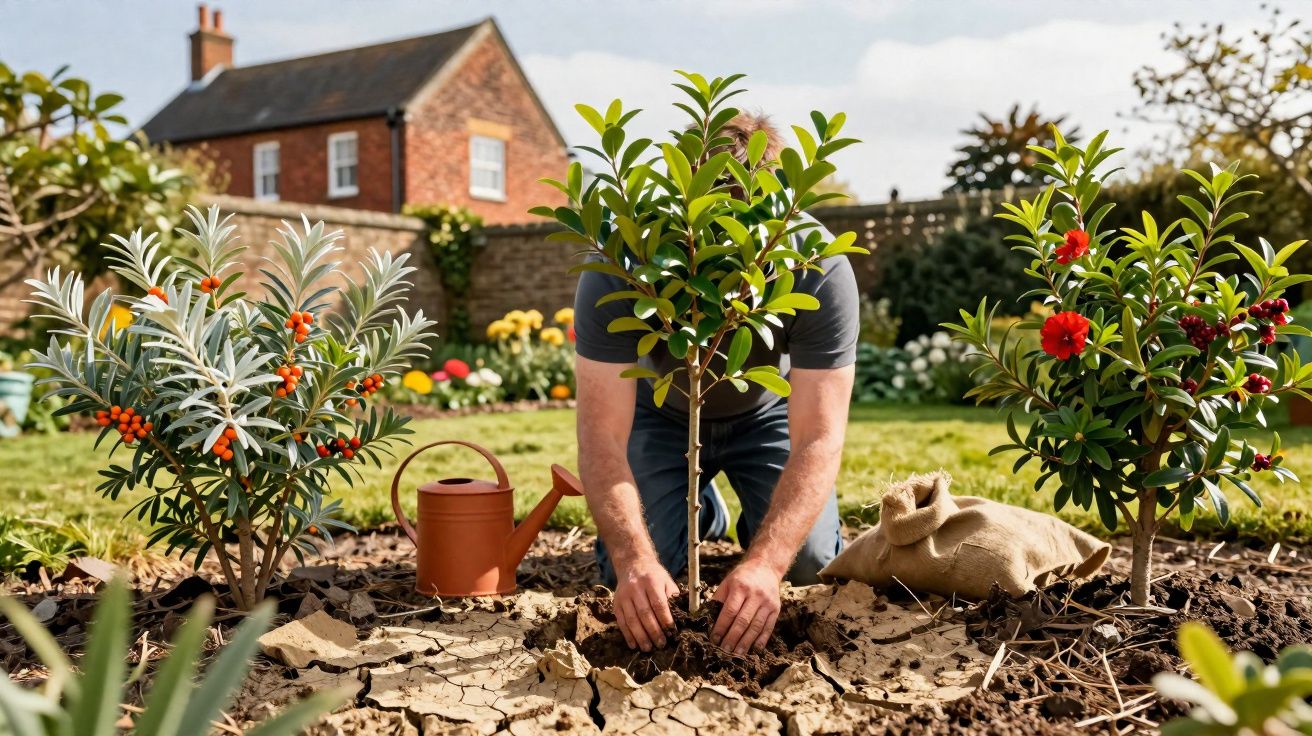
The soil may be reasonably rich, but it must not hold water for long. Heavy clay can be improved with sand or fine gravel. If your front garden only offers compacted builder’s soil, loosen it deeply before planting and enrich it with compost.
A drought champion with one weak point
Once established, Leonotis copes surprisingly well with dry spells. That makes it a valuable choice for regions where summers are becoming hotter and drier. In open ground it can manage extended periods without watering, provided it has already rooted in properly.
It tolerates temperatures down to around -8°C if the site is not completely exposed. A thick winter mulch of leaves or straw over the root zone helps the perennial through cold nights. In especially frost-prone locations, growing it in a pot can be the better option, with the container moved into a frost-free shed or a bright stairwell on cold days.
One advantage often overlooked is how well the plant fits sheltered urban spaces. A warm courtyard, a south-facing patio, or a protected front garden can give it exactly the conditions it loves: sun, warmth, and enough air movement to keep the stems healthy without battering them. In the right setting, it can behave more like a small architectural feature than a standard border perennial.
The five golden rules for planting lion’s ear
If you plant in spring, you have a good chance of seeing the first floral display by summer. A few basic rules make all the difference:
- Choose a genuinely sunny spot: Secure at least six hours of sun, or the plant will stay shorter and flower less freely.
- Make sure the soil drains well: Work in sand, gravel, or fine chippings so water cannot sit around the roots in winter.
- Start with compost: When planting, add a measure of well-rotted compost or a high-quality, structurally stable planting compost.
- Water moderately after planting: Keep it evenly moist at first, then reduce watering later - this perennial copes far better with dryness than with soggy roots.
- Mulch in open ground: Before winter, lay a thick mulch over the root zone, especially in exposed areas.
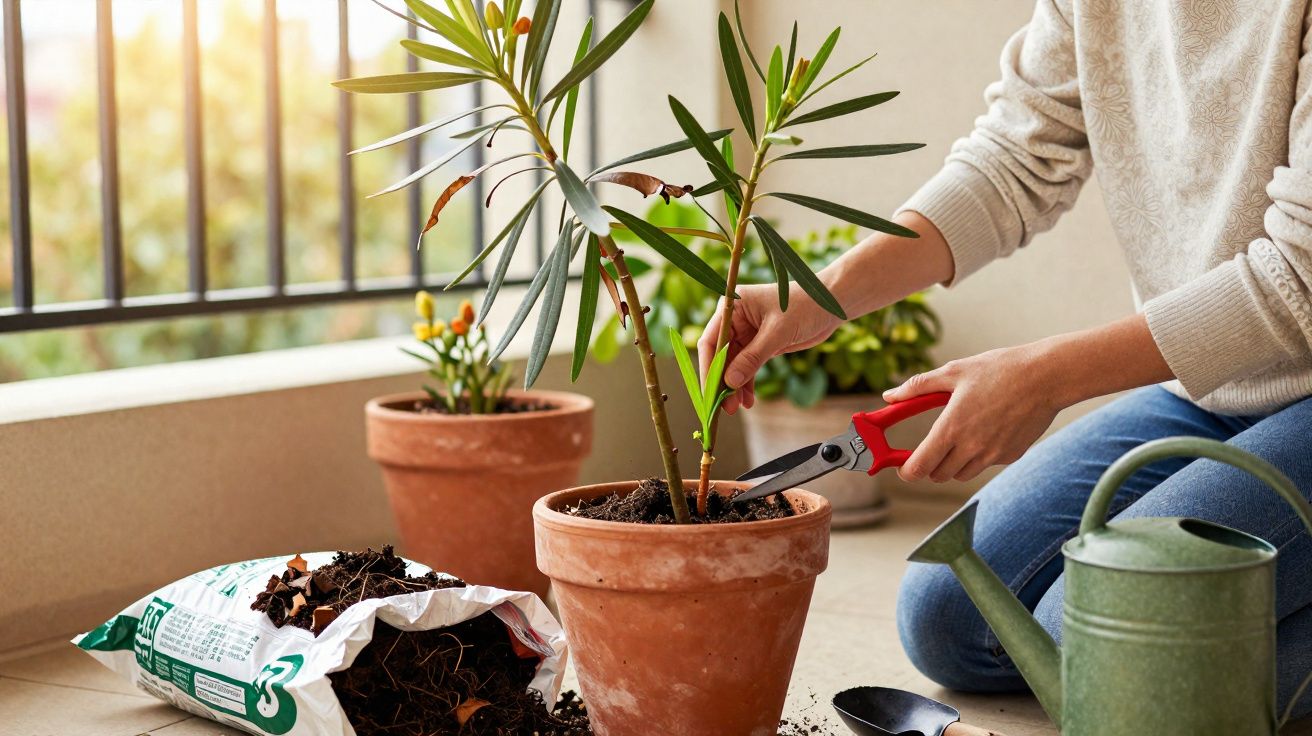
In pots, it is best to choose a tall, sturdy container so that stems reaching up to 1.8 metres do not topple over. Do not forget a drainage layer of expanded clay or gravel at the bottom.
How to make lion’s ear the star of a perennial border
Leonotis is not a plant for the edge. It performs best when placed in the middle or towards the back of a border, framed by lower companions. Its orange flower rings combine beautifully with cool blue and violet tones.
| Effect | Plant partners |
|---|---|
| Modern, graphic look | Ornamental grasses (Pennisetum, Miscanthus), grey-foliaged perennials |
| Fiery summer mix | Dark-leaved dahlias, cannas with bronze foliage, red gaura |
| Naturalistic garden | Blue and purple salvias, echinacea, rudbeckia |
| Urban design border | Structural grasses, fewer varieties, but planted in larger groups |
As a vertical, luminous accent, Leonotis tells a story in the border - it behaves like the main character making a strong entrance.
If you like something calm but not dull, plant Leonotis in a sea of airy grasses. The soft stems form a backdrop, while the orange garlands of flowers stand out clearly. In a small garden, a group of just three plants is enough to create the effect.
Border ideas for different garden types
A simple example for a 3-metre border beside a patio:
- 3 x Leonotis towards the back, planted in a staggered arrangement
- 5–7 x blue salvias in front of the Leonotis
- 3 x dark-leaved dahlias or cannas for contrast
- loosely scattered: a low ornamental millet or fountain grass
For wildlife gardeners, Leonotis also works well beside a fence or in front of a loosely clipped hedge. Place echinacea and rudbeckia in front, with wild perennials such as dyer’s chamomile or yarrow between them. The result feels spontaneous, yet still carefully composed.
Care through the year: little effort, big effect
Despite its dramatic appearance, Leonotis is not a demanding diva. If you position it correctly from the start, it asks very little of you later on.
- Spring: Cut back the old stems once there is no serious frost risk. Give it a light feed of compost to help it start.
- Summer: Water only during prolonged dry spells. You can remove spent flower tiers, but that does not always trigger new blooms; many gardeners simply leave the decorative rings in place.
- Autumn: In colder regions, leave the lower part of the stems standing and thin the plant only lightly. Leave major pruning until spring.
- Winter: Check the mulch layer and, during severe bare frosts, add an extra covering of brushwood.
Disease is uncommon as long as the soil drains well. Problems arise mainly when the plant sits wet for weeks, which can cause the crown or roots to rot. Aphids and other sap-suckers are more likely during periods of drought stress. A strong spray of water and better watering discipline are usually enough to deal with them.
Another reason this plant earns its place is seasonal continuity. It bridges the gap between high summer and early autumn, when many borders begin to look tired. Its upright structure and repeating flower tiers keep the garden animated even when other perennials are winding down. The effect becomes even more striking when the flowers catch low evening light, turning the orange tiers into a warm, glowing focal point.
Who lion’s ear suits best
Leonotis is especially appealing to gardeners who want a noticeably more contemporary look without a lot of extra work. If your beds are currently built around classic cottage-garden plants or easy ground-covering species, this perennial creates an instant stylistic break - in the best possible way.
It also has clear advantages on balconies and roof terraces. In a sufficiently large container, paired with ornamental grasses and blue salvias, it looks like a ready-made mobile design border. Particularly where you do not want to water every week, its drought tolerance comes into its own.
The main risks are in very cold regions and on extremely heavy soils. If you garden in a chilly alpine valley or on an exposed hillside, treat Leonotis as a container plant. In mild wine-growing areas or inner-city locations, by contrast, the chances are good that the perennial will last for several years.
How Leonotis fits into your garden over time
Once you have it in the border, you soon notice how strongly it changes the feel of the whole area. Many gardeners then start introducing more vertical elements: taller grasses, button snakewort, tall salvias. Gradually, the garden becomes more layered and more dramatic - very much in line with the so-called “New Perennial” style.
A welcome side effect is that the garden stays lively well into late summer and early autumn, when many traditional bloomers are already fading. The orange tiers of Leonotis, combined with mature grasses and seed heads from other perennials, create an atmosphere reminiscent of southern landscapes without feeling artificial.
If you are willing to take a small risk, try planting Leonotis in a prominent spot this spring. A dull edge border or the gap in front of a monotonous hedge is ideal. Often, one glance on a hot July day is enough to realise that this “unknown orange” has what it takes to become a favourite plant.

Comments
No comments yet. Be the first to comment!
Leave a Comment