
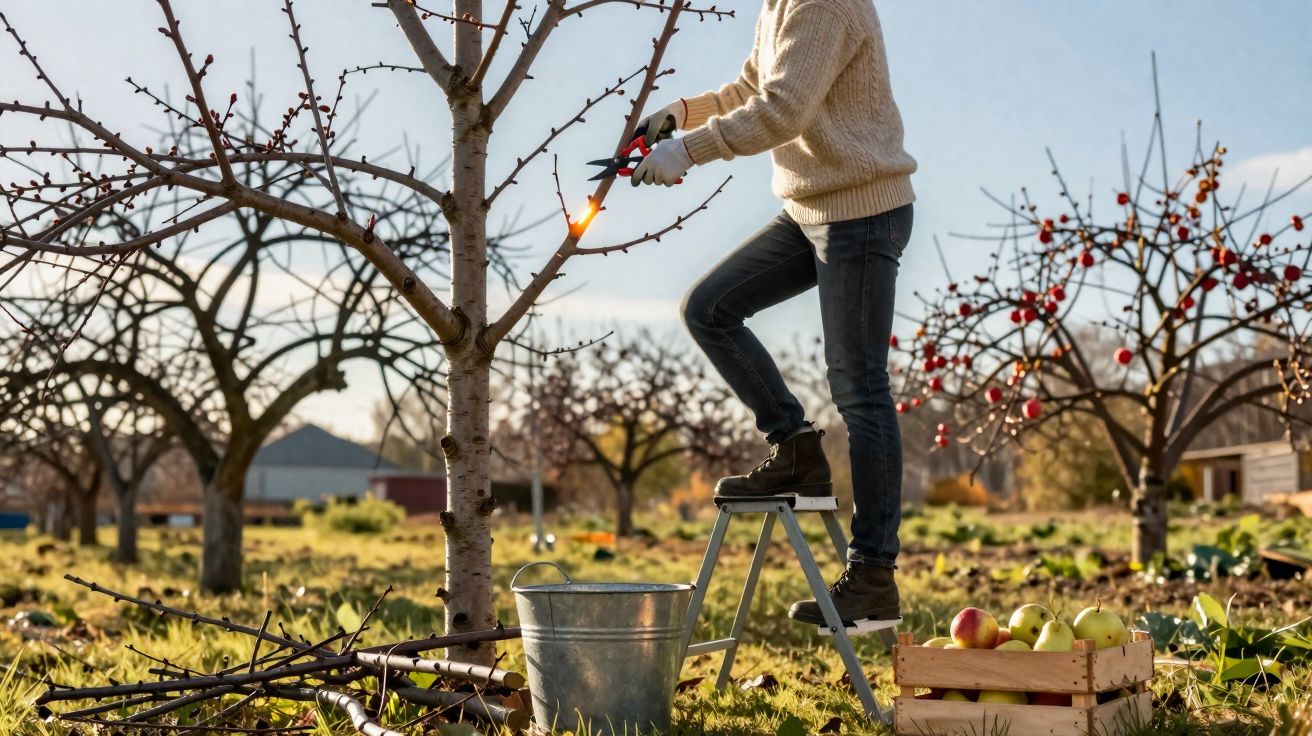
Many amateur gardeners only get round to apple, pear, peach and cherry trees in spring, then wonder why the trees later produce little fruit or develop health problems. The crucial work often needs to happen much earlier: at the tail end of winter, before the sap really starts to rise. For most fruit trees, the weeks up to around 10 March are effectively a deadline.
Why the period up to early March matters so much
Pruning fruit trees controls growth, flower buds and overall health. If you leave it too late, you quickly move from “maximising the crop” to merely “limiting the damage”.
A timely winter prune ensures the tree puts its energy into flowers and fruit, not into pointless new shoots.
Up to roughly 10 March, the sap in many trees begins to rise slowly. At that stage, pruning wounds still heal quickly, without fungi and pests having such an easy route in. The crown is also much easier to assess because there is no foliage in the way, so dead or diseased sections are far easier to spot.
Acting early brings several clear benefits:
- The trees cope better with the work because they are still in their dormant phase.
- The wounds dry out quickly and close up before pathogens become active.
- New, well-lit shoots develop exactly where the fruit should later hang.
Apple and pear trees: classics that need clear structure
Apple and pear trees are among the toughest fruit trees in the garden, but they do not forgive neglect. If you do not prune them at all, or do so without a plan, they soon form a dense, shady crown with lots of small, bland fruit.
How to prune apple and pear trees
Pruning between February and early March is aimed at organising the crown and encouraging fruitful wood. These steps help:
- Remove all dead, rotten or clearly diseased branches completely.
- Shorten upright water shoots strongly, or take them out altogether.
- Cut back any branches that cross or rub against each other to one of the two.
- Partly renew older fruiting wood that has been carrying little crop for years.
Always remove whole shoots or cut back to a well-positioned side shoot. A common mistake is making lots of small nibbled cuts on the outer edge, which only encourages a broom-like mass of thin twigs. Fewer, well-judged cuts are much better.
Peach trees: be bold with the pruning
Peach trees age extremely quickly if you treat them like apple trees. Their fruit is produced mainly on shoots from the previous year. Without consistent pruning, you may get blossom, but hardly any good-quality peaches.
Where peaches really bear fruit
A close look pays off with peaches: mixed shoots with both flower and leaf buds produce the best fruit. Pure leaf shoots or pure flower shoots mostly drain energy. From late February to no later than early March, prune hard and thin out the tree.
Important principles:
- Cut back old shoots that have already fruited several times, or remove them entirely.
- Shorten well-placed previous-year shoots to a few buds so they can form productive side shoots.
- Remove drooping branches or those growing strongly into the centre to let light into the tree.
If you prune a peach tree too gently, you create plenty of blossom - and, in the end, small, weak fruit.
Cherry trees: a special case with pitfalls
Cherry trees catch many gardeners out. They assume, “The other trees are pruned in winter, so I’ll do the same here.” That can cause problems. Cherries react badly to hard winter pruning: the wounds stay open for a long time and are vulnerable to fungal disease.
When pruning a cherry tree works better
A light shape correction in late winter is sometimes possible, but any drastic work should ideally be left until after the crop has been harvested. In summer the tree is active, the wounds close faster, and the risk of gumming and fungal infection falls significantly.
For home gardeners, that means:
- In late winter, only make small corrections and remove dead wood.
- Leave larger branches and heavy shortening until July or August.
- Make sure cuts are smooth and sloped so rainwater can run off easily.
Practical rules for a clean cut
Whatever kind of fruit tree you are dealing with, a few basic rules decide whether the result is a success or a failure.
| Aspect | Recommendation |
|---|---|
| Tools | Make clean cuts with sharp, well-maintained secateurs or a saw. |
| Weather | Prune only on dry, frost-free days, preferably under lightly overcast skies. |
| Cut placement | Always cut just above an outward-facing bud. |
| Hygiene | Disinfect tools between different trees, especially after removing diseased branches. |
Larger cuts with a diameter of around 2 to 3 cm are worth sealing. A tar-like tree resin or a modern wound sealant reduces the risk of rot and fungal damage.
Why pruning before 10 March pays off
If you stick to the window up to early March, you lay the foundations for healthy trees and a generous crop. The effects become very obvious over the course of the season.
- Rapid wound healing: Cut surfaces dry before the typical spring damp and pests can fully establish themselves.
- Targeted energy use: The tree directs strength into productive parts instead of supporting unnecessary wood.
- Better light penetration: Sun reaches deeper into the crown, helping flowers and fruit develop more flavour and colour.
- Lower risk of disease: Well-ventilated crowns are much less likely to suffer fungal infections.
A well-pruned tree needs less chemical intervention, stays more vigorous and delivers reliable yields for years.
Common mistakes that can cost you the harvest
The same errors appear in many gardens, and they usually lead to the same result: good blossom, disappointing fruit.
- Pruning on cold, wet days, when wounds stay damp for too long.
- Avoiding pruning for years until the crown becomes completely tired and unproductive.
- Cutting back hard to ugly stubs, which later produce weak, disease-prone shoots.
- Making uncertain cuts too close to the bud, or too far away, both of which create dead wood.
If you are unsure, watch your tree carefully for a full year: where do flower buds form, where do strong young shoots appear, and which parts shade each other out? That understanding makes it much easier to prune more accurately next winter.
Extra practical tips for better results in the orchard
A good prune works even better when the growing conditions are right. The soil should be loose and rich in organic matter, and fruit trees dislike waterlogging. A thin layer of compost in the root zone in March supports growth without overfeeding the trees.
If you have the space, combine different fruit varieties: an apple tree that flowers later can complement an early-flowering peach that is vulnerable to frost. This helps spread the risk of late frosts, so you are not left with nothing if a cold snap hits the first blossom.
It is also worth thinking about pollinators. Bee-friendly perennials and herbs planted under or near fruit trees help ensure the blossom is well visited in spring. More pollinated flowers mean more fruit - provided the pruning before 10 March has shaped the tree in good time.
Another useful habit is to keep a simple pruning record. A few notes or photos taken after each winter cut make it much easier to remember which branches were removed, where fruiting wood is developing and how the tree responded over the season. That makes the next cut more precise and helps prevent the crown from becoming overgrown again.

Comments
No comments yet. Be the first to comment!
Leave a Comment