
Right now is when the crucial decision is made: will the shrub give up, or burst into a blaze of flowers?
A frost-damaged or weakened oleander often looks dead to the untrained eye. In reality, many plants still have enough life left in them to put on strong growth again in summer - provided they are handled correctly now. If you prune or water blindly, though, you may finish the plant off completely. With a clear plan that includes diagnosis, gradual acclimatisation outdoors, targeted pruning, root care, suitable feeding and controlled watering, a wind-beaten shrub can often be saved.
First, check whether there is still life in the plant
Before the pot is carried out of the garage, cellar or conservatory, it is time for a proper inspection. An oleander can look entirely dried out at the top and still have reserves lower down.
- Bark test: lightly scratch the bark with a fingernail or a small knife.
- Green underneath: moist, greenish tissue means the shoot is still alive.
- Brown and dry: that branch is dead and can be removed later.
It is also worth looking right down at the base of the shrub. That is often where the best-protected buds are found. Small, plump bumps along the shoots suggest the plant is ready to start again. If they are missing altogether, the damage is more serious - but even then, it is still worth trying to rebuild the plant from the roots.
Oleander care after frost: moving it back outdoors without shock
Oleander comes from warm climates. After spending winter under cover, it should not be moved from shelter into full April sunshine overnight. Doing so can scorch the leaves and add unnecessary stress.
A rough rule of thumb is this: do not put it back outside until no more night frosts are expected and overnight temperatures are around 10°C or above. Depending on your region, that is usually between late March and mid-April.
Gradually acclimatising the plant to light and air
If the shrub is in a container, the best approach is as follows:
- Days 1–3: leave it outside for a few hours in light shade, then bring it back to a sheltered spot at night.
- Days 4–7: keep it outside for longer periods, still without direct midday sun.
- From week 2 onwards: slowly introduce full sun until it eventually has a permanent bright position.
Plants that are in the ground are less flexible. In that case, winter protection, fleece or leaf mulch should be removed gradually. Weather apps remain essential reading: if a late frost is forecast, the shrub needs protection again at short notice.
If an oleander is gently adjusted to light and temperature, it has the best chance of producing strong new shoots - and, with them, abundant flowers.
Pruning the oleander: cut confidently back to healthy wood
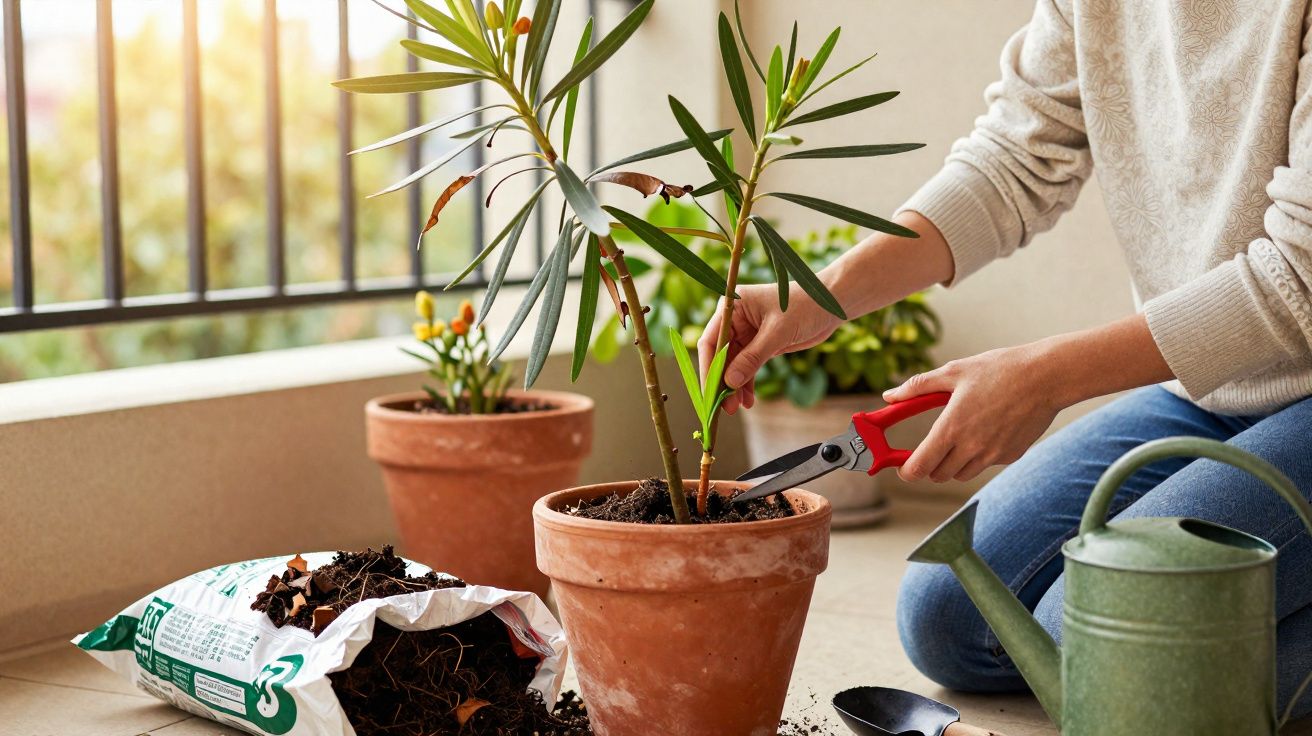
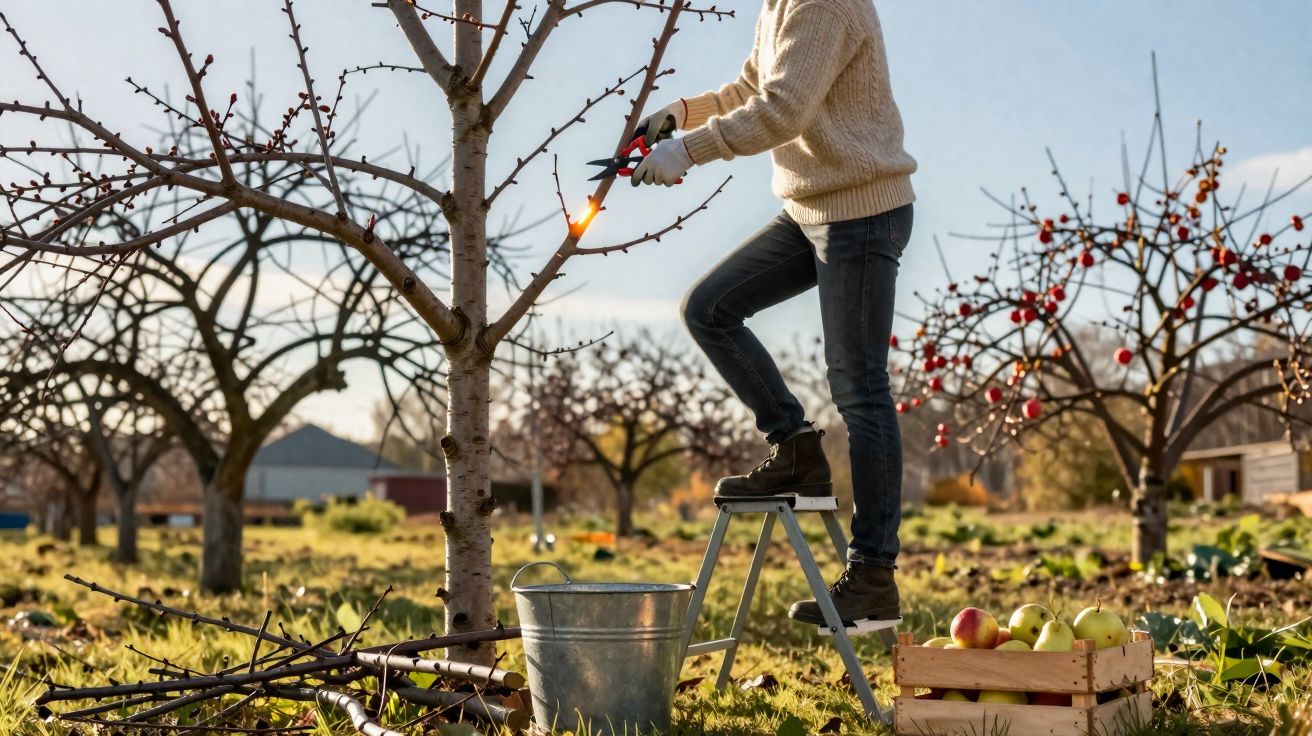
Once the risk of frost has passed, the secateurs can come out. Pruning determines whether the shrub grows densely, stays vigorous and flowers well, or merely produces sparse new growth.
The key is not to be timid and skim over the brown tips, but to cut properly back into healthy wood. You can tell you have reached it by the cut surface: it should be green and juicy inside, not grey-brown and fibrous.
- Remove all shoots that are completely black, soft or bone-dry.
- Take out branches that cross each other or grow inwards.
- Shorten very long, thin shoots by one third to two thirds.
For badly damaged plants, sometimes the only option is a drastic cut back to about 40 cm above the soil. It looks severe, but it often encourages the oleander to sprout afresh from the base, becoming strong and bushy again. Flowering will be a bit sparse in that first year, but by the following summer the restart usually pays off.
Always clean and disinfect your cutting tools before pruning, especially if you are moving between plants. That helps prevent disease from spreading into fresh cuts.
Roots and pot: giving the plant room to grow again
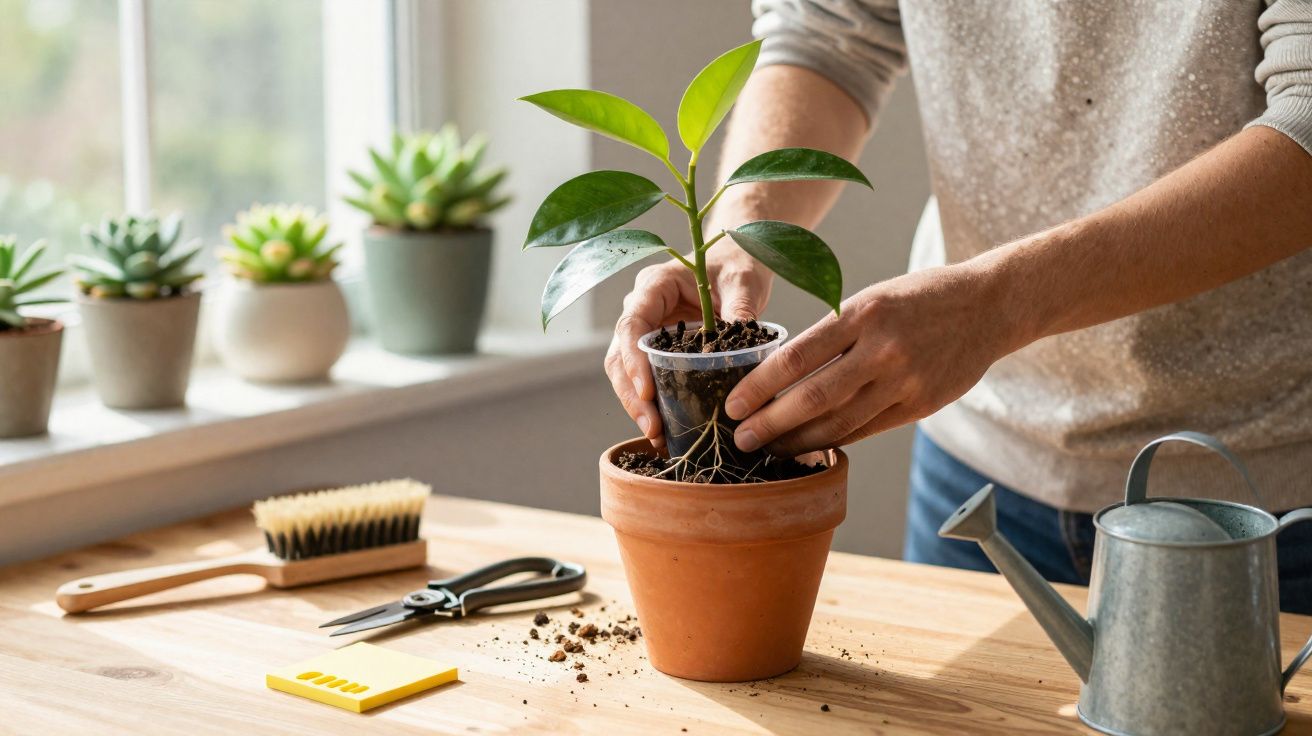
Container-grown oleander can quickly suffer from lack of space. If the root ball is just spiralling around inside the pot, and roots are already growing out of the drainage holes, it is time to repot.
Repotting correctly in spring
The best time is after pruning, once the shrub is allowed back outside.
- Choose a pot only one size larger, not an oversized container straight away.
- Add a layer of expanded clay or coarse gravel for drainage.
- Use a free-draining mix of compost for flowering plants, coarse sand and a little well-rotted compost.
- Gently loosen any compacted roots at the edge of the root ball so they can grow into the new compost.
If your oleander is already in a very heavy pot, you can skip repotting and simply replace the top 5 cm of compost. Swap it for fresh, nutrient-rich, loose compost - a kind of mini refresh for the root system.
If the plant has lost a lot of roots, wait a little while before feeding again after repotting. Fresh root tips can be sensitive, and a short pause helps them settle in safely.
Why potassium matters more than nitrogen now
Many amateur gardeners reach for a general-purpose fertiliser with a high nitrogen content out of habit. That may produce lots of leafy growth, but it also makes the shrub soft and more vulnerable to disease.
For a weakened oleander, a potassium-rich fertiliser makes more sense. Potassium strengthens cell walls, supports flower formation and improves resilience. From March through to around September, one application every one to two weeks is enough, depending on the product and the size of the plant.
Less is more here: regular, moderate doses produce far better results than rare but far too concentrated “shock” feeds.
Watering correctly: neither swamp nor dust-dry
After winter, many oleanders are a bit like a patient after flu: weakened and unable to cope well with extremes. Water carefully.
- Let the surface of the compost dry out slightly before watering again.
- Water directly at the root zone, not over the leaves from above.
- Empty the saucer after a few minutes so that no waterlogging develops.
In the ground, most regions only need a thorough soak once or twice a week during hot summer spells. It is better to water deeply less often than to give little sips all the time. A mulch layer of bark chips or gravel helps retain moisture in the soil and protects the roots.
The most common mistakes after winter - and how to avoid them
Many oleanders struggle not because of winter itself, but because of mistakes in spring. Typical pitfalls include:
- The pot is put outside far too early and freezes during a late cold snap.
- The shrub is moved in one day from a shaded veranda to a full-sun terrace.
- Out of concern for the plant, it is watered far too heavily, causing the roots to rot.
- Strong fertiliser is applied to bone-dry compost and burns the roots.
- Water sits permanently in the saucer, slowly drowning the plant.
Keep these points in mind, and the chances rise dramatically that even a badly battered shrub will recover within a few weeks and produce fresh flowering shoots.
Location, microclimate and protection from the next cold spell
Oleander loves light, warmth and shelter from cold wind. A spot against a south-facing or south-west-facing wall is ideal. The wall stores heat, softens temperature swings and creates a pleasant microclimate.
In harsher areas, a more mobile approach works well: container plants spend summer in the sunniest position and move back in autumn to a bright, cool, frost-free place. If the shrub is planted in the ground, thick leaf mulch, fleece covers and, if needed, improvised wooden or cardboard shelters can make a real difference.
If a potted oleander is in a windy spot, a discreet cane can stop the container rocking while new shoots are forming. Any ties should be loose so that the stems are supported without being damaged.
How to tell whether the rescue has worked
For many gardening fans, the most exciting question is: has it worked? In the weeks after pruning and repotting, it is worth watching the shoots closely:
- Fresh, light-green tips show that new growth is under way.
- Flower buds tend to form on young shoots.
- If a branch stays bare for a long time, it can be cut back again to healthy wood.
Patience matters. Some plants react quickly, while others take several weeks before showing obvious movement. As long as the stem and base still look green and alive, there is still hope.
Poisonous beauty: what households with children and pets should know
For all the summer flower display, one warning should not be left out: oleander is a poisonous ornamental plant. All parts contain substances that are harmful to people and animals.
If you have children or pets in the household, place the shrub where nobody can nibble the leaves or stems. When pruning, it is sensible to wear gloves, and cuttings should not go on the compost heap but in general waste.
Handled properly, however, oleander remains one of the most rewarding container plants for warm corners on balconies, terraces and in gardens. A few targeted measures in spring are often enough to turn a seemingly hopeless case into a vigorous summer star with months of flowers.

Comments
No comments yet. Be the first to comment!
Leave a Comment